What if you spent hundreds of thousands of dollars, or even millions, buying an e-commerce business, only to discover that the suppliers cannot deliver and the contracts give you no real protection?
This mistake is more common than most buyers realize, and it can destroy a profitable deal in a matter of weeks.
When acquiring an online e-commerce brand, you should take supplier agreements as the backbone of your inventory, fulfillment, and customer trust.
Weak or unenforceable contracts put all these three aspects at great risk!
This article shows you the exact steps to review and verify supplier contracts before you close on an e-commerce acquisition, so you protect your capital, your operations, and your reputation from day one.
Why Verifying Supplier Contracts Matters When Buying An Online Store

Poor supplier contract management can cost your online businesses big money.
Research shows companies can lose 5 to 9 percent of annual revenue due to contract issues like unclear terms or missed deadlines (for example, a $10 million supplier spend could lose up to $900,000) (Sirion).
When you buy an e-commerce brand without reviewing its supplier agreements, you are not just buying inventory and traffic…
You are also inheriting every hidden risk buried inside those contracts.
Verifying supplier contracts means confirming they actually exist, are legally enforceable, are commercially fair, and will still protect you after ownership changes hands.
It is one of the simplest ways to avoid paying full price for a business that is quietly bleeding money.
Now, let’s focus on the exact process you can follow to verify supplier agreements before you acquire an e-commerce store…

Looking to Acquire an E-Commerce Business?
Finding the right business takes more than browsing listings. You need an opportunity that fits your budget, aligns with your objectives and has genuine potential to grow.
Trend Hijacking helps entrepreneurs, investors, and strategic buyers source e-commerce businesses, access off-market opportunities, conduct due diligence, negotiate deals, and navigate the acquisition process from start to finish.
Tell us what you're looking to acquire, and let's find the right opportunity for you.
Understand What You Are Buying

You should start by identifying every supplier agreement tied to the business.
This includes:
Manufacturers,
packaging providers,
fulfillment partners,
freight forwarders, and
any third party involved in delivering products to customers.
Request the original signed contracts and all amendments.
Do not rely on summaries, spreadsheets, or seller explanations. If it is not in writing, then it simply doesn't exist.
Review each agreement for three basics: the term length, the products or services covered, and the pricing structure.
These crucial details will help you easily determine whether the deal still makes sense once you take over.
NOTE: Until you know exactly which contracts are in place and what they say, you are flying blind.
Related: How To Buy An E-commerce Business With No Experience
Confirm Supplier Legitimacy

A contract is only as strong as the company behind it.
Before you trust any supplier agreement, you need to confirm that the supplier is a real, operating business with a track record.
Start by verifying business registration and licensing.
Ask each supplier for their legal business name and registration number, such as a company ID or VAT number, and confirm it through official government or trade registries.
If the entity on the contract does not exist on paper, the contract is worthless.
Next, check contact and banking details. The legal name on invoices, bank accounts, and contracts should match exactly.
Mismatches are often a sign of shell companies, payment diversion, or outright fraud.
Finally, look for outside validation. Search for customer reviews, trade references, and any public complaints.
A pattern of late shipments, quality issues, or disputes is a warning that will not go away just because you bought the business.
If the supplier resists sharing basic credentials or tries to brush off these checks, walk away.
This kind of pushback usually means there is something they do not want you to see.
Read Every Clause in the Contract

One thing you need to keep in mind is that contracts can hide risk in plain sight if you don’t read them closely.
That’s why you need to focus on the following:
Identify key terms: These include delivery schedules, pricing, payment terms, quality standards, and penalties for non-performance.
Check termination rights: You must know how easy or hard it is to end the agreement if things go wrong. Contracts that lock you in without exit options are dangerous.
Review liability and risk allocation: Understand who is responsible if products are late, defective, or non-compliant with laws.
Look at jurisdiction and dispute resolution terms: Where would a legal dispute be decided? If it’s in a distant country and an expensive court, that reduces your leverage.
NEVER assume that the seller interpreted the contract correctly. Read it yourself or have someone qualified to do it for you.
Check Contract Performance History
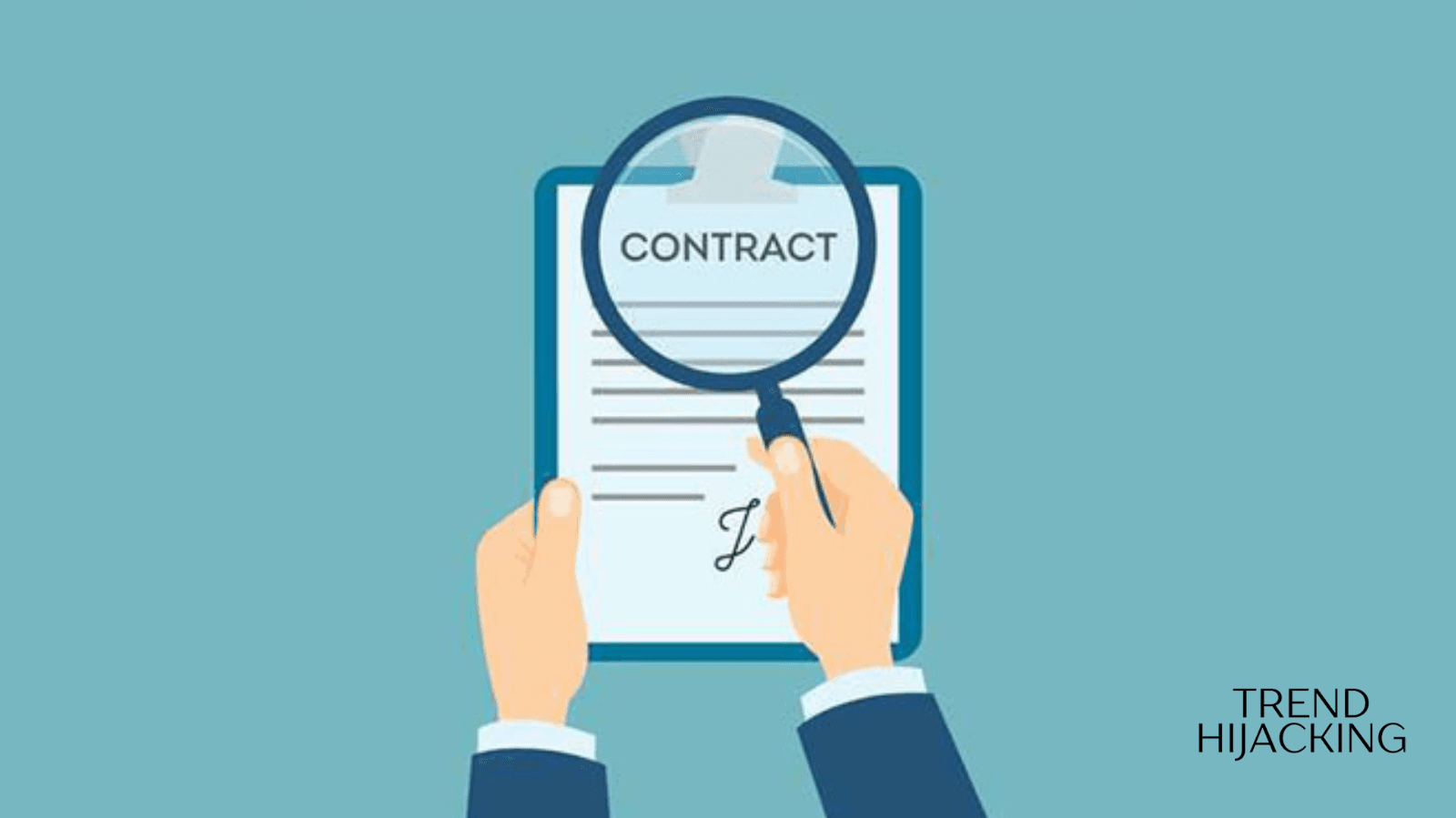
A contract is only useful if the supplier performs or delivers.
How do you check if the supplier delivers?
It’s simple: Review the delivery records, on-time shipping rates, and defect or return data.
Ask them for reports, not just explanations.
Look into any past disputes, chargebacks, or claims involving the supplier.
Repeated problems are a sign that the risk will continue after you take over.
Looking to Acquire an E-Commerce Business?
Finding the right business takes more than browsing listings. You need an opportunity that fits your budget, aligns with your objectives and has genuine potential to grow.
Trend Hijacking helps entrepreneurs, investors, and strategic buyers source e-commerce businesses, access off-market opportunities, conduct due diligence, negotiate deals, and navigate the acquisition process from start to finish.
Tell us what you're looking to acquire, and let's find the right opportunity for you.
Verify Compliance and Certification

A legitimate supplier must meet the legal and industry standards.
Request the supplier to provide proof of required certifications, such as ISO or product safety testing.
Confirm that regulated products have valid compliance documents. Then check the contract itself.
It should require the supplier to maintain these standards and give you the right to audit or inspect them.
If compliance is not written into the agreement, you are the one exposed when something goes wrong.
Do Financial Due Diligence

A supplier that looks fine today can still collapse tomorrow. And your contract will not save you if they go under.
Start by reviewing financial health. Ask for recent financial statements or a credit report.
Suppliers with weak balance sheets, overdue debts, or cash flow problems are far more likely to miss orders or shut down.
Next, examine payment terms. Requiring large payments up front without performance guarantees shifts all the risk onto you.
That's not a partnership; it's a liability.
Finally, review the pricing provisions. The contract should clearly explain when and how prices can change.
Any vague or open-ended pricing clauses invite surprise increases and disputes.
Strong supplier contracts come from financially stable partners with predictable, transparent pricing.
Related: A Complete E-commerce Due Diligence Checklist
Bring In The Experts

Sometimes, the supplier contracts can hide risks that only specialists can spot.
For this reason, hiring experts to help you with the verification process can prove quite helpful.
You may want to:
Hire a lawyer experienced in supplier agreements to identify ambiguous terms, missing clauses, or unenforceable language.
For technical or quality concerns, engage industry experts, such as product testing labs, to verify standards and compliance.
Investing in expert review early can prevent costly mistakes and protect your business after the acquisition.
Test the Agreement With Real Scenarios

A contract is only valuable if it holds up in real-world situations.
Walk through potential issues such as late deliveries, quality problems, or price changes with the supplier.
Ask them how the contract addresses each scenario.
If the responses are vague or the supplier avoids specifics, revise the agreement before completing the purchase.
Make Your Purchase Conditional

When buying the e-commerce business, we advise you to tie the purchase to contract verification.
Add a due diligence period where you can walk away if contract checks fail.
Request contract corrections before closing.
This keeps you safe if issues emerge during review.
Let’s Help You Acquire A Profitable E-commerce Business
Buying an e-commerce brand should feel clear and safe, not stressful or rushed.
Our Smart Acquisition Program helps you find off-market brands with real profit and real growth, not listings that everyone else already passed on.
We review financials, supplier contracts, traffic, and margins so you know what you are buying before you spend a dollar.
We also handle seller talks to lock in a lower price, so you start with a profit from day one.
You make the final calls while our team runs the work, sets up the right staff, and builds a clear growth plan.
You keep 100% ownership, with no equity given away, and no monthly retainers.
After the deal closes, we will stay with you for 30 days to make sure thehandoff is smooth, and the business runs the way it should.
Final Word
Verifying supplier contracts is a crucial step before committing yourself to buying an e-commerce brand.
Contracts carry financial, operational, and legal risk. So, you should check supplier legitimacy, read every clause, review performance history, confirm compliance, and use legal experts.
Make contract verification part of the deal conditions so you don’t pay for hidden problems.
Taking these steps protects your investment and sets you up for smooth operations after you take control.





A Done-For-You E-commerce Business
Discover how we Build, Launch, and Scale a 6-figure/month Business for You
Learn more
The 6-Step Blueprint to E-Commerce Acquisition
See how we Acquire, Convert, and Scale with Real Case Studies to Prove It.
You May Also Like


Join investors, Entreprenuers and Professionals like you building wealth through Ecommerce acquisitions, with the experts managing every step.
Start with our 14-day Free Business Acquisition Launch, where we show you exactly how we operate and give you a curated list of businesses tailored to your budget, goals, and lifestyle.