If you’re planning to buy a small business, you definitely want to know how long it will take. So, what is the timeline for a small business acquisition? The truth is, most small business acquisitions take 6 to 12 months from the first search to closing. Some deals close in 90 days while some take more than a year. The exact timeline varies depending on the deal size, financing, and how prepared both sides are.
In this article, we will break the entire acquisition process into clear stages to help you understand what happens at each stage and provide realistic time estimates for each stage. After reading this guide, you'll know what to expect and how to move faster.
Stage 1: The Preparation Phase (Approx. 2–8 Weeks)

Before you contact the seller of a business you’re interested in acquiring, you need to prepare. During this stage, you’ll essentially be deciding on the following important aspects:
Your budget
Your financing plan
Your industry focus
Your deal criteria
If you plan to finance your acquisition with an SBA loan, you should speak with a lender early. The U.S. Small Business Administration (SBA) backs many small business acquisition loans. In fiscal year 2023, the SBA approved over 57,000 7(a) loans, many of which funded business purchases (U.S. SBA report).
In this case, the preparation tasks to consider include:
Reviewing your credit score
Gathering tax returns and financial statements
Creating a personal financial statement
Setting a clear acquisition target (revenue, profit, location)
If you skip this step, you will waste months chasing the wrong deals.
How To Move Faster: Create a one-page acquisition criteria sheet. Share it with brokers. This step saves weeks of back-and-forth.

Trend Hijacking helps you Reclaim Control over your Financial Destiny
Most successful professionals and investors like you never actually own real assets that cashflow at the pace you want.
You earn well.
You invest passively.
But you never truly control something scalable.
We've created a solution: a FREE guide that shows you exactly how investors are using acquisitions to outperform stocks and real estate, all without needing any experience.
Stage 2: Search And Initial Screening (Approx. 1–4 Months)

This stage often takes the longest. And that’s because it involves carrying out some of the most crucial processes of acquisitions. These include reviewing the available listings, signing NDAs, analyzing financial summaries, speaking with brokers, and even rejecting many deals
Some of the biggest marketplaces for selling small businesses, such as BizBuySell and Flippa, display thousands of active listings at any time, so you’ll always have many options. You will also find many weak businesses.
During the screening stage, you should do the following:
Review 3 years of tax returns
Review profit and loss statements
Check revenue trends
Ask about customer concentration
Ask about owner involvement
Focus on eliminating weak deals fast. We advise you to review multiple businesses before making one offer.
Typical timeline: Serious buyers often evaluate 10–30 businesses before choosing one.
How to move faster: Use a checklist. If a business fails 2–3 core criteria, move on immediately.
Stage 3: Letter of Intent (Approx. 1–3 Weeks)

Once you have spotted a good target, the next step is to submit a Letter of Intent (LOI). A good LOI should include the following:
Purchase price
Deal structure
Down payment
Financing terms
Due diligence period
Closing timeline
The LOI is usually non-binding, except for confidentiality and exclusivity.
This stage moves quickly if both parties agree on the price. It slows down if valuation expectations differ.
Tip: Use clear numbers. Avoid vague language. For example, write: “Buyer will pay $800,000 total purchase price.” Do not write: “Buyer intends to pay around market value.”
Once both sides sign the LOI, the deal becomes serious.
Stage 4: Due Diligence (Approx. 30–90 Days)

Stage 5: Financing Approval (Approx. 30–60 Days)

If you use financing, this stage overlaps with due diligence. For SBA 7(a) loans, lenders usually require:
Business valuation
Appraisal (if real estate is included)
Environmental review (for certain industries)
Personal background checks
The SBA loan process often takes 45–90 days, depending on the lender's speed.
Cash deals move faster. Seller-financed deals also move faster because they require less underwriting.
Explicit comparison:
Cash deal: 30–60 days total after LOI
SBA loan deal: 60–120 days after LOI
Seller financing: Often 45–75 days
If speed matters, structure matters.
Trend Hijacking helps you Reclaim Control over your Financial Destiny
Most successful professionals and investors like you never actually own real assets that cashflow at the pace you want.
You earn well.
You invest passively.
But you never truly control something scalable.
We've created a solution: a FREE guide that shows you exactly how investors are using acquisitions to outperform stocks and real estate, all without needing any experience.
Stage 6: Legal Documentation (Approx. 2–4 Weeks)
This stage involves business acquisition attorneys who prepare the final purchase agreement. A typical agreement covers these areas:
Asset purchase vs. stock purchase
Representations and warranties
Non-compete terms
Training period
Transition support
Asset purchases are more common in small business acquisitions. Buyers prefer asset deals because they limit liability exposure.
Your lawyer will also coordinate:
Lease transfer
Bill of sale
Closing statement
Escrow setup
It’s important to note that this stage can slow down if lawyers argue over minor details.
How to move faster: Tell your lawyer to focus on material risk. Avoid long debates over low-impact clauses.
Stage 7: Closing (Approx. 1–7 Days)

Closing is typically the shortest phase of the acquisition process, often wrapping up within a few days once all documents are properly executed.
At this stage, funds are transferred according to the agreed structure, legal ownership officially changes hands, and control of keys, access credentials, and operational systems is delivered to you.
If employees have not already been informed, they are notified as part of the transition plan. From a legal and operational standpoint, this is the moment you assume full responsibility and authority as the new owner.
The total timeline from first search to closing often lands between 6 and 12 months.
Full Timeline Summary
Here is a simple breakdown of the entire acquisition timeline of a small business:
Stage | Time Estimate |
Preparation | 2–8 weeks |
Search | 1–4 months |
LOI | 1–3 weeks |
Due Diligence | 30–90 days |
Financing | 30–90 days |
Legal & Closing | 2–4 weeks |
Fast deal: ~3 months
Typical deal: 6–9 months
Slower deal: 12+ months
What Actually Controls The Acquisition Timeline?

Three factors influence deal speed more than anything else, and understanding them upfront allows you to manage expectations realistically instead of emotionally.
1. Financing Type
The structure of your financing sets the pace. SBA loans introduce underwriting, lender reviews, and layered documentation requirements that naturally extend timelines. There are more checkpoints and more parties involved. Cash deals, on the other hand, remove much of that friction. Fewer approvals mean fewer delays, and transactions can move significantly faster when capital is readily deployable.
2. Seller Organization
Well-prepared sellers accelerate everything. Clean financial statements, organized tax returns, and clear documentation make due diligence straightforward. When records are incomplete or bookkeeping is sloppy, momentum slows. Every inconsistency triggers more questions, more verification, and more back and forth
3. Buyer Decisiveness
Indecision quietly destroys timelines. Buyers without defined criteria hesitate, second-guess, and stall negotiations. Clear acquisition standards allow you to evaluate efficiently, negotiate with confidence, and maintain control of the process.
How To Cut 2–3 Months Off Your Acquisition Timeline
Want to speed up your acquisition by cutting off 2-3 months from the process? If yes, consider taking the following steps:
1. Get pre-qualified with an SBA lender before making offers.
2. Prepare your personal financial statement early.
3. Use a due diligence checklist from day one.
4. Set weekly deadlines with brokers and sellers.
5. Hire experienced advisors who close deals regularly.
Data from IBBA surveys shows that experienced brokers close deals faster than private-party sales. Structure and process matter.
Why Acquisition Timelines Can Mislead You

While a timeline shows you how long a deal takes, it never tells you how risky that deal is.
In our field of specialization, which is e-commerce business acquisitions, we always witness e-commerce buyers spending 6–12 months searching, negotiating, and closing. Then problems surface after the transfer. The business depends on one traffic source. The supplier controls pricing. The owner ran everything without documented systems.
Many buyers also overpay on marketplace listings. Competitive bidding inflates multiples. Even a 20–30% overpayment reduces your margin for error.
A smarter approach connects acquisition and execution from day one. You validate risk deeply before closing. You structure the deal with a margin built in. You prepare systems and team plans before ownership transfers.
If you want to see how that works in practice, our Smart Acquisition framework breaks down a 60-day acquisition-to-scale model designed to protect capital and create immediate momentum.
Conclusion
A small business acquisition usually takes 6 to 12 months. The search phase takes the longest. Financing and due diligence add the most delays. Cash deals tend to close faster than SBA-financed deals. Organized sellers close faster than disorganized sellers.
If you prepare early, have clear criteria, and move decisively, you can shorten the process by several months. Buying a business is a serious move, and having a clear timeline protects your time, money, and focus. If you treat each stage like a project with deadlines, you will stay in control of the deal.




A Done-For-You E-commerce Business
Discover how we Build, Launch, and Scale a 6-figure/month Business for You
Learn more
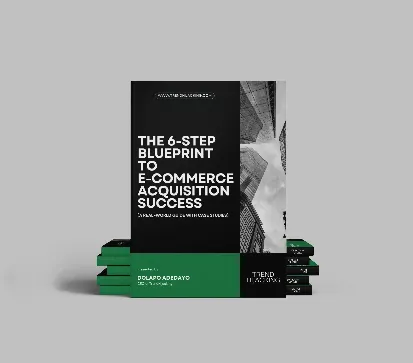
The 6-Step Blueprint to E-Commerce Acquisition
See how we Acquire, Convert, and Scale with Real Case Studies to Prove It.
You May Also Like


Join investors, Entreprenuers and Professionals like you building wealth through Ecommerce acquisitions, with the experts managing every step.
Start with our 14-day Free Business Acquisition Launch, where we show you exactly how we operate and give you a curated list of businesses tailored to your budget, goals, and lifestyle.