
When evaluating a Shopify store for acquisition or investment, understanding its revenue is critical. Numbers you see on screenshots or self-reported dashboards often don’t tell the full story. Without verification, you risk overpaying for a store, misjudging a trend, or even misallocating resources.
That said, verifying Shopify store revenue is not a trivial process. It requires you to combine real operational insights, traffic analysis, and financial scrutiny. In this guide, we’ll break down how seasoned e-commerce operators determine whether reported revenue is accurate and sustainable, based on firsthand experience running and acquiring online businesses.
Why You Should NEVER Skip Revenue Verification

BEFORE we dive into more details, let’s first discuss why revenue verification is crucial…
Revenue for an e-commerce business means more than just a mere financial metric; it reflects operational efficiency, product-market fit, and market timing.
A store generating $50,000 in monthly sales with high ad spend and constant refunds is far less valuable than one generating $30,000 in revenue with strong organic traffic, low churn, and repeat customers.
As an investor or buyer looking to acquire an existing Shopify brand, performing revenue verification will help you:
Understand the store’s true earning potential.
Avoid overpaying based on inflated or selective data.
Identify operational bottlenecks or risks hidden behind raw revenue numbers.
Even competitive analysts benefit from revenue verification. Trends often appear first in Shopify stores before going viral on social media or marketplaces.
Recognizing whether a store’s success is sustainable or trend-driven requires a careful assessment of revenue quality.

Looking to Acquire an E-Commerce Business?
Finding the right business takes more than browsing listings. You need an opportunity that fits your budget, aligns with your objectives and has genuine potential to grow.
Trend Hijacking helps entrepreneurs, investors, and strategic buyers source e-commerce businesses, access off-market opportunities, conduct due diligence, negotiate deals, and navigate the acquisition process from start to finish.
Tell us what you're looking to acquire, and let's find the right opportunity for you.
Why You Should NEVER Rely On Revenue Screenshots
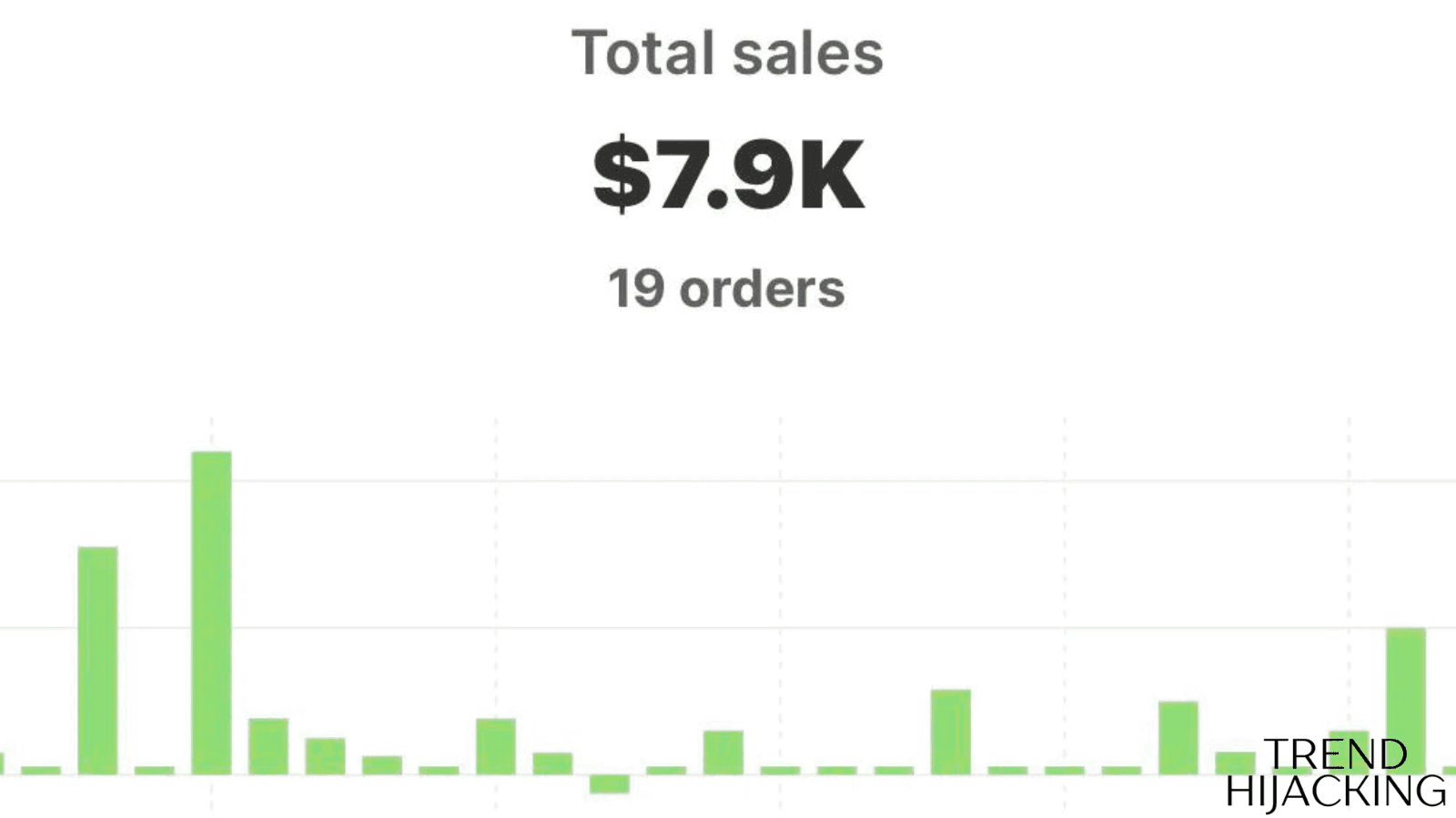
One of the most common mistakes you can do in revenue evaluation is trusting Shopify screenshots, Google Analytics reports, or social media stats without further validation.
Why? Because these metrics can be manipulated or selectively presented.
For 7plus years, we’ve been actively operating in the e-commerce acquisition space at TrendHijacking, reviewing and buying Shopify stores across multiple niches. One pattern became painfully clear: screenshots of dashboards or Google Analytics are often misleading.
We’ve seen firsthand that some sellers intentionally, or sometimes unintentionally, present numbers in a way that inflates perceived revenue.
It’s common for sellers to crop dashboards, highlight only high-performing weeks, or exclude refunds, chargebacks, and failed transactions. Even screenshots from Shopify or third-party analytics tools can be selectively edited.
Thus, without verification, you could easily assume that a store is performing far better than reality.
One time we evaluated a dropshipping store in the home goods niche claiming $40,000 in monthly revenue. The seller provided cropped Shopify screenshots showing the past week’s top-performing orders, conveniently excluding refunds and canceled orders. On the surface, the metrics looked solid: daily sales of $1,000–$1,500, high average order value, and strong traffic.
Once we gained access to full Shopify payouts and Stripe statements, the picture changed drastically.
This is what we found:
Total gross revenue for the month: $42,500
Refunds and chargebacks: $12,700
Net revenue received: $29,800
On digging deeper, we noticed that the weekly spike highlighted in screenshots coincided with a flash sale that accounted for 50% of orders, and half of those sales had been refunded by the time payouts were issued.
Without accessing full data, we might have overvalued the store by 40% or more.
This example clearly shows why relying on screenshots alone is dangerous. To perform a true Shopify revenue verification, you must do a comprehensive view, combine analytics, payment processor data, and operational insights.
Screenshots can only tell part of the story, but they cannot confirm the net revenue, repeat customer behavior, or sustainability.
Now let’s get into the exact steps to follow to verify Shopify store revenue…
Step 1: Access Native Shopify and Payment Data

The most reliable you can count on when verifying the revenue of any e-commerce business is the store’s own Shopify dashboard and payment processor. Shopify usually offers comprehensive reports that include the following key financial metrics:
Gross sales: Total revenue from completed orders.
Refunds and returns: Essential for calculating net revenue.
Net payouts: Revenue received after fees and refunds.
Payment processors like Stripe or PayPal confirm the money that has truly moved. For buyers, requesting access to a “View Payouts” report or payment processor dashboard is standard due diligence.
Example from practice: We were evaluating a Shopify store in the fitness accessories niche that claimed around $80,000 in monthly revenue.
On paper, the numbers looked solid, but when we reviewed Stripe payout statements and full Shopify reports, we discovered that refunds, chargebacks, and canceled orders had eaten into roughly $15,000 of that total. The net revenue the store brought in was closer to $65,000.
Without digging into the full financials, a buyer could easily overvalue the business by 20–25%, not realizing that a significant portion of reported sales never converted into real income.
Step 2: Use Third-Party Analytics Tools
Sometimes, direct access of the Shopify dashboard may not be accessible immediately. In that case, you can use third-party tools to give you estimates that you can use to triangulate revenue.
Some of the most used tools include:
StoreLeads and Commerce Inspector: These offer you traffic estimates and popular product insights.
SimilarWeb: This is a helpful tool for approximating the site traffic, engagement, and revenue ranges.
While the estimates given by these tools aren't precise, they will give you context. Experienced buyers and investors always combine these tools with reported data to assess plausibility.
Pro Tip: If you find a store claiming six-figure revenue with only 5,000 monthly visitors, chances are high it often rely on unusually high average order values or heavy ad spending, which may not be sustainable.
Step 3: Analyze Traffic, Conversion, and Marketing

Revenue is simply a product of traffic multiplied by conversion rate and average order value. Analyzing these components provides valuable insight into whether an e-commerce store’s revenue claims are realistic:
Traffic quality: Organic traffic or repeat customers indicate sustainable revenue. Paid traffic can inflate numbers short-term.
Conversion rate: Typical Shopify stores convert 1–3% of visitors. If a store has claims far outside this range, you need to dig deeper.
Customer acquisition cost (CAC): A high CAC relative to revenue can signal that revenue is not profitable.
Operators often cross-reference ad spend, email campaign metrics, and social media engagement to confirm that traffic aligns with revenue trends.
Looking to Acquire an E-Commerce Business?
Finding the right business takes more than browsing listings. You need an opportunity that fits your budget, aligns with your objectives and has genuine potential to grow.
Trend Hijacking helps entrepreneurs, investors, and strategic buyers source e-commerce businesses, access off-market opportunities, conduct due diligence, negotiate deals, and navigate the acquisition process from start to finish.
Tell us what you're looking to acquire, and let's find the right opportunity for you.
Step 4: Verify Supplier and Inventory Activity
Revenue can also be validated by reviewing product movement. If you’re looking at a dropshipping or hybrid Shopify store, you should check the following:
Check purchase orders, invoices, or fulfillment reports.
Compare product quantities sold against supplier shipment volumes.
Last year, we reviewed Shopify store in the kitchenware niche that reported roughly $25,000 in monthly revenue. At first glance, it seemed like a healthy, mid-sized business.
However, when we requested supplier invoices and fulfillment records, it became clear that only about $15,000 worth of products had been purchased and shipped.
That $10,000 gap pointed to either overstated sales or a backlog of unfulfilled orders, a major red flag for any prospective buyer.
It also revealed potential cash flow issues, since revenue on paper didn’t match the store’s operational reality.
Step 5: Look for Operational Red Flags

Even verified revenue can sometimes be misleading if the business has structural weaknesses. That’s why we strongly recommend that you check these red flags when evaluating a store’s revenue:
High refunds or chargebacks: Reduces net revenue and indicates product quality or customer service issues.
Seasonal dependence: Stores reliant on trends or holiday spikes may not maintain year-round revenue.
Heavy paid advertising dependence: A store that cannot maintain revenue without expensive ad campaigns may be unsustainable.
Recognizing these patterns helps you differentiate between genuinely profitable stores and short-term hype-driven successes.
Step 6: Triangulate Multiple Data Sources
No single report tells you the full story of a Shopify store’s revenue. Screenshots, analytics dashboards, and supplier invoices all provide pieces of the puzzle, but relying on just one can be misleading.
Experienced investors usually cross-check Shopify analytics with payment processor statements to confirm net revenue after refunds, chargebacks, and processing fees, uncovering discrepancies that can drastically change the store’s valuation.
They also compare reported revenue against traffic and engagement metrics, assessing whether the number aligns with realistic conversion rates and site performance.
Supplier invoices and fulfillment records further validate that claimed sales resulted in shipped products, highlighting potential over-reported revenue or operational bottlenecks.
Triangulating multiple sources also reveals unusual patterns, such as revenue spikes from short-term promotions or viral hype.
Practical Tips from Experienced Buyers

Here are some practical tips from experienced operators to help you verify revenue and avoid common mistakes when buying a Shopify business:
Request historic data: Three to six months of payouts and analytics reveal trends rather than snapshots.
Check net profit, not just gross revenue: High revenue with low margins can be misleading.
Ask for fulfillment data: In e-commerce, shipped products are proof of sales.
Watch for anomalies: Sudden spikes or drops often indicate seasonal trends or manipulations.
Operators who integrate these steps develop a nuanced understanding of store performance, beyond surface-level claims.
Conclusion
Verifying Shopify store revenue is a critical skill for serious buyers and investors. Screenshots and surface metrics rarely tell the full story. Our approach combines Shopify data, payment processor statements, traffic analysis, supplier verification, and operational insights.
By triangulating multiple sources, spotting red flags, and evaluating trends in context, experienced operators gain a realistic view of a store’s financial health and sustainability.
Revenue verification goes beyond numbers; it involves understanding operations, margins, and growth potential, giving you a competitive edge to identify truly profitable, scalable e-commerce opportunities.
If you’re serious about acquiring an established Shopify store, there are practical resources that can help you act with confidence. At TrendHijacking, we provide tools and guidance designed for buyers like you: Our Smart Acquisition framework guides you through sourcing, verifying, and acquiring profitable e‑commerce businesses while setting up systems to scale them sustainably. It’s a hands‑on, structured approach for safer, smarter acquisitions.
You can also check our curated list of e-commerce businesses for sale gives you direct opportunities to evaluate, and our financing options if you need financing to acquire an online business.





A Done-For-You E-commerce Business
Discover how we Build, Launch, and Scale a 6-figure/month Business for You
Learn more

The 6-Step Blueprint to E-Commerce Acquisition
See how we Acquire, Convert, and Scale with Real Case Studies to Prove It.
You May Also Like


Join investors, Entreprenuers and Professionals like you building wealth through Ecommerce acquisitions, with the experts managing every step.
Start with our 14-day Free Business Acquisition Launch, where we show you exactly how we operate and give you a curated list of businesses tailored to your budget, goals, and lifestyle.