
Overview
This is positioned as an independent, design-forward premium watch brand, selling directly to consumers through Shopify. The brand emphasizes craftsmanship, aesthetics, and exclusivity, with a made-to-order / low-volume premium positioning rather than mass-market scale.
Financially, the business reports exceptionally high profit margins (~85%), a relatively small but premium customer base, and a high average order value ($340). Revenue, however, is highly inconsistent month-to-month, indicating campaign-driven or launch-driven performance rather than steady demand.
From an acquisition perspective, Montoir is best viewed as a brand asset with optionality, not yet a fully systemized or scaled operation. The upside lies in professionalizing marketing, stabilizing revenue, expanding distribution, and strengthening repeat purchase mechanics.
Key Insights
Website Performance & Metrics
Website Speed
The site is visually polished but image-heavy, which likely impacts load speed, particularly on mobile.
No obvious performance optimization (compressed media, lazy loading) is visible externally.
This is a conversion risk, especially for paid traffic.
Product Variation & SKU Count
Limited SKU count (curated collection rather than breadth).
This simplifies operations but concentrates risk around a small number of hero products.
Low SKU complexity = operational efficiency, but caps LTV unless accessories or variants are introduced.
AOV, LTV & Purchase Behavior
AOV: ~$340, which is strong for DTC watches.
Watch category is inherently low repeat frequency.
Without straps, servicing, limited drops, or accessories, LTV is likely close to AOV.
Repeat customer rate is assumed to be low-to-moderate, which is typical for watches.
Conversion Rate (Inferred)
Premium pricing + aesthetic branding suggests conversion rates likely in the 0.8%–1.5% range.
Any underperformance in speed or trust signals directly impacts paid efficiency.
Website Design & Brand Presentation
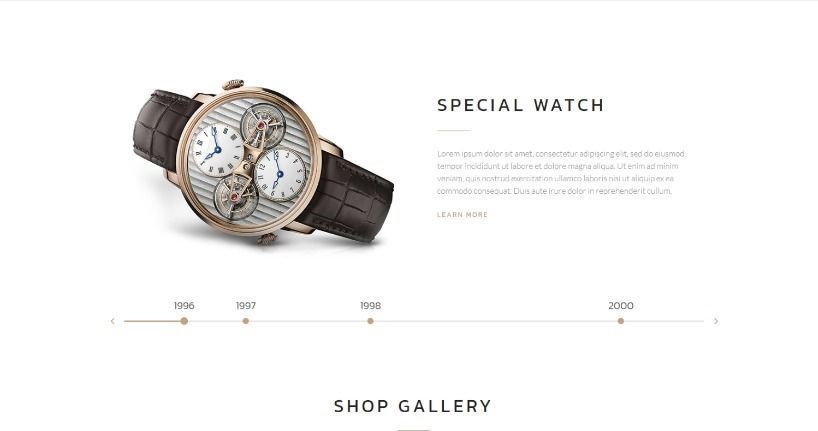
Clean, minimal, premium-aligned design.
Strong visual consistency.
Brand communicates “independent luxury” effectively but lacks deep storytelling (heritage, craftsmanship process, founder narrative).
Brand Positioning & Customer Sentiment
Positioned between fashion watches and entry-level luxury.
No obvious Trustpilot or third-party review footprint surfaced externally.
Lack of visible social proof reduces trust at higher price points.
Financial Analysis
Headline Financials
Annual Revenue: $203,956
Annual Profit: $173,180
Profit Margin: ~85%
Customers: 914
Orders: 338
Email List: 904
Revenue Volatility (Major Flag)
Revenue spikes (e.g., Feb, Sep, Nov 2025) followed by sharp drop-offs.
January 2025 shows $0 revenue, suggesting:
Ads paused
Founder inactivity
Supply constraints
Or operational downtime
High-Level Summary
Total Revenue (Dec 2024 – Nov 2025): $203,956
Total Expenses: $30,776
Total Profit: $173,180
Average Profit Margin: ~84.5%
Overall, the business is highly profitable with exceptionally strong margins, indicating low operating costs relative to revenue.
Marketing (Paid & Organic)
Paid Marketing
Likely Meta and/or influencer-driven.
Performance appears on/off, not evergreen.
No evidence of structured funneling, retargeting depth, or creative iteration cadence.
Organic Marketing
Minimal SEO footprint inferred.
Product-led, not content-led.
No educational, lifestyle, or editorial layer to support organic demand.
Influencer Strategy
Mentioned in listing, but no clear long-term ambassador strategy visible.
Likely transactional rather than brand-compounding.
Scalability Assessment
CAC likely acceptable during spikes but unproven at scale.
Without:
Creative testing system
Email/SMS monetization depth
CRO optimization
scaling paid media would be fragile.
Market & Demand Signals
Category Demand
Watches are an evergreen category, but highly competitive.
Google Trends for watches are stable, not growing.
Demand is style- and brand-driven, not problem-urgent.
Seasonality
Strong Q4 gifting spikes (confirmed by revenue data).
Valentine’s Day, Father’s Day, and holiday cycles matter disproportionately.
Problem Urgency
This is a nice-to-have / status purchase, not a necessity.
Demand drops quickly when marketing pressure is removed.
Cultural Tailwinds
Continued interest in personal style, gifting, and independent brands.
However, smartwatch adoption suppresses mainstream demand.
Product–Market Fit Indicators
Value Proposition (1 sentence)
“A design-led independent watch brand offering premium, made-to-order timepieces without traditional luxury markups.”
Differentiation
Design-first positioning.
No clear IP, technical innovation, or proprietary movement advantage.
Differentiation is aesthetic and brand-based, not structural.
Repeat Usage
Low natural repeat unless an ecosystem is built (straps, servicing, limited drops).
Price–Value Alignment
Pricing feels justified if:
Design quality is genuinely high
Materials and movements meet expectations
Trust signals need strengthening to fully support premium perception.
Brand Strength & Perception
Consistency
Website, messaging, and visuals are aligned.
Brand voice is restrained, premium, but slightly generic.
Emotional Positioning
Aspirational and status-driven.
Could lean more heavily into identity, heritage, or craftsmanship storytelling.
Social Proof
Limited visible UGC.
Minimal third-party validation.
This is a conversion and scaling bottleneck.
Traffic & Distribution Footprint
Primary Channels
Direct website traffic
Paid social
Influencers
Channel Risk
High dependence on paid spikes.
No diversified traffic engine.
Platform Dependency
Shopify + Stripe = low platform risk.
Marketing dependency is the real risk.
International Appeal
Watches have global appeal, but logistics, duties, and returns may complicate expansion.
Competitive Landscape
Highly saturated niche.
Competes against:
Fashion watch brands
Microbrands
Entry-level luxury
Switching costs are low.
No obvious moat beyond brand perception.
Operational Efficiency
Strengths
Low SKU count
DTC model
No physical retail
Direct shipping
Risks
Likely founder-led operations.
Unclear supplier redundancy.
Cash flow sensitive to campaign timing.
Risk & Fragility Signals
Revenue inconsistency
Low repeat purchase frequency
Brand moat still shallow
Easy replication by other microbrands
Unclear reason for sale (must be clarified)
Exit & Optionality Signals
Buyer Types
Brand roll-ups
DTC aggregators (selective)
Strategic fashion/lifestyle buyers
Asset Type
More brand asset than cash-flow asset today.
Multiple Expansion
Possible if:
Revenue stabilized
Repeat purchase layer built
Marketing systemized
“Unfair Advantage” Assessment
Hard to Copy
Existing brand assets
Customer list
Design language
Easy to Copy
Product category
Supply chain
Marketing angles
What Improves with Scale
Margins
Brand trust
Negotiating power
What Gets Worse
CAC
Customer expectations
Inventory risk if expanded poorly
Challenged Identified
Highly inconsistent revenue
Low inherent repeat purchase behavior
Limited social proof and trust signals
Over-reliance on paid or campaign-driven traffic
No visible evergreen acquisition engine
Founder dependency likely high
Premium positioning without strong third-party validation
Recommendation
This turnkey onlin store should be viewed as a selective, brand-led acquisition, not a plug-and-play cash-flow business.
This is a good fit if the buyer:
Has strong paid media and brand-building capabilities
Can systemize launches and campaigns
Intends to build accessories, drops, or community layers
Is comfortable with brand risk and repositioning
This is not ideal if the buyer:
Wants predictable monthly cash flow immediately
Avoids discretionary or fashion-driven categories
Relies on organic demand alone
Before proceeding, we must confirm directly with the seller:
Verified Stripe + Shopify data
Breakdown of costs and margins
CAC by channel
Repeat customer rate
Reason for sale
Founder involvement post-sale
Supplier agreements and IP ownership
Conclusion
Overall, this is a well-presented, premium microbrand with clear upside, but it is still early-stage in terms of operational maturity and marketing systems. The business has strong gross margins, solid AOV, and brand potential, but currently lacks revenue stability, defensibility, and repeat-driven economics.
With the right operator, this can be rebuilt into a scalable premium lifestyle brand. Without that, it risks remaining a campaign-dependent boutique operation.