
Overview
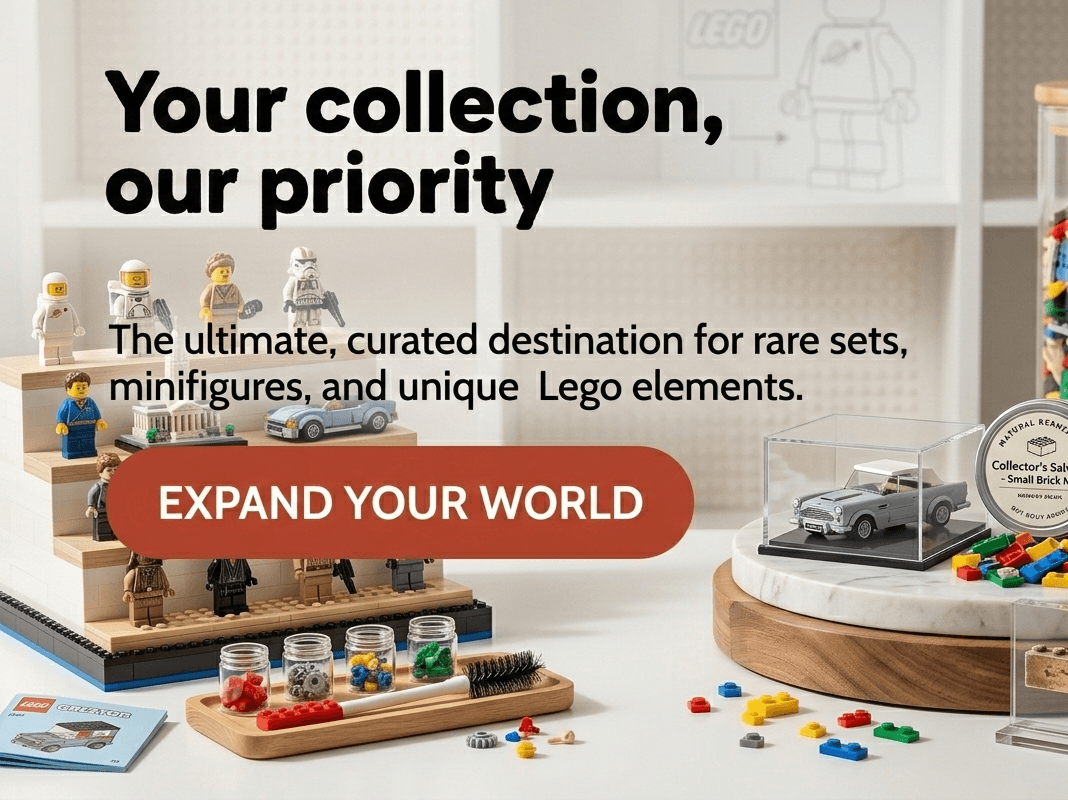
This Shopify store is a 10-year-old LEGO collectible resale business generating approximately $759k annual revenue and $114k annual profit at a 15% net margin, operating primarily across Europe, Canada, and select Asian markets.
The business sells authorized LEGO collectible minifigures, with a heavy B2B skew (≈60%), supported by a strong reputation layer (650+ 5-star Trustpilot reviews), long-standing supplier relationships, and a warehouse operation in Dublin.
At a 2.0x profit multiple and 0.3x revenue multiple, this is priced as a cash-flow asset, not a growth asset—despite clear, visible growth levers that have not been meaningfully exploited.
This is not a flashy brand. It is a durable, operationally real business with defensible demand, moderate complexity, and upside that is execution-driven rather than trend-driven.k
Key Insights
Market & Demand Signals
Search & Demand
LEGO is a globally dominant evergreen brand with multi-decade demand durability.
Collectible LEGO minifigures sit at the intersection of:
Hobbyist collectors
Resellers
Gift buyers
Small retail businesses
Demand is event-driven but recurring, aligned with LEGO’s release cycles (Jan, May, Sept).
Market Nature
Not a fad category.
Demand is cyclical but predictable, tied to product launches.
LEGO collectibles benefit from:
Nostalgia
Scarcity mechanics
Completion psychology (sets, series)
Seasonality
Revenue spikes around release windows.
February softness is normal and non-alarming.
Pre-orders smooth cash flow and reduce inventory risk.
Verdict:
This is a timeless demand category, not trend-dependent, with strong long-term tailwinds.
Product–Market Fit
Value Proposition (Clear in 1 sentence):
Differentiation
Authorization via supplier with direct LEGO relationship
Ability to fulfill bulk B2B orders
Strong logistics + negotiated UPS rates
Pre-order model reduces stock risk
Repeat Purchase Potential
High for:
B2B buyers
Collectors completing series
Lower for casual one-off gift buyers
Price–Value Alignment
Competes on availability + reliability, not branding
Pricing is competitive, not premium
Some margin left on the table due to conservative pricing
Verdict:
Product–market fit is proven and stable, though not emotionally differentiated.
Website Performance & Brand Review
Website Speed & UX
Functional, transactional design
Not best-in-class UX, but trust-oriented
No obvious conversion optimizations (bundles, urgency, personalization)
Product Range & SKUs
High SKU count due to minifigure variations
SKU complexity is manageable but operationally heavy
Opportunity for:
Bundles
“Complete series” packs
B2B pricing tiers
Conversion Rate, AOV, LTV (Inferred)
Conversion rate likely industry average (1.5–2.5%)
AOV likely higher for B2B, lower for B2C
LTV strong for B2B accounts; under-leveraged for B2C
Brand Positioning & Sentiment
Functional, not aspirational
Heavy trust signals:
Trustpilot
Testimonials
Longevity
Brand equity exists, but is under-monetized
Financial Due Diligence
Reported Metrics
Revenue: ~$759,492
Profit: ~$113,924
Margin: 15%
Monthly Profit: ~$9,494
Profit Multiple: 2.0x
Revenue Multiple: 0.3x
Quality of Revenue
Not inflated by ads
Not platform-dependent
Driven by:
Affiliates
Direct demand
Repeat buyers
Blunt Take
Margins are acceptable, not impressive
This is a leverageable P&L
5–10% margin improvement materially changes valuation
Marketing & Distribution
Current State
Affiliate-heavy (≈10 partners at 2%)
Minimal paid media
No meaningful social presence
Email list ~10,000 (under-utilized)
Channel Risk
Low platform dependency
No reliance on Meta, Google, TikTok
Traffic stability > growth velocity
Growth Opportunities
Paid social for launches
Google Shopping for high-intent buyers
Email segmentation (B2B vs B2C)
Retargeting around release cycles
Operations & Efficiency
Fulfillment
In-house warehouse (Dublin)
Optional outsourced fulfillment available
Strong UPS relationship (advantageous)
Inventory
€20k–€40k held
Pre-orders reduce cash-flow strain
MOQ €5k is reasonable
Team
Owner-operator dependent
1 low-cost freelancer (€1,500/year)
Minimal systems depth
Risk:
Knowledge concentration with owner. Transition support is critical.
Customer Data & Relationships
10,000+ email subscribers
B2B relationships are a hidden asset
No CRM sophistication visible
No loyalty or volume-based programs apparent
Opportunity:
Formalize B2B accounts into structured revenue streams.
Legl & Compliance (Surface Level)
Physical goods resale (low regulatory exposure)
Uses Stripe & PayPal
LEGO authorization is indirect (supplier-based)
Must verify:
Supplier contracts
Authorization continuity post-sale
Trademark usage rights
Competitive Landscape
Highly competitive niche
Many small resellers
Low switching costs
Differentiation comes from:
Reliability
Scale
Trust
B2B capability
This business survives because of execution, not moat.
Risk & Fragility Signals (Blunt)
Key Risks
Supplier dependency
Margin sensitivity to shipping costs
Owner-centric operations
Brand is not defensible if poorly managed
Notable Absences
No hero SKU risk
No trend dependency
No regulatory landmines
Exit & Optionality
Best Exit Paths
Roll-up into hobby or collectibles group
Cash-flow portfolio asset
Strategic buyer seeking EU distribution
Multiple Expansion Potential
Strong if margins reach 20–25%
Brand polish + systems = higher exit multiple
“Unfair Advantage” Check
Hardest to Copy
10-year operating history
Supplier relationships
B2B customer base
Trust signals
Improves with Scale
Margins
Shipping leverage
Email monetization
Gets Worse with Scale
SKU complexity
Inventory forecasting
Challenges Identified
Under-optimized margins
Weak brand storytelling
Minimal marketing sophistication
Owner dependency
No publicly verifiable recent financial records
Recommendation
Proceed to next diligence phase if and only if the seller can provide:
Last 12 months P&L by month
Traffic source breakdown
Supplier authorization confirmation
Owner transition plan
Reason for sale
This is a solid acquisition for an operator, not a passive investor.
Conclusion
This Shopify brand is a durable, real, cash-flowing business priced conservatively relative to its age and stability.
It lacks polish, but that is precisely where the upside lives.
The downside is protected by:
Longevity
Brand trust
Evergreen demand
The upside is unlocked by:
Margin expansion
Paid acquisition
B2B systemization