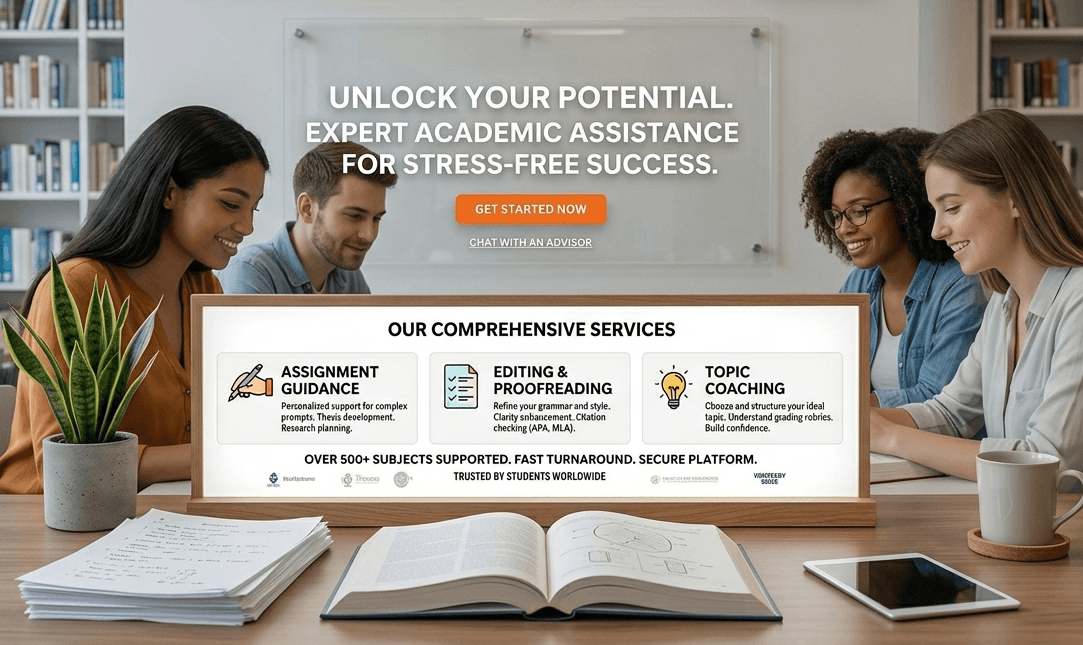

Overview
This is a long-standing, service-based education business offering custom academic assistance, including homework help, exam support, tutoring, editing, proofreading, and full online course completion. The business positions itself as a human-led, non-AI academic service, emphasizing confidentiality, plagiarism-free work, and qualified tutors (MA/PhD level).
From an acquisition perspective, this is not a product brand and not traditional ecommerce. It is best understood as a lead-generation + fulfillment coordination business, monetizing student demand through a freelance tutor network.
At face value, the reported economics are extremely attractive: very high margins, low overhead, and a fast payback period. However, those same attributes also make the business potentially fragile, heavily dependent on traffic quality, compliance risk, and operational execution behind the scenes.
Key Insights
Website Performance & UX (Surface Level)
Website speed & technical structure
WordPress-based site with relatively lightweight pages.
No obvious performance bottlenecks on first load, though the site is clearly not optimized for modern Core Web Vitals.
Infrastructure appears basic (likely shared or low-cost hosting), which aligns with low reported expenses but creates scale risk.
Design & presentation
Functional, conversion-oriented, but dated.
Heavy reliance on text blocks, trust badges, and service listings.
Does not resemble a modern SaaS or premium education brand.
The design communicates utility and urgency, not brand aspiration.
Conversion intent
Clear CTAs (“Order Now,” “Get Help Today,” live chat prompts).
Designed for high-intent traffic, not browsing or discovery.
Likely relies on users already searching for academic help under time pressure.
Product Offering & “SKU” Structure
This is a service catalog, not SKUs in the ecommerce sense.
Core services include:
Homework & assignment writing
Exam and test assistance (including proctored exams)
Full online course completion
Editing & proofreading
Tutoring (various subjects)
Business and corporate reports
Observations:
Broad service coverage increases total addressable demand.
However, breadth also increases quality control and compliance risk.
No visible standardized packages or subscriptions—pricing appears custom and order-based.
Repositioning potential:
Could be narrowed and reframed into:
Legitimate tutoring + academic support
Professional upskilling / continuing education support
Corporate research and report services
Current positioning straddles a gray zone that may limit brand defensibility.
Market & Demand Signals
Search demand
Academic help, homework help, exam assistance are evergreen but seasonal.
Demand spikes around:
Midterms
Finals
New academic semesters
Google Trends historically show consistent demand, but also heavy competition.
Market nature
Large global market.
Highly commoditized.
Price-sensitive.
Low switching costs.
Problem urgency
High urgency: deadlines, exams, grades.
This urgency supports conversion rates but also increases refund, dispute, and reputation risk.
Tailwinds
Online education normalization.
Remote learning.
Increased academic pressure globally.
Headwinds
Growing AI usage (ChatGPT, AI tutors).
Increasing institutional crackdowns on academic integrity services.
Platform and payment processor scrutiny.
Brand Positioning & Customer Sentiment
Value proposition (one sentence):
“Fast, confidential, human-written academic help across any subject, delivered by qualified professionals.”
Brand strength
Longevity (15 years) is the biggest asset.
Trust signals:
Scamadviser safe checks
Claimed Trustpilot / TrustAnalytica presence
“No AI” positioning
Customer sentiment
Reviews emphasize:
Speed
Helpfulness
Relief under deadlines
Less emphasis on brand loyalty or long-term relationship
Emotional positioning
Primarily functional and anxiety-relief driven.
Not aspirational, not community-based.
Financial Analysis
Reported Numbers (Unverified)
Revenue: $140,000
Profit: $130,000
Expenses: ~$10,000 annually
Margin: ~93%
This margin profile is exceptional but abnormal.
Quality of Earnings
Such margins strongly imply:
Minimal paid marketing
Heavy reliance on organic SEO
Owner-managed operations
Freelancer costs possibly excluded, deferred, or variable per order
Key concern:
If tutor payments are transaction-based and passed through customer pricing, reported “profit” may be gross profit, not true net profit.
Sensitivity Risk
Because expenses are so low:
Small increases in cost have an outsized impact.
Adding:
Paid traffic
Management
Compliance tools
Customer support staff
will materially compress margins.
Multiples Commentary
Profit multiple: 1.6x
Revenue multiple: 1.5x
For a 15-year business, these are reasonable and even conservative, suggesting:
Seller understands risk.
Market prices in compliance, sustainability, and owner dependency concerns.
At this multiple, the business is attractive only if income durability is proven.
Marketing & Traffic (Inferred)
Primary channels
Organic search (likely dominant)
Direct traffic
Minimal visible paid advertising
Channel concentration risk
Very high.
Likely Google-dependent.
SEO asset
Aged domain is a strong moat.
However:
Unknown backlink quality
Unknown keyword concentration
Unknown exposure to algorithm updates
Paid marketing
Appears underutilized or intentionally avoided.
Scaling via paid ads would:
Reduce margins
Increase scrutiny from platforms
Operations & Efficiency
Operational model
Order intake via website
Tutor matching (freelance)
Delivery coordination
Customer support
Strengths
Asset-light
Scalable in theory
Flexible labor model
Risks
Quality control at scale
Tutor dependency
Refunds and disputes
24/7 support burden
Implicit owner involvement
Key unknown
How many hours per week the owner actively works.
Legal & Compliance Due Diligence
This is the single biggest risk vector.
Key issues:
Academic integrity policies vary by country and institution.
“Exam taking” and “course completion” services are legally and contractually sensitive.
Payment processors (PayPal, Stripe) can freeze accounts without warning.
Advertising policies are tightening around academic assistance.
Mitigation
Reposition services.
Tighten terms.
Reduce emphasis on exam-taking.
Shift toward tutoring and guidance.
Challenges Identified
Revenue durability is unproven
No P&L.
No traffic analytics.
No order volume data.
Compliance and platform risk
One policy change could materially impact the business.
Owner dependency
Likely higher than disclosed.
Limited brand moat
Easy to replicate operationally.
Differentiation mostly based on age and SEO.
Growth requires margin sacrifice
Paid acquisition and team expansion will compress profits.
Recommendation
Do not proceed to acquisition without deeper diligence.
However, this business does warrant further investigation if:
Traffic is stable and diversified.
Revenue is consistent month-over-month.
Owner involvement is minimal and transferable.
Tutor and fulfillment costs are transparently documented.
Information Required From Seller
Before any offer:
Last 12–24 months monthly revenue & profit
Verified P&L
Traffic breakdown (Google Analytics / GSC)
Customer acquisition sources
Average order value
Repeat customer rate
Tutor payment structure
Owner hours per week
Reason for selling
Any payment processor issues historically
Conclusion
This e-commerce business for sale appears to be a high-cash-flow, low-multiple, aged digital asset with meaningful upside only if its income stream is clean, compliant, and transferable.
At its current valuation, it is not a growth brand—it is a cash-flow play with asymmetric risk.
If validated, it could be a strong acquisition for:
Buyers are comfortable with regulatory gray areas
Operators with SEO expertise
Investors prioritizing payback speed over brand defensibility
If not validated, it is exactly the type of business where reported profits evaporate post-acquisition.