
Overview
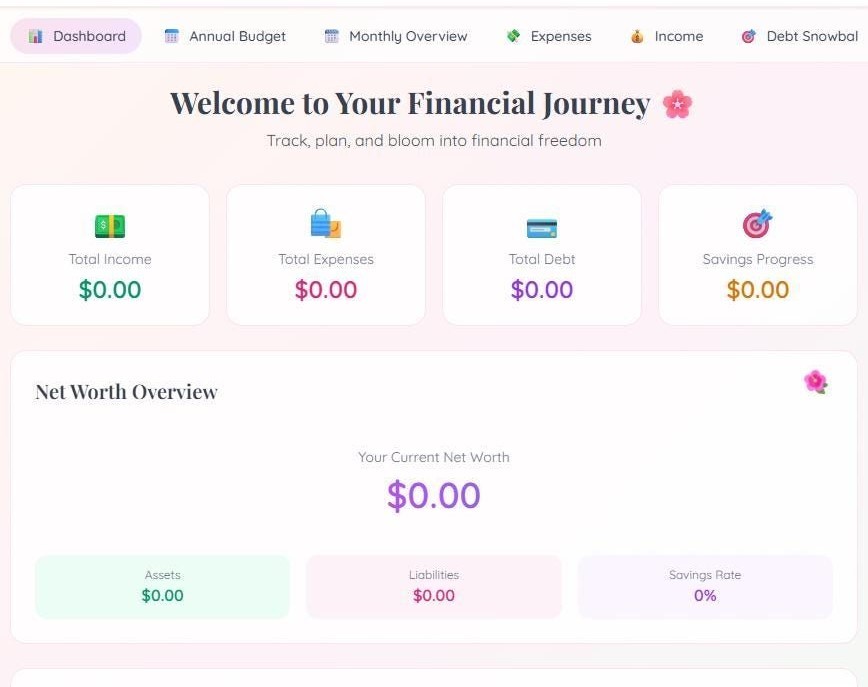
This is a high-margin, automated, digital e-commerce brand focused on financial organization products for couples and families. Its value proposition is clear: simple, visual, downloadable budgeting templates that avoid the complexity and subscription cost of mainstream financial tools. The brand has scaled predominantly through organic social content, securing strong profitability for a business under two years old.
In its short lifespan, the store has generated $307K+ in revenue with $223K+ in net profit per Flippa (supported by monthly financial breakdowns), and averages 77% net profit margins which places it significantly above digital and ecommerce business benchmarks.
This report provides a deep, objective assessment of opportunity, strengths, risks, and strategic recommendations.
Key Insights
Market & Demand Signals
Problem Relevance: Budgeting is a high urgency demand especially in Europe’s cost-conscious markets. Many individuals and families seek tools that are simple, actionable, and not locked behind SaaS pricing.
Search Trends: While specific Google Trends data is not provided, the continued growth in financial wellness and budgeting content across TikTok and Instagram suggests demand is stable or growing, particularly among younger demographics who engage with short-form content.
Seasonality & Evergreen Elements: Financial planning demand spikes during New Year and back-to-school cycles but remains evergreen because budgeting is an ongoing need.
Product Market Fit Indicators
Value Proposition: Strong and easily articulated: "Budget clearly, stay organized, no subscription needed."
Differentiation: Positioned against complex, subscription-based apps; offers simplicity, localization (French), and one-time purchase value.
Repeat Usage: Budgeting tools are often “one-off purchases” but can be repeatedly referenced, indicating decent lifetime value but limited by SKU count.
Price Value Perception: Appears strong given willingness to buy digital tools that avoid ongoing fees. Price anchored as a one-time, affordable financial productivity tool.
Website Performance & Metrics
Website Speed & UX
While a full page speed audit wasn’t directly provided, Shopify and digital product delivery generally imply efficient service. However, performance scoring should be confirmed via PageSpeed & GTmetrix.
Product Variation & SKUs
SKU variety appears narrow likely just a few core budgeting templates. This simplifies fulfillment but constrains repeat revenue opportunities. Expanding SKUs (debt planners, savings trackers, financial checklists, bundles) should be a priority.
AOV & Customer Metrics
AOV: Likely corresponds with one-time digital product pricing probably low to mid-range. Real AOV data required.
CLTV: Digital products typically have low CLTV unless you deploy upsells and complementary templates.
Repeat Customer Rate: Unknown key gap. Digital templates often have lower repeat rates unless a product suite is built.
Website Conversion
Without analytics data, we infer strong conversion historically given profitability—but this should be validated. Benchmarking against digital conversion rates (~2–5%) is needed.
Brand Positioning & Sentiment
Social Strength: Combined 350K followers on Instagram and TikTok provides impressive brand equity.
Trustpilot & Reviews: You flagged Trustpilot presence this needs sentiment analysis. Positive reviews are strong social proof; negative reviews may offer clues on product clarity or UX issues.
Brand Messaging: Focused on functional benefit (clarity, simplicity). Emotional touchpoints (stress relief, financial peace) can be strengthened.
Marketing & Efficiency
The Shopify store is organically driven with no paid ads historically meaning CAC has effectively been near-zero.
Organic content has driven traffic reliably. However, dependence solely on organic channels represents a concentration risk and limits scale until paid testing begins.
Traffic & Acquisition
Traffic sources are primarily social + direct/organic search. There appears to be no presence on marketplaces (Etsy, Gumroad) or paid channels historically representing a major upside.
Competitive Environment
High Competition: Personal finance tools are abundant; however, localized downloadable templates with content storytelling is a niche with less direct replication.
Differentiation Opportunity: Brand voice, community, and localization give the online store an edge over generic, global budgeting tools.
Financial Evaluation
Revenue & Profit Performance
Total FY: $223K in revenue, $171K profit (77% margin).
Monthly Average: $18.5K revenue; $14.3K profit.
Consistent Profits: Every month profitable no loss months.
Scaling Pattern: Q2–Q4 saw strong growth, indicating product demand and content payoffs.
Valuation & Multiples
Profit Multiple: 0.8× – below market standards (~1.5×–2.5× for comparable businesses).
Revenue Multiple: 0.6× – conservative given margin profile.
Age Factor: Business age (1 year) is the primary reason for the discount.
Unit Economics
Extremely high margins due to zero COGS for digital goods and minimal support costs.
Operational Efficiency & Business Model
Ease of Operation: ~1 hour/day, minimal support.
Fulfillment: Fully automated; no logistics burden.
Dependence on Founder: Content creation managed by external creators, but strategy & performance oversight lies with the founder.
Scalability: Moderate automation is strong but content cadence & channel expansion need systems.
Customer Data & Relationship Signals
114,705 Email Subscribers: A highly valuable asset. Email monetization has likely been under-optimized.
Customer Engagement: Social follower counts indicate community potential; reviewing these audiences for active engagement metrics is crucial.
Retention & Repeat Sales: Unknown this must be probed.
Legal & Compliance Due Diligence
Data Protection: GDPR and EU consumer laws apply strongly given EU focus. Verify privacy policy, cookie consent, and data handling.
Intellectual Property: Original content and templates should have ownership clarified.
Terms & Refund Policy: Confirm robust terms to protect against refund abuse and outline digital delivery expectations.
Platform Compliance: Shopify digital delivery must comply with French tax/VAT regulations. Confirm VAT treatment on digital goods.
Challenges Identified
Traffic Concentration Risk
Heavy reliance on organic social traffic; paid channels untested.
SKU Narrowness
Limited product catalog reduces CLTV and repeat purchase potential.
Metric Gaps
No reliable data on AOV, conversion, repeat rate, CLTV, bounce rates, mobile performance.
Valuation Discount
Conservative multiples reflect perceived execution risk due to short history.
Monetization Underdevelopment
Email list and subscriber monetization appear under-leveraged.
Market penetration limited to French-speaking users.
Recommendations
Due Diligence Questions for Seller
Confirm conversion rates, AOV, repeat customer rate, CLTV.
Clarify email monetization strategy and segmentation.
Ask why no paid acquisition has been tested.
Confirm seasonality patterns and traffic stability.
Understand support metrics and refund rates.
Request full GA4 and Shopify analytics access for deeper traffic diagnostics.
Growth Acceleration Strategies
Test Paid Acquisition
Launch paid tests on Meta, TikTok, Pinterest to assess CAC vs AOV/CLTV.
Expand SKU Suite
Launch complementary templates and bundles.
Email & SMS Monetization
Build automated flows, segmented offers.
Marketplace Listing
Distributed through Etsy, Gumroad to access new buyer pools.
Localization
Expand into additional languages (ES, IT, PT) leveraging existing content assets.
Community & Influencer Partnerships
Tighter integration with creators and affiliates to expand reach.
Conclusion
This e-commerce business presents as a highly efficient, profitable, and automated digital brand with strong community reach and solid product-market fit. It’s rare to find a brand with no loss months, 77%+ margins, and a large subscriber base so early in its life cycle.
Primary Strengths
Strong financial performance
Automated and lightweight operations
Large social and email audience
Clear problem solving
Primary Risks
Traffic source concentration
Limited product expansion and repeat revenue opportunities
Dependence on organic growth
Buyer Opportunity
For an operator who:
Can refine analytics
Expands traffic sources
Diversifies offerings
Monetizes the email database
…this acquisition could unlock multiple expansion, improved retention, and meaningful strategic growth.
Before acquisition, it’s critical to gather missing KPI data (conversion, AOV, repeat rate), validate forecast assumptions, and probe why paid channels were never leveraged.
Next Steps
We recommend scheduling a detailed call with the seller to address open metrics, discuss monetization history, and validate assumptions about the business’s readiness for scaling beyond organic channels.