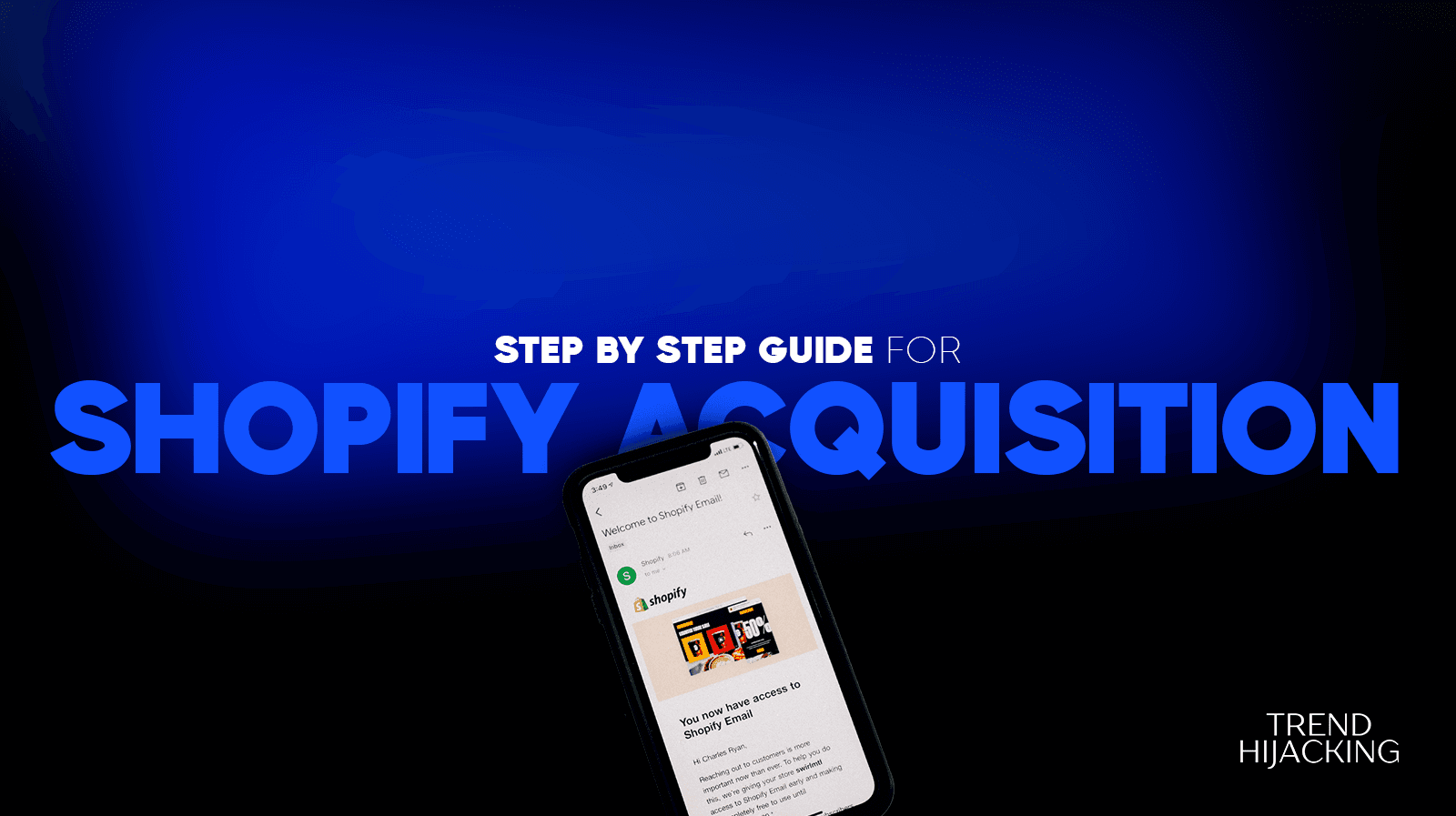
Buying a Shopify store is no longer a “side hustle experiment”; it has evolved into a serious acquisition strategy for investors looking to enter ecommerce with proven momentum instead of starting from zero. In 2026, Shopify powers millions of active stores worldwide, forming one of the largest ecommerce ecosystems globally, while worldwide online retail continues its rapid expansion toward trillions in annual sales, making well-positioned Shopify businesses highly attractive digital assets.
Instead of building from scratch, acquiring an existing Shopify store allows investors to step directly into a functioning business with real revenue, traffic, customer data, and validated product-market fit. This means you skip the risky early stage of testing products, building funnels, and spending heavily on marketing just to reach break-even.
This guide walks you through a professional, step-by-step acquisition framework from sourcing and valuation to due diligence, negotiation, and post-acquisition scaling so you can make data-driven investment decisions. And throughout this process, platforms like Trend Hijacking help investors identify and acquire profitable ecommerce stores with less guesswork, stronger deal flow, and a focus on real performance metrics rather than hype.
Why Investors Should Buy Shopify Stores (Not Build Them)
Speed, Scale, and Proven Cash Flow
For investors, time is an opportunity cost. Launching a new Shopify store from zero means enduring months of testing:
Product selection and pricing.
Supplier reliability and fulfillment.
Ad creatives, audiences, and traffic channels.
Most new stores never reach profitability, but buying an existing store changes the equation entirely. Investors can:
Acquire stores already generating $5,000–$15,000/month in stable revenue.
Take over businesses with built‑in traffic, email lists, and repeat buyers, cutting time‑to‑profitability from years to months.
Reducing Risk With Hard Data
Modern Shopify acquisitions are no longer speculative. Savvy investors now demand:
At least 3–6+ months of Shopify and payment‑processor data (Stripe, PayPal, etc.).
Direct access to ad‑account analytics (Meta, Google, TikTok) to validate ROAS and net profit.
Trend Hijacking helps investors by pre‑screening stores for:
Clean, realistic revenue history and growth trends.
Strong traffic sources (SEO, repeat buyers, multiple channels).
Reliable suppliers and strong product‑market fit.
This approach turns ecommerce acquisition into a repeatable, data‑backed investment strategy, not a one‑off gamble.

Trend Hijacking helps you Reclaim Control over your Financial Destiny
Most successful professionals and investors like you never actually own real assets that cashflow at the pace you want.
You earn well.
You invest passively.
But you never truly control something scalable.
We've created a solution: a FREE guide that shows you exactly how investors are using acquisitions to outperform stocks and real estate, all without needing any experience.
Step 1: Define Your Investment Criteria
Size, Budget, and Risk Profile
Before you even browse a single listing, define your investment rules:
Deal size:
Beginner investors often target stores doing $3,000–$8,000/month in stable, documented revenue.
More experienced investors aim for $10,000–$30,000/month sites with diverse traffic and higher net margins.
Budget and multiples:
Many Shopify acquisitions trade between 2.5–5x monthly net profit for smaller or newer businesses.
Established, brand‑heavy stores can reach 5–10x monthly net profit, depending on SEO strength and repeat‑purchase behavior.
Choosing Model, Niche, and Traffic Profile
Next, decide what kind of e-commerce business fits your skill set and risk tolerance:
Dropshipping: Lower upfront cost but relies heavily on ad‑management skills and stable suppliers.
Private‑label or wholesale: Higher margins and defensibility, but more complex logistics.
Trend Hijacking helps investors filter by:
Business model (dropshipping vs private‑label).
Niche (fitness, pets, home & garden, beauty, etc.).
Traffic mix (SEO‑led, paid‑ads‑heavy, or blended).
Once you lock in these criteria, you move from “shopping randomly” to investing systematically.
Step 2: Sourcing Acquisition‑Ready Shopify Businesses
Where Investors Should Look
There are several places to find Shopify stores, but they differ sharply in quality and transparency:
General marketplaces and brokers (e.g., Quiet Light, Flippa‑style sites) list many stores, but quality varies widely, and vetting is left to the buyer almost entirely.
Private networks and communities can offer better deals but require strong due diligence muscles.
Curated acquisition platforms like Trend Hijacking specialize in investor‑ready ecommerce businesses, with pre‑validated data and structured listing formats.
What to Look For as an Investor
When evaluating a Shopify business, focus on:
Historical performance: At least 3–6 months of Shopify and payment‑processor exports, not just “lifetime revenue” claims.
Traffic composition:
Stores with substantial organic (SEO) traffic are more defensible and less dependent on ad spend.
Heavily ad‑reliant stores are viable only if you already know how to run profitable Meta/Google/TikTok campaigns.
Niche familiarity: Choose verticals you understand (pets, home, fitness, beauty, baby, etc.), so you can quickly improve product selection, messaging, and positioning.
Trend Hijacking streamlines this by providing standardized financial summaries and traffic‑mix breakdowns, so investors can compare multiple stores side‑by‑side and quantify risk before moving forward.
Step 3: Conducting Rigorous Due Diligence
Financial Health and Profitability
As an investor, your priority is cash‑flow quality, not vanity metrics.
Request and verify:
Shopify admin exports (orders, revenue, AOV, refunds, cancellations).
Payment‑processor statements (Stripe, PayPal, etc.) to confirm gross revenue and fees.
Ad‑account data showing spend, ROAS, and net profit after ad costs.
Key checks:
Consistent monthly revenue without wild spikes.
Healthy net margin (often 10–25%+ for optimized stores, depending on niche and model).
Traffic, SEO, and Traffic Quality
Use tools like Ahrefs, SEMrush, or similar to:
Measure organic traffic volume and domain authority over time.
Identify ranking keywords and content gaps.
Audit for technical SEO issues (slow pages, broken links, crawl errors, poor mobile UX).
Stores with strong SEO inherit a long‑term traffic moat that doesn’t vanish if you pause ads, making them more attractive to long-term investors.
Product, Supply Chain, and Operational Risk
Dig deeper into:
Product differentiation: Are items generic “me‑too” SKUs or do they have a clear USP?
Supplier reliability: Dropshipping via reputable suppliers or apps, or private‑label relationships, reduces fulfillment risk.
Customer reviews and trust signals: Authentic reviews with photos and detailed feedback indicate a healthier operation.
Trend Hijacking focuses on stores with vetted suppliers and strong product‑market fit, so investors are buying businesses with a solid operational foundation, not just flashy listings.
Step 4: Structuring and Negotiating the Deal
Valuation Frameworks for Investors
Most Shopify businesses trade within these ranges:
Smaller or newer stores: 2.5–5x monthly net profit.
Established brands with strong traffic and repeat buyers: 5–10x monthly net profit.
Some investors also use:
Revenue multiples (1–2x annual revenue) for lifestyle or brand‑heavy stores.
Traffic‑based multiples for SEO‑led or content‑heavy sites.
Payment Terms, Escrow, and Legal
Common structures include:
Lump‑sum cash payment.
Earn‑outs or seller financing, where part of the price is paid after certain performance milestones.
Regardless of the structure, always use a reputable escrow service to:
Hold funds until the seller transfers Shopify store access, domain, email lists, social accounts, and supplier relationships.
Protect against incomplete or fraudulent transfers.
Trend Hijacking helps investors benchmark valuations against comparable stores and can assist in drafting or reviewing a Letter of Intent (LOI) that clearly defines price, terms, and exit conditions
Trend Hijacking helps you Reclaim Control over your Financial Destiny
Most successful professionals and investors like you never actually own real assets that cashflow at the pace you want.
You earn well.
You invest passively.
But you never truly control something scalable.
We've created a solution: a FREE guide that shows you exactly how investors are using acquisitions to outperform stocks and real estate, all without needing any experience.
Step 5: Executing the Transfer and Onboarding
Asset Transfer Checklist
Ensure the seller delivers:
Shopify admin access for owner and staff accounts, including theme, apps, and settings.
Domain ownership transferred to your registrar or confirmed unlocked.
Email and CRM data (Klaviyo, Mailchimp, etc.).
Social media accounts and any committed ad‑account access.
Supplier agreements and contacts, especially for private‑label or wholesale.
Verify 2FA, login credentials, and administrative settings before final payment clears.
Post‑Purchase Audit Period
Treat the first 1–2 weeks as a mini due diligence extension:
Re‑run key reports in Shopify, payment processors, and ad platforms.
Watch for sudden refunds, chargebacks, or traffic drops.
Investors who buy through Trend Hijacking receive structured onboarding support to access and verify all data, minimizing the risk of post‑acquisition surprises.
Step 6: Optimizing the Shopify Business After Acquisition
Establish a Performance Baseline
Before optimizing, document:
Core metrics (revenue, orders, AOV, conversion rate, ROAS, return rate).
Top‑performing products, pages, and campaigns.
This baseline lets you quantify the impact of every change, turning optimization into a measurable investment.
Product, Offer, and Pricing Strategy
Identify profitable products vs. “revenue traps” (high volume, low margin).
Test bundles, upsells, and cross‑sells to increase average order value.
Trend Hijacking’s stores often start with data‑backed product selections, giving investors a stronger foundation to optimize rather than reverse‑engineer.
Conversion Rate and User Experience
Focus on:
Page speed and mobile UX (optimizing images, reducing third‑party scripts, improving Core Web Vitals).
Checkout flow (fewer steps, fewer distractions, clear trust badges).
Even small improvements here can meaningfully boost revenue without new traffic.
SEO and Content Leverage
If the store already has SEO traffic, double down:
Fix technical SEO issues (canonical tags, sitemaps, crawl errors).
Optimize product‑page titles, meta descriptions, and headings with target keywords.
Create blog content and guides around your niche to capture long‑tail search intent.
SEO‑strong stores are ideal for investors who want long‑term, defensible assets rather than ad‑dependent “rent‑to‑own” businesses.
Diversify Traffic Sources
To reduce risk, expand beyond any single channel:
Scale paid‑ads campaigns with new creatives, audiences, and platforms.
Grow email and SMS marketing to boost repeat purchases.
Build organic social presence around products and lifestyle.
Diversified traffic makes the business more predictable and easier to scale over time.
Increase Customer Lifetime Value
Repeat buyers are far more profitable than one‑time purchasers.
Implement automated email and SMS flows (abandoned cart, post‑purchase, win‑back).
Launch loyalty and rewards programs.
Ask for feedback and reviews to refine offers and trust signals.
Step 7: Scaling Your Shopify Portfolio Long‑Term
Strategic Reinvestment and Portfolio Growth
Once a store is stable, investors can:
Scale ad spend on top‑performing products and countries.
Expand product lines or variants based on existing demand data.
Invest in brand, content, and SEO/link‑building to build deeper defensibility.
Many investors treat individual Shopify stores as portfolio assets, acquiring multiple niche‑focused businesses over time instead of relying on one brand.
Systems, Automation, and Teams
To scale efficiently:
Automate workflows (inventory alerts, customer service scripts, reporting).
Outsource repetitive tasks (customer support, basic ad management, content creation).
Build a lean team or partner network aligned with your growth goals
Why Trend Hijacking Exists: To Help Investors Buy Ecommerce Businesses
The entire purpose of Trend Hijacking is to help investors acquire ecommerce businesses—not to sell generic “stores,” but real, documented, data‑backed businesses with clear revenue, traffic, and supply‑chain foundations.
Trend Hijacking:
Curates ready‑made Shopify and dropshipping businesses that are built to be acquired, not just “launched.”
Pre‑validates SEO health, supplier quality, traffic sources, and financial data, so investors don’t waste time on fluff listings.
Matches businesses to investors’ specific criteria (budget, revenue target, niche, model), then provides transparent reporting and onboarding support.
If you’re an investor who wants to buy, not build, ecommerce businesses in 2026, the next step is to:
Define your financial parameters and risk profile.
Submit your criteria to Trend Hijacking.
Let our team shortlist Shopify acquisition opportunities that match your strategy, so you can focus on evaluating, optimizing, and scaling, not hunting for deals in the noise.
Conclusion
Buying a Shopify store in 2026 is a strategic, data-driven investment, not a game of chance. The real advantage comes from acquiring existing e-commerce businesses with proven revenue, traffic, and product-market fit instead of building from scratch. Platforms like Trend Hijacking make this process easier by helping investors find, evaluate, and acquire profitable Shopify stores with strong fundamentals. With the right due diligence and valuation approach, each acquisition becomes a scalable asset in your portfolio.
If you’re ready to enter e-commerce through acquisitions, define your criteria and let Trend Hijacking connect you with the right opportunities.




A Done-For-You E-commerce Business
Discover how we Build, Launch, and Scale a 6-figure/month Business for You
Learn more

The 6-Step Blueprint to E-Commerce Acquisition
See how we Acquire, Convert, and Scale with Real Case Studies to Prove It.
You May Also Like


Join investors, Entreprenuers and Professionals like you building wealth through Ecommerce acquisitions, with the experts managing every step.
Start with our 14-day Free Business Acquisition Launch, where we show you exactly how we operate and give you a curated list of businesses tailored to your budget, goals, and lifestyle.