So you want to buy a SaaS business. That sounds like a great move on paper: Think of recurring revenue, low overhead, and no physical inventory to manage. And yes, there are investors out there making it work.
But before you wire a single dollar, you need to understand what you are getting into when you decide to buy a SaaS business. Because the reality on the ground looks quite different from the pitch decks and broker listings.
This article walks you through the honest picture that reveals the good parts, the parts people gloss over, and what other options experienced investors are quietly choosing instead.
Why SaaS Businesses Look So Attractive To Investors/Entreprenerus?
Let’s be honest… Monthly Recurring Revenue (MRR) is one of the cleanest income models in the digital space.
Customers pay every month. Churn is measurable. The product delivers value automatically without the owner needing to fulfill orders or manage a warehouse. For a passive investor, it checks a lot of boxes.
And the multiples reflect this. SaaS businesses typically sell for 3x to 5x annual profit, sometimes higher. That premium exists because buyers see predictability in the numbers.
But predictability on paper and predictability in practice are two very different things.

Trend Hijacking helps you Reclaim Control over your Financial Destiny
Most successful professionals and investors like you never actually own real assets that cashflow at the pace you want.
You earn well.
You invest passively.
But you never truly control something scalable.
We've created a solution: a FREE guide that shows you exactly how investors are using acquisitions to outperform stocks and real estate, all without needing any experience.
The Pros of Buying A SaaS Business
To be fair, there are real reasons why savvy investors target SaaS businesses. The model has genuine strengths worth understanding before you decide.
Recurring Revenue Is Highly Predictable
Monthly recurring revenue (MRR) gives you a clear picture of what the business will earn next month. Unlike ecommerce, where sales fluctuate with seasons and ad spend, SaaS revenue is largely locked in by subscription contracts. That predictability makes financial planning much easier.
High Margins Once the Product Is Built
SaaS businesses can run at 70% to 80% gross margins once development costs are behind them. There is no cost of goods sold eating into every sale. Once a customer is paying, delivering the product to them costs almost nothing.
This is why SaaS businesses sell at premium multiples. The margin profile is genuinely strong for the right buyer.
Low Operational Overhead
There is no inventory to manage, no warehouse, no shipping logistics. A well-built SaaS product runs on infrastructure that costs a fraction of what physical product fulfilment requires. For a buyer who inherits a stable product with a capable team, day-to-day operations can be lean.
Customers Tend to Stick Around
A customer who has integrated a SaaS tool into their workflow does not leave easily. Switching costs are real. Migrating data, retraining staff, and adapting processes to a new tool is painful enough that many customers will renew simply out of inertia.
This stickiness translates into longer customer lifetimes and higher lifetime value per customer compared to most ecommerce businesses.
Scalable Without Proportional Cost Increases
Adding 100 new customers to a SaaS product does not require hiring 100 more people. The product scales digitally. Once the infrastructure can handle the load, growth comes at a much lower marginal cost than most other business models.
The Real Cons of Buying a SaaS Business
Before you move forward with a purchase, here are the risks that do not always make it into the listing description.
1. You Are Buying a Tech Product, Not Just a Business
This is the part that catches most buyers off guard.
When you acquire a SaaS business, you are inheriting a codebase. If the tech stack is outdated, if there are bugs in the backend, if the product needs new features to stay competitive, that work falls on you. And good developers are not cheap.
Many SaaS buyers assume they can run the product passively. Very few do. Most end up needing to hire a CTO, bring on a development team, or learn enough to manage technical contractors. That takes time, money, and technical judgment most non-technical investors simply do not have.
2. Churn Can Destroy Your Investment Quickly
Customer churn is the silent killer in SaaS. A business showing 3% monthly churn might look fine at first glance. But annualized, that means you are losing over 30% of your customer base every year.
When you buy the business, the previous owner's relationship with customers transfers only partially. Customers have zero loyalty to you as a new owner. If the product stagnates or support quality drops even slightly during the transition, churn accelerates fast.
3. You Are Paying Premium Prices for Future Risk
SaaS businesses command high multiples because they are valued on recurring revenue potential. But you are essentially betting on a customer base staying engaged, competition not eating into market share, and the product remaining relevant.
A SaaS product that dominates its niche today can be made obsolete in 18 months by a better-funded competitor or a shift in the tools people use. You pay a premium today for income that is not guaranteed tomorrow.
4. Customer Concentration Is a Huge Red Flag
Many smaller SaaS businesses get acquired and the buyer later discovers that two or three clients account for 50% or more of MRR. Lose one of them and your revenue drops off a cliff.
This kind of concentration risk is often buried in the financials and overlooked by buyers who are too excited about the top-line numbers.
5. Support and Product Development Never Stop
Unlike a content site or an established ecommerce brand, a SaaS product demands constant attention. Users find bugs. They want new features. Competitors ship updates. The market moves.
If you step back from development for even a few months, the product starts to fall behind. This is not a passive asset. It is a technology business that requires ongoing investment just to stay in place.
6. The Acquisition Due Diligence Is Extremely Complex
Buying a SaaS business requires you to assess not just revenue and traffic, but also code quality, infrastructure costs, security vulnerabilities, contractual obligations with enterprise clients, and data compliance requirements.
Most buyers are not equipped to do this properly without spending serious money on technical audits. And even then, surprises emerge after the deal closes.
A Better Investment Option: Buy An Established Ecommerce Business
Here is what a lot of investors are doing instead. And once you look at the numbers, it makes a lot of sense.
An established ecommerce business gives you many of the same financial benefits as SaaS, with far less technical complexity and a much more transparent due diligence process.
Why Owning an Established Ecommerce Brand Beats Buying a SaaS Business:
#1. Real, Tangible Assets
When you buy an established ecommerce brand, you are acquiring something you can see and touch. There is inventory with real market value. There are supplier relationships, a customer list, brand equity, and an existing sales channel that is already generating revenue.
If things go sideways, your assets do not evaporate the way code and subscriptions can.
Proven Demand With Existing Customers
An established ecommerce business has already done the hardest part: finding product-market fit and building a customer base. There are reviews, repeat buyers, and organic traffic already coming in.
You are not inheriting a technology risk. You are stepping into a working machine that already knows how to sell.
Easier to Operate and Scale
Ecommerce operations are much more straightforward to manage than SaaS products. You do not need a development team to keep the business running. Most established brands have supplier systems, fulfilment processes, and marketing channels already set up.
Scaling is also more accessible. Increase ad spend, add new products, open new sales channels. The levers are clear and the results are measurable.
Lower Technical Barrier to Entry
You do not need to understand code to run an ecommerce brand. You need to understand customers, products, and marketing. These are skills that are far more common among business buyers, and far easier to bring in if you need help.
Stronger Cash Flow Stability
Physical product sales tend to be more predictable and diversified than SaaS subscriptions. A customer buys a product, returns for more, and tells their friends. That word-of-mouth and repeat purchase dynamic builds a business that is not entirely dependent on monthly renewal decisions.
Faster Path to Profitable Operations
With SaaS, you often need to invest in product development before you see margin improvements. With an established ecommerce business, the path to profitability is simpler. Tighten up the supply chain, improve the conversion rate, optimize ad spend. The levers are operational, not technical.
Exit Multiples Are Attractive and Growing
Established ecommerce brands with consistent revenue are selling at strong multiples right now, and the market for acquiring them is only growing. Platforms like Flippa, Empire Flippers, and private brokers are seeing more capital chasing quality ecommerce deals than there are quality businesses available.
That supply-demand dynamic is good news for buyers who get in and build equity before exiting.
Trend Hijacking helps you Reclaim Control over your Financial Destiny
Most successful professionals and investors like you never actually own real assets that cashflow at the pace you want.
You earn well.
You invest passively.
But you never truly control something scalable.
We've created a solution: a FREE guide that shows you exactly how investors are using acquisitions to outperform stocks and real estate, all without needing any experience.
The Cons of Buying an Ecommerce Business
No investment is perfect, and e-commerce is no exception.
Inventory management adds a layer of complexity that a SaaS business does not have. You need to manage stock levels, supplier lead times, and storage costs. Getting this wrong ties up cash and creates fulfilment problems.
Margins can also be thinner than SaaS, particularly in competitive product categories where paid ads are required to drive traffic. Running a profitable ecommerce business requires discipline around unit economics.
These are real challenges, but they are manageable with the right guidance and a solid acquisition process.
Buy Saas Business Frequently Asked Questions
Here are some common questions investors ask about buying SaaS businesses:
What is the average multiple for buying a SaaS business?
Most SaaS businesses sell for 3x to 5x annual profit, though high-growth businesses with strong MRR can command multiples above 6x. Pricing depends heavily on churn rate, revenue quality, and how dependent the product is on the current owner's technical involvement.
Is buying a SaaS business a good passive income investment?
In most cases, no. Running a SaaS product requires ongoing technical maintenance, feature development, and customer support. Unless you have a strong team in place at acquisition, expect it to require active involvement, especially during the first 12 to 18 months after purchase.
What should I check before buying a SaaS business?
Focus on monthly and annual churn, customer concentration, code quality, infrastructure costs, support ticket volume, and the owner's actual time commitment. Many SaaS businesses are priced as passive assets but require significant hands-on work to maintain.
How does buying an ecommerce business compare to buying a SaaS business?
Ecommerce businesses are generally easier to operate, have lower technical barriers, and offer more tangible assets. SaaS can deliver higher margins but comes with technology risk and ongoing development needs. For most buyers without a technical background, established ecommerce is the more accessible path.
Where can I find established ecommerce businesses for sale?
Established businesses are listed on platforms like Flippa, Empire Flippers, and through private acquisition specialists. Working with a specialist who sources off-market or below-market deals gives you an edge over buyers competing in public marketplaces.
So, Should You Buy SaaS Business?
If you are thinking seriously about buying a SaaS business, go in with your eyes open. The upside is real, but so are the risks. Technical debt, churn, premium pricing for uncertain future income, and the constant demand of product development make it a challenging path for most buyers.
For investors who want cash flow, asset ownership, and a cleaner path to growth, established ecommerce businesses consistently deliver. They are transparent, operational, and far more forgiving for first-time acquirers.
The key is finding the right deal at the right price.
That is exactly what we help with. At Trend Hijacking, we specialize in helping investors acquire ecommerce businesses for sale that are already generating revenue, often below market value. If you are ready to move from browsing to owning, this is a good place to start.



A Done-For-You E-commerce Business
Discover how we Build, Launch, and Scale a 6-figure/month Business for You
Learn more
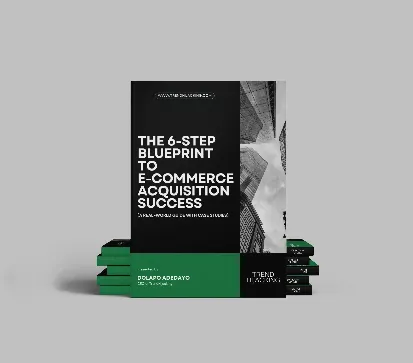
The 6-Step Blueprint to E-Commerce Acquisition
See how we Acquire, Convert, and Scale with Real Case Studies to Prove It.
You May Also Like


Join investors, Entreprenuers and Professionals like you building wealth through Ecommerce acquisitions, with the experts managing every step.
Start with our 14-day Free Business Acquisition Launch, where we show you exactly how we operate and give you a curated list of businesses tailored to your budget, goals, and lifestyle.