
Executive Snapshot
Business model: DTC (Shopify) + Marketplace (Etsy hybrid)
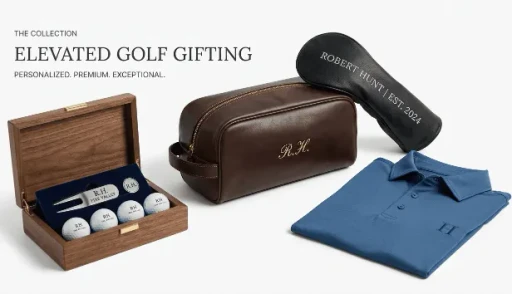
Primary product category: Personalized premium golf accessories & gifting
Geography focus: Australia (core), USA (organic demand via Etsy)
Year founded: 2020
Initial investment thesis:
A profitable, high-margin niche gifting brand in an evergreen sport category with strong conversion rates (5–7%) and clear upside via international expansion, B2B gifting, and underutilized marketing channels.
Initial concern flags:
Heavy seasonality (gift-driven demand) and relatively low repeat purchase rate; growth currently reliant on limited paid channels and Australia-centric demand.
Market & Demand Signals
The brand operates within the global golf equipment and accessories market, a multi-billion-dollar category with steady long-term growth driven by increasing participation, lifestyle positioning, and corporate networking culture. Golf remains particularly strong in developed markets such as the US, UK, and Australia, with a stable and affluent customer base.
Within this broader category, personalized gifting represents a fast-growing sub-segment. Demand is fueled by emotional purchasing occasions (Father’s Day, Christmas, birthdays), making it both seasonal and recurring annually. Search trends for terms like “personalized golf gifts” and “golf accessories gifts for men” show consistent spikes during key retail periods, indicating predictable seasonality rather than volatility.
Keyword intent is high, buyers are typically already in purchase mode, which explains the brand’s strong conversion rate. However, demand is not purely evergreen; it is cyclical with strong peaks.
Culturally, golf benefits from continued relevance in business networking and leisure, while gifting personalization aligns with broader consumer trends toward customization and premium experiences. There are minimal regulatory barriers impacting demand.
Overall, this is a stable but moderately seasonal market, not trend-driven but not fully evergreen either.
→ Market attractiveness score: Strong
→ Demand durability assessment: Moderately durable (seasonal but recurring annually)
Product–Market Fit Indicators
The e-commerce business demonstrates strong product–market fit within a clearly defined niche: premium, personalized golf gifting.
The value proposition is simple and compelling: high-quality, personalized golf accessories designed specifically for gifting occasions. This clarity supports high conversion and low friction in customer decision-making.
The core customer persona includes:
Gift buyers (partners, family members, colleagues)
Golf enthusiasts purchasing premium accessories for personal use
Corporate buyers seeking branded or bulk gifting options
Differentiation is driven by:
Personalization (name/initial customization)
Premium presentation and perceived quality
Focused niche positioning (golf + gifting intersection)
In-house product design
However, commoditization risk exists. Golf accessories themselves are not inherently unique, and personalization can be replicated by competitors. The defensibility lies more in brand positioning and execution than IP.
Customer adoption is extremely easy, no education required, impulse-friendly, and emotionally driven. This supports high conversion rates.
Repeat purchase potential is moderate:
Gifting buyers are often one-off
Repeat purchases come from self-use or additional gifting occasions
No subscription or refill mechanism exists
Pricing sits in the premium range but is justified through:
Personalization
Gift-ready packaging
Perceived quality
→ PMF confidence level: High
→ Differentiation strength: Moderate (brand-led, not structurally protected)
Website & Conversion Infrastructure
The online store’s conversion infrastructure is a clear strength of the business.
The Shopify store demonstrates strong UX fundamentals, reflected in an above-average conversion rate of 5–7%. This indicates effective product pages, clear value communication, and low friction in the buying journey. The site likely performs well on mobile, given modern Shopify optimization and strong consumer metrics.
Visual branding is consistent and premium, aligning with its gifting positioning. Product imagery and presentation reinforce trust and justify pricing.
The catalog is intentionally focused, avoiding overwhelm while enabling cross-sell opportunities across complementary accessories (gloves, bags, holders). AOV (~$60 AUD) is stable but has room for expansion via bundling.
Upsell opportunities likely exist but are underdeveloped:
Bundle kits (gift sets)
Add-on personalization upgrades
Seasonal collections
Trust signals are strong:
Hundreds of 5-star reviews onsite
1,000+ Etsy reviews
High fulfillment reliability
No major technical issues are apparent, and checkout friction appears minimal.
→ Conversion infrastructure rating: Strong
→ Quick-win optimization opportunities:
Introduce structured bundles to increase AOV
Add urgency triggers (delivery deadlines for gifting occasions)
Expand UGC and lifestyle content
Optimize email capture and abandoned cart flows
Enhance product page storytelling (gift scenarios, use cases)
Traffic & Distribution Footprint
Traffic is modest (~25K monthly page views) but highly efficient, as evidenced by strong conversion rates.
Primary channels:
Paid ads (Australia-focused)
Organic Etsy traffic (US-heavy)
Direct/brand traffic and referrals
The business shows moderate channel concentration risk, with reliance on paid acquisition in one primary geography (Australia). However, Etsy provides a secondary demand stream, partially diversifying risk.
Platform dependency exists:
Shopify (sales infrastructure)
Etsy (international exposure)
Likely Meta ads (primary acquisition engine)
SEO presence appears underdeveloped, representing a missed opportunity. International reach is currently passive rather than actively scaled.
Marketplace presence (Etsy) is a major advantage, validating product demand globally without upfront acquisition costs.
→ Traffic fragility score: Moderate
→ Channel diversification strength: Moderate (solid base but under-leveraged channels)
Marketing & Customer Acquisition
Marketing is effective but underdeveloped, this is both a strength and an opportunity.
Paid acquisition is present but not overly sophisticated. The business has scaled to ~$400K+ revenue without heavy reliance on influencers, PR, or advanced funnel systems, indicating strong underlying product appeal.
Creative sophistication is likely moderate, functional rather than highly optimized. There is significant upside in:
UGC-driven ads
Storytelling creatives
Seasonal campaign scaling
Funnel depth is shallow:
Email list (~20,000) is underutilized
Limited lifecycle marketing outside peak seasons
Retargeting likely basic
Organic social and influencer presence are minimal, which is unusual for a gifting brand and represents untapped growth potential.
CAC appears efficient (implied by high margins and conversion rate), while LTV is moderate due to limited repeat mechanisms.
Scalability signals are strong:
Proven paid channel performance
Untapped international markets
Expandable product line
B2B opportunity not yet formalized
→ Marketing maturity level: Moderate (foundational but not optimized)
→ Scalability assessment: High (multiple clear growth levers available)
Monetization & Unit Economics
This e-commerce business operates a premium pricing strategy, with AOV around ~$40 USD (~$60 AUD), driven by personalized products positioned as gifts rather than commodities. Product price bands likely range from ~$20–$80 USD, aligning with impulse-friendly premium gifting.
Given the 42% net margin and DTC model, implied gross margins are strong (likely 65–75%), supported by:
In-house design (no licensing fees)
Lightweight products (low shipping costs)
Premium markup via personalization
Upsell and bundling logic exists but is underdeveloped, current AOV suggests limited structured bundling. Introducing gift sets could materially improve revenue per customer.
Refund/return signals appear low based on high review ratings, indicating strong product satisfaction and low operational leakage.
No subscription model exists, limiting LTV expansion.
Margin expansion potential is clear through:
Supplier negotiation at scale
Bundling and pricing optimization
Improved paid acquisition efficiency
→ Economic health estimate: Strong
→ Monetization sophistication: Moderate (solid foundation, under-optimized)
Brand Strength & Perception
The online brand presents as a focused niche brand rather than a generic storefront.
Brand consistency across site and product presentation is strong, with a premium, gift-oriented aesthetic. The positioning is emotional + aspirational, centered on thoughtfulness and personal connection rather than pure function.
Storytelling depth is moderate, clear positioning exists, but brand narrative and content layers are not deeply developed.
Founder visibility is minimal, which reduces key-person risk but also limits brand personality.
Review sentiment is a major strength:
Hundreds of 5-star DTC reviews
1,000+ Etsy reviews
Strong fulfillment reputation
No Trustpilot or major press presence is evident, meaning third-party authority is limited.
Community presence is weak, no clear owned audience beyond email.
Defensibility is primarily brand-based (perception + gifting niche), not structural.
→ Brand asset strength: Moderate–Strong
→ Reputation risk flags: Limited external validation beyond owned channels
Competitive Landscape
The golf accessories market is moderately crowded, with:
Large incumbents (Nike Golf, Titleist) dominating core equipment
Numerous small DTC brands offering accessories
Etsy/Amazon sellers competing on personalized items
Competition in personalized golf gifting is fragmented but growing.
Pricing tiers:
Low-end: $10–$25 (generic accessories)
Mid-tier: $25–$50
Premium tier: $50–$100
[Brand name] sits in the premium gifting tier, avoiding direct price wars.
Switching costs are low, customers can easily choose alternative gifts.
Barriers to entry are also low:
No regulatory hurdles
Simple product manufacturing
Personalization tools widely accessible
Incumbents have brand authority but are less focused on gifting/personalization.
This is not yet a pure race-to-the-bottom market, but commoditization risk is rising.
→ Competitive intensity rating: Moderate
→ Positioning gap opportunities: Corporate gifting, premium bundles, storytelling-led brand differentiation
Operational Complexity (Inferred)
Operationally, the business is relatively lightweight.
SKU count appears moderate, with a curated catalog rather than extensive inventory, reducing complexity.
Supply chain risk exists but appears manageable, no indication of heavy supplier concentration, though this should be validated.
No regulatory exposure (non-consumable products), reducing compliance burden.
Fulfillment is moderately intensive due to:
Personalization requirements
Seasonal spikes (holiday surges)
Returns burden appears low due to product type and customer satisfaction.
Inventory holding (3–4 months) introduces moderate cash-flow sensitivity, but not excessive.
International logistics complexity is currently minimal, as global demand is largely fulfilled via Etsy.
→ Operational risk score: Low–Moderate
→ Scalability friction points: Personalization throughput, peak-season fulfillment capacity
Risk & Fragility Signals
The business shows several structural vulnerabilities.
Hero SKU dependency likely exists (personalized gloves), which may drive a significant portion of revenue.
Revenue is partially dependent on paid ads in Australia, creating channel concentration risk.
Platform dependency includes Shopify and Etsy, policy changes or account issues could impact sales.
Demand is seasonal, increasing volatility during off-peak periods.
Brand moat is moderate, but product moat is weak, easy to replicate offerings.
Legal risks are minimal (no regulated products).
→ Fragility index: Moderate
→ Top 3 structural risks:
Replicability of personalized products by competitors
Seasonal revenue concentration
Paid acquisition dependency in a single geography
Growth Levers (Externally Visible)
International Paid Expansion
Launch Meta/Google campaigns in the US, UK, and Canada where organic demand already exists.Corporate Gifting Channel
Formalize B2B offering (bulk pricing, branding options, outbound sales).Product Bundling Strategy
Introduce gift sets and seasonal bundles to increase AOV and conversion.Lifecycle Marketing Expansion
Activate email flows (post-purchase, upsell, seasonal reminders) to improve LTV.Creative & UGC Scaling
Deploy influencer/UGC campaigns to enhance paid performance and brand reach.
Founder & Operator Signals
The business appears systemized rather than founder-dependent:
SOPs documented
Small team in place
Low daily time requirement (3–4 hours off-peak)
Founder visibility is low, reducing brand reliance on personality.
Execution velocity appears steady but not aggressive, growth driven by product and paid ads rather than rapid experimentation.
The operator profile leans more product-focused than marketing-driven, leaving growth upside for a strong marketer.
→ Operator dependency risk: Low–Moderate
Exit & Optionality Signals
This is primarily a cash-flow + brand expansion asset.
Strategic buyer appeal:
Aggregators (DTC brands)
Golf niche operators
Gifting-focused ecommerce groups
Roll-up compatibility is strong within gifting or sports accessory portfolios.
Multiple expansion potential exists if:
International revenue grows
Brand equity strengthens
Marketing systems mature
With scale:
Improves: margins, supplier leverage, brand equity
Worsens: operational complexity (fulfillment, inventory)
→ Exit attractiveness score: Moderate–High
“Unfair Advantage” Check
The e-commerce store’s advantage is not structural but positional:
Early mover in personalized golf gifting niche (Australia)
Strong review base and customer trust
Proven product-market resonance
However, most advantages are replicable within 12–18 months:
No IP or patents
No exclusive supplier moat
No strong community lock-in
Hardest to replicate quickly:
Review density + trust
Brand positioning within niche
Financial Snapshot (Preliminary Review)
Revenue shows strong growth (~60% YoY), indicating demand expansion rather than stagnation.
Profitability is healthy (42% margin), suggesting efficient operations and pricing power.
Margins appear stable and attractive for ecommerce.
Multiples:
0.8x revenue → attractive
1.9x profit → below typical DTC benchmarks (often 2.5–4x)
No obvious anomalies, though:
Seasonality may distort monthly averages
Repeat purchase rate is relatively low
The business appears partially optimized for sale, but with clear untapped upside.
Key Unknowns to Validate in Seller Call
Monthly revenue breakdown (last 6–12 months)
True gross margin (COGS + shipping)
CAC and blended ROAS by channel
Customer LTV (repeat purchase behavior)
Refund/return rate
Supplier agreements and dependency
Inventory valuation and turnover
Reason for selling (depth beyond stated)
Missed growth opportunities (from founder perspective)
Biggest operational bottlenecks
Preliminary Verdict
Opportunity Level: High
Risk Level: Moderate
Investment Profile:
Cash-flow play with upside
Brand build opportunity
Light operational scale play
Recommendation:
Schedule seller call
This is a high-quality small ecommerce asset with strong margins, clear PMF, and multiple untapped growth levers. While defensibility is limited, the combination of profitability, positioning, and scalability creates an attractive asymmetric opportunity, particularly for a buyer with marketing and international expansion expertise.