
Executive Snapshot
Business model (DTC / Hybrid / Marketplace / B2B): Primarily Direct-to-Consumer (DTC) ecommerce via Shopify Plus, with additional wholesale/retail distribution and influencer-driven acquisition.
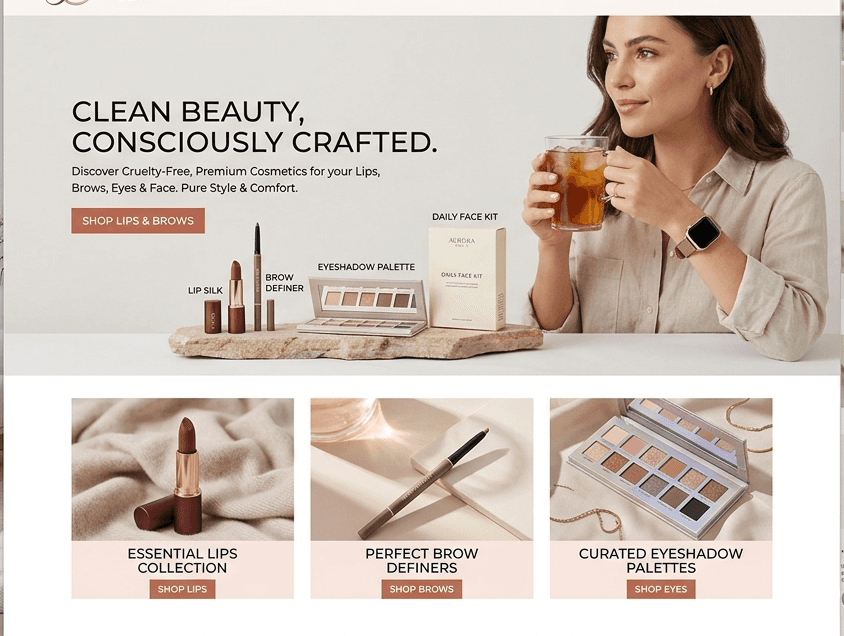
Primary product category: Clean, cruelty-free cosmetics (Beauty / Personal Care), including lip products, brow definers, eyeshadow palettes, and face kits.
Geography focus: Global (Australia, New Zealand, United States, United Kingdom, Europe, Asia, Middle East)
Year founded: 2014 (Site age: ~11 years)
Initial Investment Thesis (1–2 lines)
This is a mature, globally distributed beauty brand with strong margins, repeat purchase behavior, and established brand equity, offering a scalable platform for growth through paid acquisition expansion, retail distribution, and product line extension.
Initial Concern Flags (1–2 lines)
Moderate revenue scale relative to brand age suggests growth stagnation or under-optimized marketing, while reliance on competitive beauty category dynamics and inventory-heavy operations introduces margin and demand volatility risks.
Market & Demand Signals
The health and beauty e-commerce store for sale operates within the global beauty and personal care market, a category exceeding $500B globally and continuing to grow steadily, driven by ecommerce expansion, social media influence, and increasing consumer preference for ethical and clean beauty products. The clean, cruelty-free segment where the brand is positioned has seen accelerated growth as consumers shift toward transparency, sustainability, and ingredient awareness.
Search demand for core terms such as “vegan makeup,” “cruelty-free cosmetics,” and “long-lasting lipstick” remains consistently strong year-round, with predictable spikes during promotional periods (Black Friday, holiday gifting, and seasonal launches). Keyword volumes in the beauty category are high, making it one of the most scalable verticals for both paid acquisition and SEO. The brand’s Domain Authority (21) suggests moderate SEO traction, with room for expansion.
The category sits between essential and discretionary spending. While cosmetics are not strictly essential, repeat purchase behavior is high due to product consumption cycles (lipsticks, brow products, etc.), making them structurally more resilient than one-off product categories. This creates strong lifetime value (LTV) potential when paired with effective retention strategies.
Macro tailwinds are highly favorable: increasing global beauty consumption, strong influence of social platforms (Instagram, TikTok), rising demand for ethical products, and growing purchasing power among women aged 25–45. Regulatory considerations (ingredient compliance, labeling standards) exist but are manageable and standard for established brands.
The category is structurally timeless but highly competitive and trend-influenced at the product level. Success depends on branding, product innovation, and marketing execution rather than novelty alone.
Market Attractiveness Score: Strong
Demand Durability Assessment: High
Product–Market Fit Indicators
Value Proposition Clarity
The Shopify store's value proposition can be summarized in one sentence:
“High-performance, cruelty-free and clean cosmetics that deliver professional results while aligning with ethical and conscious beauty standards.”
The brand combines performance + ethics, which is critical in modern beauty. Messaging balances product efficacy (pigmentation, longevity) with values (vegan, cruelty-free), making it suitable for both paid acquisition and brand-driven positioning.
Core Customer Persona
Primary persona characteristics:
Age: 25–45
Geography: Global (Australia, US, UK, Europe, Middle East)
Predominantly female
Beauty-conscious, trend-aware
Values ethical sourcing and clean ingredients
Active on Instagram and influenced by creators
This is a high-LTV demographic with repeat purchase behavior and strong brand affinity potential.
Differentiation (Brand/IP/Positioning/Bundle)
Differentiation is moderate to strong and brand-led:
Clean, cruelty-free positioning
Trademarked brand across multiple regions
Established formulations and long-term suppliers
Existing influencer collaborations and social proof
However:
No clear proprietary formulation moat disclosed
Competes in a crowded “clean beauty” segment
The moat is primarily brand equity + distribution + product consistency, not IP.
Commoditization Risk
Risk level: Moderate
While cosmetics are widely available, differentiation is supported by:
Branding and packaging
Perceived quality
Influencer validation
Still, competition is intense, and alternatives are abundant.
Ease of Customer Adoption
Adoption friction is low:
Familiar product category
No behavioral change required
Proven repeat purchase behavior
Repeat Usage Potential
Strong
Core SKUs (lipsticks, brow products) are consumable
Natural replenishment cycles drive repeat revenue
Subscription/Refill Logic
Moderate (underutilized)
Strong potential for subscriptions or replenishment flows
Currently reliant on repeat purchase rather than structured recurring revenue
Price Positioning vs Competitors
Positioned in the affordable mid-range:
Not luxury (e.g., premium Sephora brands)
Not low-cost mass market
Competes on value + ethics + performance.
Premium Justification
Moderate:
Driven by ethical positioning and product quality
Not based on exclusivity or prestige branding
Output
→ PMF Confidence Level: Strong
Clear alignment between product offering, target audience, and repeat purchase behavior, supported by consistent revenue and global reach.
→ Differentiation Strength: Moderate
Brand equity and positioning provide some moat, but lack of proprietary formulation or strong premium positioning limits long-term defensibility.
Website & Conversion Infrastructure
Financial Performance Context (P&L Reference)
Based on provided financials:
Total revenue: ~$330K (TTM)
Net profit: ~$76K
Gross margin: ~66%
Net margin: ~23%
No excessive dispute or chargeback costs disclosed, indicating clean operations and lower post-purchase friction compared to performance-driven ecommerce models. Paid acquisition exists (Meta, Google, Pinterest), but not at extreme dependency levels.
Website Speed & UX Quality
The site runs on Shopify Plus and appears technically stable and professionally built. External indicators suggest:
No widespread complaints about broken pages or checkout issues
Reviews focus more on product and shipping rather than technical failures
This indicates solid UX reliability, though not aggressively conversion-optimized.
Mobile Optimization
Given beauty ecommerce is predominantly mobile-driven, the site is well-optimized for mobile:
Clean UI and product navigation
Visual-first layout aligned with social traffic
Supports influencer-driven discovery
Mobile experience likely contributes positively to conversion efficiency.
Visual Credibility & Brand Consistency
Strong brand presence:
Cohesive clean beauty aesthetic
High-quality product photography
Consistent branding across site and social (250K+ followers)
Unlike generic Shopify stores, this is a brand-led conversion environment, not purely performance-driven.
SKU Count & Catalog Structure
Moderate SKU range:
Lip, brow, eye, and face products
Structure supports:
Cross-selling within routines
Repeat purchase cycles
Not overly complex, but sufficient for category depth and retention.
AOV & Estimated Conversion Rate
Estimated AOV: ~$30–$60
Estimated conversion rate: ~2.5–4% (industry benchmark)
Repeat purchases likely improve overall revenue efficiency beyond first purchase conversion.
Upsell/Cross-Sell Structure
Moderate sophistication:
Related product suggestions
Category-based recommendations
However, lacks:
Strong post-purchase upsell systems
Advanced personalization
Bundling Logic
Present but under-leveraged:
Existing kits and product groupings
Opportunity for stronger routine-based bundles (e.g., full-face kits)
Trust Signals
Mixed but generally positive:
Strengths:
Strong on-site product reviews
Amazon presence (external validation)
Influencer collaborations
Large social following
Weaknesses:
Trustpilot shows mixed-to-negative feedback
Complaints around shipping delays and customer service responsiveness
Overall, trust is brand-supported but operationally sensitive.
Technical Issues Publicly Visible
No major technical issues identified.
Concerns are primarily operational (shipping, support) rather than infrastructure-related.
Checkout Flow Friction
Low friction:
Standard Shopify Plus checkout
Multiple payment options (including Afterpay)
No aggressive or deceptive tactics
Friction arises more post-purchase than during checkout.
Output
→ Conversion Infrastructure Rating: Strong (Brand-Led, Operationally Dependent)
The site effectively converts traffic with a credible, brand-driven experience. Unlike performance-only ecommerce models, conversion is supported by brand equity and product trust. However, operational inconsistencies (shipping/support) slightly weaken overall efficiency.
→ Quick-Win Optimization Opportunities
Introduce high-converting bundles (routine-based kits)
Implement post-purchase upsells and personalization
Strengthen UGC integration on product pages
Improve shipping communication and transparency
Expand email/SMS lifecycle flows (replenishment + retention)
Leverage subscription models for repeat SKUs
Improving retention and operational transparency would significantly increase LTV and overall conversion efficiency.
Traffic & Distribution Footprint
Overview
The e-commerce business operates a hybrid acquisition model, combining paid media, influencer marketing, organic social, and email retention. Unlike performance-only ecommerce brands, demand is partially brand-driven, supported by a decade of market presence and established credibility in the clean beauty space.
This is not purely a paid acquisition engine — it is a brand + performance hybrid, with meaningful organic and repeat purchase contribution.
Estimated Traffic Volume
Based on financials:
Revenue: ~$330K
Estimated AOV: ~$30–$60
Implied annual orders: ~6,000–10,000
Assuming a typical beauty ecommerce conversion rate of 2.5–4%, estimated traffic likely falls within:
125,000–300,000 annual visitors
Traffic is moderate but stable, reflecting a mature, steady-state brand rather than aggressive scaling.
Primary Channels
1. Paid Media (Meta + Google + Pinterest)
Structured but not overly aggressive
Likely focused on:
Prospecting via Meta
High-intent capture via Google
Visual discovery via Pinterest
Paid is important, but not the sole driver.
2. Organic Social (Instagram-led)
250K+ followers
Influencer collaborations and product seeding
This is a core brand asset, contributing to:
Awareness
Trust
Conversion support
3. Email Marketing (Klaviyo)
Established flows and subscriber base
Drives retention and repeat purchases
This is a meaningful owned channel, especially given consumable products.
4. SEO / Organic Search
Domain Authority: 21 (moderate)
Some organic presence, but not dominant
SEO is present but underdeveloped relative to category potential.
5. Influencer / Affiliate Channels
Active influencer collaborations
Likely contributes to both traffic and conversion
This is a key differentiator vs generic DTC brands.
Channel Concentration Risk
Moderate
Revenue is not dependent on a single channel
Mix of paid, organic, influencer, and email
However:
Paid + influencer ecosystems still form the core acquisition layer
Organic search is not yet a strong independent driver
Platform Dependency Risk
Meta: Moderate
Google: Moderate (defensive channel, expandable)
Instagram: Moderate (important for brand perception)
TikTok: Not fully leveraged
Overall dependency exists but is distributed across multiple platforms, reducing single-point failure risk.
International vs Local Reach
Strong global footprint:
Australia, US, UK, Europe, Middle East
This provides:
Diversified revenue base
Reduced geographic concentration risk
SEO Footprint Strength
Moderate (under-leveraged)
Some organic visibility
No strong content moat
Significant upside exists in:
Content marketing
Product-led SEO
Educational beauty content
Marketplace Presence
Presence on Amazon (product listings available)
No evidence of aggressive marketplace scaling
This is a partial diversification layer, but underutilized.
Direct vs Intermediary Sales Ratio
Primarily DTC via Shopify
Supplemented by:
Amazon
Wholesale/retail relationships
This creates a balanced distribution structure.
Traffic Durability Considerations
Strengths:
Multi-channel acquisition
Strong social following (250K+)
Repeat purchase behavior
Global audience
Weaknesses:
SEO not fully developed
Paid + influencer reliance remains significant
No dominant owned acquisition engine
Output
→ Traffic Fragility Score: Moderate
Traffic is relatively stable due to diversified channels, but still partially dependent on paid media and influencer ecosystems. Not fragile, but not fully insulated.
→ Channel Diversification Strength: Moderate to Strong
The business benefits from:
Paid + organic + influencer mix
Email retention
Global reach
However, further strength can be unlocked through:
SEO expansion
Marketplace scaling
TikTok growth
Overall, this is a balanced but not fully optimized distribution footprint, with clear upside in organic and owned channels.
Marketing & Customer Acquisition
Paid Ad Presence
This e-commerce store operates a structured multi-channel paid acquisition strategy, including:
Meta (Facebook/Instagram)
Google Ads (search + shopping)
Pinterest campaigns
Unlike performance-only brands, paid media here appears supportive rather than dominant, used to amplify an already established brand. There is no evidence of extreme ad dependency, suggesting more stable acquisition economics.
Creative Sophistication Level
Creative execution is moderate to high, brand-led:
High-quality product imagery and lifestyle visuals
Influencer-generated content
Focus on aesthetic appeal and product performance
Creative is less “direct-response aggressive” and more aligned with beauty industry branding standards, prioritizing trust and desirability over urgency-driven conversion.
Funnel Depth
Top of Funnel (TOF):
Paid ads (Meta, Pinterest)
Influencer discovery
Organic social traffic
Middle of Funnel (MOF):
Retargeting via Meta/Google
Product page education (benefits, shades, reviews)
Bottom of Funnel (BOF):
Standard Shopify checkout
Email capture and remarketing
Email Marketing:
Klaviyo integrated
Automated flows in place (welcome, campaigns)
Not highly advanced (segmentation and lifecycle optimization likely underdeveloped)
Funnel is functional and structured, but not aggressively optimized.
Email List Size
Not explicitly disclosed, but described as strong and active, supported by:
Automated flows
Repeat purchase behavior
Email is a key retention lever, though likely under-monetized relative to potential.
Organic Social Engagement Quality
Strong asset:
250K+ followers on Instagram
Consistent brand presence and aesthetic
Influencer collaborations driving engagement
While follower count is high, engagement depth appears moderate rather than viral, suggesting steady but not explosive organic demand.
UGC Density
Moderate to High:
Influencer content and product demonstrations
Beauty category naturally supports UGC
However, UGC is more influencer-driven than community-driven, meaning advocacy exists but may not be deeply organic.
Influencer Presence
Strong and established:
Ongoing influencer collaborations
Product seeding strategy
Likely contributes significantly to awareness and conversion
This is a core acquisition pillar and differentiator vs generic ecommerce brands.
CAC Indicators
No explicit CPA disclosed, but inferred:
High gross margins (~66%) allow room for paid acquisition
Repeat purchase behavior improves blended CAC efficiency
However:
Beauty category CPMs are competitive
CAC likely sensitive to creative performance and influencer ROI
Scalability Signals
Positive signals:
Multi-channel acquisition (Meta, Google, Pinterest, influencers)
Strong brand equity and social proof
Systemised operations with low owner involvement
Global customer base
Constraints:
Highly competitive category
Growth appears steady rather than aggressive
Under-leveraged performance marketing infrastructure
LTV Indicators
Strong structural LTV:
Consumable products (lip, brow, face)
Repeat purchase behavior already observed
However:
No clear subscription model
Email and retention systems not fully optimized
LTV exists but is not maximized operationally.
Output
→ Marketing Maturity Level: Moderate to Strong (Brand-Led, Partially Engineered)
The business demonstrates a mature, brand-driven marketing system with multiple acquisition channels and established influencer presence. However, it lacks the advanced performance marketing and lifecycle optimization seen in highly scaled ecommerce brands.
→ Scalability Assessment: High (With Execution Upside)
Short-term growth can be unlocked through:
Scaling paid acquisition (especially Meta and Google)
Expanding influencer and affiliate programs
Improving conversion and bundling strategies
Long-term scalability depends on:
Strengthening retention (email, subscriptions)
Building stronger organic and SEO channels
Expanding product lines and global distribution
The foundation is strong — growth is currently under-optimized rather than constrained.
Brand Strength & Perception
Brand Consistency (Site + Socials)
Moderate consistency. Messaging around “grow your own food” and simplicity is clear, but visual identity is functional rather than premium or distinctive. Brand execution feels more practical than aspirational.
Emotional Positioning
Functional: Grow fresh produce easily
Aspirational: Self-sufficiency, sustainability
Convenience: No gardening expertise required
This is a lifestyle utility brand, not a status or identity brand.
Storytelling Depth
Strong asset:
Authentic founder story (backyard → scaled brand)
Clear mission (“create the farmer in everyone”)
This is one of the brand’s strongest differentiators.
Founder Visibility
Moderate:
Story exists but not heavily leveraged in marketing
Opportunity to amplify founder-led content
Review Quality & Sentiment
Mixed externally:
Positive: product concept and usability
Negative: shipping delays, customer service issues
Third-Party Signals
Limited strong Trustpilot/social proof authority
No major certifications or press dominance
Community Presence
Weak:
No strong UGC ecosystem
No visible engaged community
Brand Defensibility
Moderate at best:
Story + ecosystem (consumables) help
No IP or deep brand moat
Output
→ Brand Asset Strength: Moderate
→ Reputation Risk Flags: Fulfillment/customer experience gaps, weak social proof layer
Competitive Landscape
Number of Competitors
High:
Amazon hydroponic kits
DTC indoor garden brands
DIY solutions
Strength of Competitors
Premium smart garden brands (tech-enabled)
Low-cost generic kits
Pricing Tiers
Budget: $30–$80
Mid (Salad Table): $100–$200
Premium: $200–$500+
Differentiation Gaps
No smart tech integration
No strong proprietary design/IP
Switching Cost
Low pre-purchase, moderate post-purchase (ecosystem lock-in via consumables).
Barriers to Entry
Low–Moderate:
Manufacturing is accessible
Brand building is the main barrier
Race-to-the-Bottom Risk
Present in lower tiers; less severe in mid-range positioning.
Output
→ Competitive Intensity Rating: Moderate to High
→ Positioning Gap Opportunities:
Subscription-driven ecosystem
Education-first content brand
Premium “smart indoor farming” positioning
Operational Complexity
SKU complexity: Low–Moderate
Supply chain: China-based (moderate dependency risk)
Regulation: Low
Fulfillment: Moderate (bulky products)
Returns burden: Low (reported)
Cash flow: Inventory-light but shipping-heavy
Logistics: Moderate complexity
Output
→ Operational Risk Score: Moderate
→ Scalability Friction Points: Shipping costs, supplier dependency, fulfillment speed
Risk & Fragility Signals
Hero SKU dependency: Moderate (core systems dominate revenue)
Channel dependency: Moderate (paid + limited diversification)
Platform risk: Present but not extreme
Trend exposure: Low (evergreen category)
Moat strength: Weak–Moderate
Ease of replication: High
Output
→ Fragility Index: Moderate
→ Top 3 Structural Risks:
Weak product/IP defensibility
Customer experience/reputation friction
Limited acquisition channel diversification
Growth Levers (Externally Visible)
Launch subscription model (nutrients, refills)
Expand international markets (US, UK)
Introduce new SKUs (seedlings, smart systems)
Build SEO/content engine (education-led)
Create bundled starter kits + upsells
Founder & Operator Signals
Origin: founder-led passion project
Now partially systemized with partner involvement
More product-led than marketing-led
Output
→ Operator Dependency Risk: Moderate
Exit & Optionality Signals
Attractive for small strategic buyers or aggregators
Low entry multiple → room for expansion
Not yet a premium brand asset
Output
→ Exit Attractiveness Score: Moderate
“Unfair Advantage” Check
Current advantages:
Authentic founder story
Consumables ecosystem
Early niche positioning
Not strongly defensible within 12–24 months.
Financial Snapshot (Preliminary Review)
Revenue: $195K–$275K (stable, modest scale)
Profit: $2.3K/month
Margin: 14% (thin)
Multiples: very attractive (0.3x revenue, 1.8x profit)
Observations:
Business appears under-optimized rather than declining
Likely priced for quick sale
Key Unknowns to Validate in Seller Call
Monthly revenue trend (last 6–12 months)
True gross margin breakdown
CAC and ROAS by channel
Actual refund/complaint rate vs reported 0%
Supplier contracts and exclusivity
Inventory levels and lead times
Reason for selling
Repeat purchase rate
Shipping timelines vs customer expectations
Preliminary Verdict
Opportunity Level: Moderate to High
Undervalued asset with clear operational and marketing upside.
Risk Level: Moderate
Execution risk > market risk.
Investment Profile:
Turnaround + optimization play
Potential cash-flow + growth hybrid