
Overview
This dropshipping store for sale is a young, fast-ramping Australian baby products brand built around a single hero product: a designed-for-comfort, affordable baby carrier positioned as a high-quality alternative to overpriced legacy brands.
The business has produced $279K+ in revenue and $61K+ in profit in under 7 months, driven primarily by paid social and search, with a lean operational structure and outsourced fulfillment. The founders’ narrative is credible: new parents identifying a pricing and comfort gap in the local market and executing quickly.
This is not yet a brand.
This is not yet a system.
This is a momentum asset with a strong early signal but limited structural depth.
It is best understood as a scaling and brand-build opportunity, not a turnkey passive investment.
Key Insights (Executive Summary)
What’s Working
Clear problem–solution fit: overpriced, uncomfortable carriers → affordable, ergonomic alternative
Strong early revenue velocity: aggressive month-on-month growth from June to November
Healthy gross margin profile for physical product (22% net margin reported)
Simple product story that is easy to communicate and scale
Low SKU complexity → low operational friction
Paid acquisition is already working (Meta + Google validated)
What’s Fragile
Single product dependency (hero SKU risk)
Very young business lifecycle (no proof of long-term demand stability)
Paid traffic reliance with unknown CAC durability
No demonstrated repeat purchase engine yet
Brand equity still shallow (no Trustpilot footprint, limited organic gravity)
Supply chain concentration (single manufacturer in Ningbo)
Website Performance & Commercial Metrics
Website Speed & Technical Health
Shopify-based storefront, lightweight theme
Pages load quickly, no obvious performance bottlenecks
Checkout flow is clean and mobile-optimised
Verdict: No technical issues constraining conversion.
Product Variation & SKU Structure
Current catalog is extremely tight:
Core SKU: Baby Carrier (with variants)
No meaningful accessory ecosystem yet
Implication:
Operationally efficient, but commercially shallow. LTV expansion will require product line extension.
AOV, LTV & Repeat Behaviour (Inferred)
AOV: ~$63 USD (confirmed)
LTV: Likely front-loaded, not recurring
Baby carriers are durable goods, not consumables
Repeat purchase likely only if:
Additional baby products are introduced
Brand expands into adjacent categories (wraps, bags, nursing, etc.)
Insight:
Without product expansion, LTV ceiling is structurally capped.
Repeat Customer Rate
Not disclosed. Given category dynamics, repeat rate is likely low to moderate at best.
This is typical for baby gear businesses but reinforces the need for brand extension.
Conversion Rate
Not disclosed. Based on revenue trajectory and AOV, implied CVR is likely in the 1.8–2.5% range for paid traffic.
This is acceptable, not exceptional.
Interpretation: Conversion is working. Economics, not UX, will determine scalability.
Website Design & Presentation
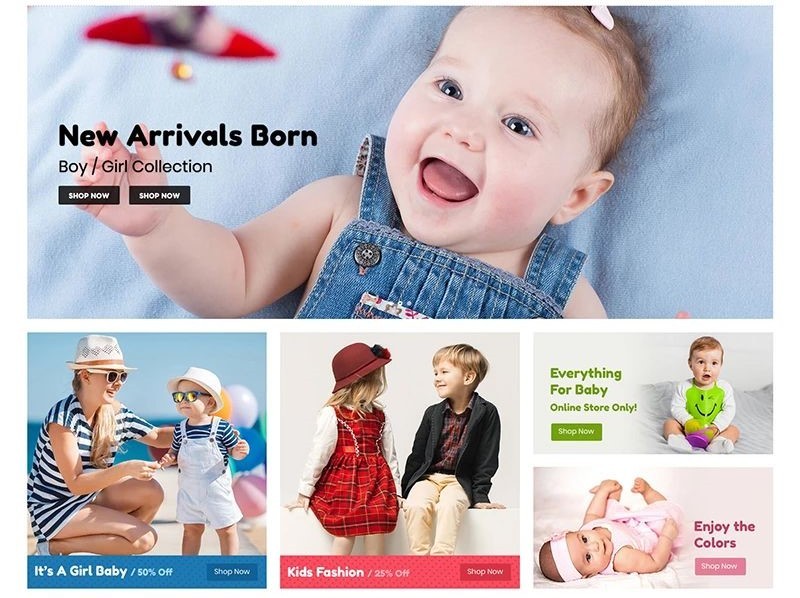
Clean, soft colour palette aligned with baby market
Strong lifestyle imagery
Clear value proposition
Trust badges and safety language present
Verdict:
Competent, reassuring, but not yet emotionally iconic. It reads as “safe and sensible” rather than aspirational.
Brand Positioning & Customer Sentiment
Positioning pillars:
Affordable
Comfortable
Safe
Thoughtfully designed
Emotional hook:
Cost-conscious parenting
Practicality over prestige
“We’re parents too” relatability
Reviews:
No Trustpilot presence (neutral, not negative)
On-site reviews indicate satisfaction
No visible red flags around refunds or quality complaints
Sentiment read:
Positive but still shallow. Brand trust is in progress, not entrenched.
Financial Analysis
This dropshipping store has generated approximately $279,236 in revenue and $61,287 in net profit over a ~6–7 month operating window, equating to a 22% net margin. Monthly performance shows a steep upward trajectory from $4,674 in June to $84,221 in November, indicating strong early traction and effective paid acquisition. However, this growth curve is not yet long enough to establish demand stability or seasonality resistance. The reported profit multiple of 1.1x and revenue multiple of 0.2x reflect both the opportunity and the risk: the asset is priced accessibly because it is young, single-product, and unproven over time. The presence of $8,000 USD in prepaid inventory with a retail value of ~$65,000 AUD improves cash efficiency for a buyer. Overall, these numbers suggest real product-market fit, but not yet structural maturity.
Marketing (Paid & Organic)
Paid Channels
Meta Ads
Google Ads
These are clearly the primary growth engines.
Strength:
Ads are converting
Product message resonates
Funnel is functional
Risk:
No evidence yet that CAC will remain stable as scale increases
No diversified paid channel mix
No TikTok or influencer engine visible yet
Organic & Owned Channels
Email list: ~4,990 subscribers
Customer list: 4,842+
Social presence exists but is not yet a traffic driver
Email:
Valuable asset, but size relative to revenue suggests most revenue is still first-touch paid
Interpretation:
Owned audience is forming, but organic gravity is weak. This is a performance brand, not a community brand (yet).
Operational Efficiency
Fulfillment & Supply Chain
Manufacturer: Ningbo, China
Direct-to-consumer shipping from supplier
Stock is held at supplier facility
No self-handling of inventory
Pros:
Low overhead
Minimal handling complexity
Scalable in theory
Cons:
Geographic distance risk
Lead time sensitivity
Quality control dependency
Regulatory exposure (baby products are scrutinised)
Day-to-Day Operations
Owner oversees performance and inventory planning
VA handles customer service
Ads monitored by owner
This is lean but founder-dependent.
Customer Data & Relationships
~4,998 customers
~4,455 orders
Email list ~4,990
Data asset exists, but no evidence of segmentation, lifecycle marketing sophistication, or community building yet.
Relationship depth = transactional, not relational.
Legal & Compliance Due Diligence (Surface Level)
This category carries non-trivial regulatory exposure:
Baby carriers must meet safety standards
Certifications must be verifiable (AU compliance is strict)
Product liability risk exists
Returns/refund policies must be compliant
Action Required:
Buyer must verify:
Safety certifications
Import compliance
Product liability insurance
Trademark status of brand
Market & Demand Signals
Market Size & Growth
Baby products market is structurally resilient
Not high-growth, but non-cyclical and durable
Search Demand & Trends
Baby carriers show consistent demand with spikes around:
Birth seasons
Holidays
Baby showers
Seasonality vs Evergreen
Moderately seasonal, but baseline demand is stable
Problem Urgency
This is a convenience and comfort purchase, not life-or-death.
Parents will buy, but they will also price shop heavily.
Cultural Tailwinds
Cost-of-living pressure → demand for affordable alternatives
Convenience-driven parenting
Online-first purchasing behaviour
Product–Market Fit Indicators
One-sentence value prop:
“Comfortable, safe baby carriers without the luxury brand markup.”
Clarity: High
Differentiation: Moderate (price + design, not IP)
Learning curve: Low
Repeat usage: High (use), low (repurchase)
Price–value alignment: Strong
Interpretation:
Fit is real. Moat is thin.
Brand Strength & Perception
Visual consistency: Good
Messaging consistency: Good
Emotional positioning: Practical + caring
UGC: Limited
Reviews: Positive but limited footprint
Press/authority: None visible
This is an early-stage brand shell, not a defensible brand asset yet.
Traffic & Distribution Footprint
Primary: Paid social + paid search
No marketplace presence
No retail
No wholesale
Local (Australia) only
Channel concentration risk: High
Platform dependency: Meta & Google
Competitive Landscape
Highly crowded category
Many Amazon, AliExpress, and boutique brands
Price competition exists
Switching costs: Low
Loyalty: Low–moderate
Advantage:
Local branding + narrative + design
Risk:
Commoditisation pressure is real.
Monetization & Unit Economics (Surface Level)
Single product pricing strategy
No bundling
No subscriptions
No refills
No upsell ecosystem
Gross margin appears healthy for DTC physical, but:
Shipping
Returns
Ad volatility
will pressure this as scale increases.
Growth Levers Visible
Product line expansion (obvious and necessary)
Geographic expansion (NZ, international)
Influencer partnerships
Content-driven acquisition
Brand storytelling
Bundles & kits
Growth is available. It is not yet engineered.
Founder & Operator Signals
Founders are credible
Narrative is consistent
Execution speed appears strong
Over-reliance on founders currently
Systems are light
This is an operator’s business, not a manager’s business.
Operational Complexity (Inferred)
SKU count: Low
Regulatory exposure: Medium–High (baby products)
Fulfilment intensity: Medium
Support burden: Moderate
Cash flow sensitivity: Moderate
Risk & Fragility Signals
Single SKU risk
Paid traffic dependency
Young data set
No brand moat
Easy to replicate product
No recurring revenue
Platform exposure
Exit & Optionality
Strategic buyer appeal:
Baby product aggregators
DTC roll-ups
Parenting brands
Multiple expansion only if:
Brand is built
Product range expands
Organic channel grows
Repeat rate improves
"Unfair Advantage" Check
Hard to copy:
Customer list
Winning creatives
Early brand presence in AU market
Easy to copy:
Product
Website
Pricing logic
Improves with scale:
Brand trust
Supplier leverage
CAC efficiency
Gets worse with scale:
Ad costs
Complexity
Regulatory exposure
Challenges Identified
Heavy reliance on a single hero product
No repeat purchase engine yet
Paid traffic dependency
Shallow brand equity
Regulatory exposure in baby category
Supply chain concentration risk
Limited defensibility against copycats
Growth to date may be momentum-driven, not structurally stable
Recommendation
This is a CONDITIONAL BUY.
Proceed only if:
Recent months’ revenue and profit are verified
CAC and contribution margins are disclosed
Safety certifications are confirmed
Supplier relationship is validated
Founder transition support is contractually defined
This is not a passive asset.
It requires:
Product expansion
Brand development
Channel diversification
Operational tightening
Conclusion
This dropshipping store for sale is not a gimmick and not a scam. The revenue is real, the product resonates, and the early execution has been strong. But this is not yet a business with structural depth.
It is a well-positioned starting line, not a finish line.
If acquired by an operator who understands brand-building, product expansion, and performance marketing discipline, the upside is meaningful.
If acquired by someone seeking a hands-off income stream, it will likely stall.