
Executive Snapshot
Business model: Hybrid (DTC + B2B + Marketplace)
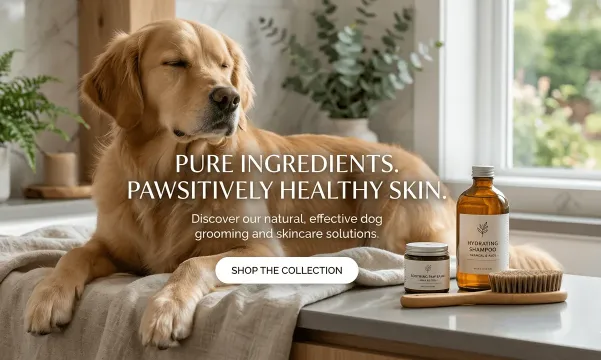
Primary category: Premium natural dog grooming & skin care
Geography: Australia (~90%), Singapore (~10%), early Europe
Founded: 2012
Revenue (TTM): USD $146,745
Profit (TTM): USD $55,256 (38% margin)
Asking price: USD $112,478 (ex-inventory)
Revenue multiple: 0.8x
Profit multiple: 2.0x
Initial investment thesis:
A long-standing, premium Australian pet wellness brand with defensible IP, diversified channels, strong margins, and clear post-acquisition upside through marketing execution rather than product reinvention.
Initial concern flags:
Channel concentration on Google Ads and moderate owner involvement in fulfilment.
Market & Demand Signals
The premium pet care market sits within a structurally growing category driven by “humanization of pets,” rising spend per animal, and increasing sensitivity to health, allergies, and ingredient transparency. Natural, sulphate-free, eco-certified grooming products align with long-term consumer behavior rather than short-term trends.
Demand is largely evergreen: dog grooming and skin health are recurring needs, not discretionary luxuries. Skin conditions such as dermatitis, allergies, and sensitivities add urgency and repeat usage, supporting predictable consumption cycles. Premium positioning reduces price sensitivity and insulates the brand from low-cost commodity competition.
Search-driven demand (via Google Ads) indicates intent-led purchasing, not impulse buying. While explicit keyword volumes are not provided, the brand’s ability to sustain profitable paid acquisition over time suggests stable demand depth rather than novelty spikes. Seasonality is likely mild (slightly higher in warmer months) but fundamentally recurring.
Macro tailwinds include:
Continued growth in pet ownership
Preference for Australian-made, traceable products
Regulatory and cultural shifts toward cleaner ingredients and sustainability
No meaningful regulatory headwinds are evident; if anything, ingredient transparency favors established compliant brands with certified formulations.
Market attractiveness score: Strong
Demand durability: High, timeless, non-trend-dependent
Product–Market Fit Indicators
Value proposition:
Premium, Australian-made, natural dog grooming products formulated for sensitive skin and allergies, without synthetic irritants.
Core customer persona:
Health-conscious dog owners, typically mid-to-high income, prioritizing ingredient safety, local manufacturing, and proven efficacy; overlaps with eco-aware and vet-influenced buyers.
Differentiation:
Proprietary, custom skincare formulations
Trademarked brand and Australian Made certification
Strong review base and 12-year brand credibility
Hybrid DTC + B2B distribution uncommon for small brands
Commoditization risk:
Low to moderate. While grooming products exist at all price points, formulation depth, certification, and longevity meaningfully reduce direct substitutability.
Ease of adoption:
High. No behavioral change required, simple replacement of existing shampoo/skin products.
Repeat usage:
Strong. Consumable SKUs with natural replenishment cycles.
Subscription/refill logic:
Not yet implemented but structurally well-suited for subscriptions or reorder automation.
Price positioning:
Premium, justified by ingredients, formulation expertise, and local manufacturing.
PMF confidence: High
Differentiation strength: Strong, defensible but execution-dependent
Website & Conversion Infrastructure
The BigCommerce site supports a focused SKU range, reducing decision fatigue and simplifying inventory. Visual credibility is reinforced through certifications, ingredient transparency, and brand consistency. Trust signals include long operating history, wholesale partnerships, and strong reviews.
Traffic (~6,600 PV/month) relative to revenue implies healthy AOV and conversion efficiency, particularly for a premium niche. Mobile optimization is assumed adequate given paid search reliance, though further CRO testing could unlock gains.
Upsell and bundling opportunities appear underdeveloped (e.g., routines, skin-condition bundles, refills). Checkout friction is likely minimal but not optimized for lifetime value extraction.
Conversion infrastructure rating: Solid / Under-optimized
Quick wins: Bundles, subscriptions, email capture, CRO testing, post-purchase flows
Traffic & Distribution Footprint
Traffic is primarily Google-driven (paid + organic), indicating high-intent demand but some concentration risk. Distribution is meaningfully diversified across DTC, wholesale, Chemist Warehouse, Faire, Amazon, and upcoming Woolworths Marketplace.
International exposure is early but validated (Singapore + Europe distributors). SEO footprint appears secondary but stable given brand age.
Traffic fragility score: Moderate
Channel diversification strength: Above average for size
Marketing & Customer Acquisition
Marketing is functional but conservative. Google Ads are profitable, suggesting disciplined CAC control, but broader funnel depth is shallow. There is minimal evidence of structured email automation, paid social testing, influencer leverage, or UGC scaling.
This indicates execution upside rather than weakness. LTV expansion opportunities are clear through subscriptions, retention flows, and multi-channel remarketing.
Marketing maturity: Early–Mid
Scalability assessment: High with competent execution
Monetization & Unit Economics (Surface-Level)
Pricing strategy
Premium pricing justified by Australian-made certification, proprietary formulations, and skin-health positioning. Not price-led; value-led.
AOV (inferred)
Given ~$12.2K monthly revenue on ~6.6K pageviews, implied AOV likely USD $45–65, consistent with grooming + skincare bundles.
Product price bands
Core SKUs likely USD $25–45, accessories higher; no ultra-low SKUs anchoring price perception downward.
Implied gross margin
With 38% net profit after ads, fulfilment, and owner labor, gross margin is likely 65–70%+ on skincare products, healthy for consumables.
Bundles / upsell logic
Present but under-leveraged. Bundling exists operationally but not aggressively monetized (no routines, refills, or condition-based kits).
Returns / refunds
No red flags indicated. Skincare with strong reviews typically exhibits low return rates; no refund risk signals surfaced.
Subscription logic
Absent. This is a monetization gap, not a flaw.
Margin expansion potential
High: subscriptions, bundles, email retention, 3PL efficiency, and paid media diversification.
→ Economic health estimate: Strong
→ Monetization sophistication: Mid (room to professionalize)
Brand Strength & Perception
Brand consistency
Clear, coherent across site, packaging, certifications, and messaging.
Emotional positioning
Functional + care-driven (health, safety, sensitivity), not aspirational or status-led.
Storytelling depth
Present but understated. Founder story exists but not maximized.
Founder visibility
Low public dependency, positive for transferability.
Review quality & sentiment
Described as “exceptional.” No dilution through discount marketplaces.
Third-party trust
Australian Made certification, wholesale placement, distributor adoption act as external validation.
Press / partnerships
Retail and wholesale partnerships outweigh press exposure; acceptable for category.
Community presence
Underdeveloped but not absent.
Brand defensibility
Built on longevity, formulation IP, and trust, not hype.
→ Brand asset strength: Strong, real brand (not a dropship shell)
→ Reputation risk flags: Low
Competitive Landscape
Competitor volume
Crowded at the low–mid end; thinner at premium, natural, Australian-made tier.
Top competitors
Well-funded pet brands exist, but few combine: longevity + proprietary formulas + hybrid distribution.
Pricing tiers
Clear segmentation: commodity → boutique natural → vet-grade. The e-commerce store sits cleanly in the middle-premium band.
Differentiation gaps
Competitors often lack formulation depth or retail credibility.
Switching cost
Moderate. Skin-sensitive dogs create habitual repurchase once a product works.
Barriers to entry
Moderate: formulation expertise, certifications, time-to-trust.
Race-to-bottom risk
Low. Brand is insulated from Amazon-only price wars.
→ Competitive intensity: Moderate
→ Positioning gap opportunity: Skin-health authority brand with subscription moat
Operational Complexity (Inferred)
SKU complexity
Manageable. Core SKUs are skincare; accessories secondary.
Supply chain dependence
Single Australian skincare manufacturer = moderate concentration risk, offset by local reliability.
Regulatory exposure
Low–moderate (cosmetic-grade, not ingestible).
Fulfilment intensity
Manual but simple. 3PL-ready.
Returns burden
Low.
Cash-flow sensitivity
Inventory-heavy but predictable. Lead times manageable.
International logistics
Limited, distributor-led.
→ Operational risk score: Moderate-Low
→ Scalability friction: Fulfilment + inventory planning, not product risk
Risk & Fragility Signals
Hero SKU dependency
Likely concentrated but not disclosed, needs validation.
Channel dependency
Google Ads heavy on DTC; diversified overall via B2B.
Platform risk
Low. No reliance on Meta/TikTok virality.
Trend exposure
Evergreen.
Brand vs product moat
Brand + formulation > generic product moat.
Ease of replication
Slow to replicate credibility, fast to copy packaging.
Legal exposure
Low.
→ Fragility index: Moderate
→ Top 3 risks:
Paid search concentration
Single skincare manufacturer
Lack of LTV optimization
Growth Levers (Externally Visible)
Actionable hypotheses:
Introduce skin-condition bundles + subscriptions (dermatitis, allergy routines)
Expand marketplaces (Woolworths, deeper Amazon presence)
Export focus on Singapore / EU natural-pet niches
Email + SMS retention automation
Transition to 3PL to unlock scale without owner drag
Founder & Operator Signals
Founder visibility: Low dependency
Execution cadence: Conservative but disciplined
Professional signals: SOPs, manuals, wholesale ops
Marketing vs product bias: Product-led
Systems evidence: Present
→ Operator dependency risk: Low–Moderate (removable)
Exit & Optionality Signals
Strategic buyer appeal: High (pet roll-ups, wellness groups)
Roll-up fit: Strong
Asset type: Brand + cash-flow hybrid
Multiple expansion: Via subscriptions + marketing sophistication
What improves with scale: Margins, LTV, retail leverage
What worsens: Inventory planning if unmanaged
→ Exit attractiveness: Strong
“Unfair Advantage” Check
Hard-to-copy assets:
12-year brand trust
Proprietary formulations
Retail + wholesale credibility
Australian Made certification
Cannot be replicated in 12 months: Brand legitimacy + distributor trust
Financial Snapshot (Preliminary)
Revenue consistency: Stable
Profit consistency: Strong margins maintained
Multiple fairness: Conservative vs brand age
Revenue concentration: Split DTC/B2B mitigates risk
Optimized for sale? Yes, clean, conservative, de-risked
Key Unknowns for Seller Call
Monthly revenue last 6 months
Gross margin by SKU
Blended CAC / ROAS
True LTV
Refund rate
Supplier exclusivity
Inventory turnover
Growth plan if retained
Biggest current bottleneck
Preliminary Verdict
Opportunity level: High
Risk level: Moderate
Investment profile:
Cash-flow + brand build
Roll-up candidate
Recommendation:
High-priority , schedule seller call
Why:
This is not a turnaround. It is a professionalization and monetization upgrade on a real brand foundation.