
Executive Snapshot
Purpose: Quick, decision-ready overview of the opportunity.
Business model: Direct-to-Consumer (DTC) via Shopify (with early wholesale signals)
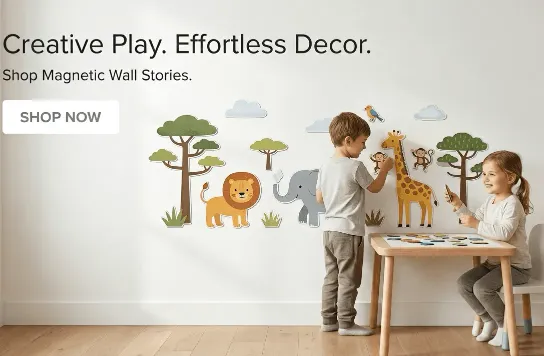
Primary product category: Children’s home décor (magnetic wall stickers & accessories)
Geography focus:
Core: United Kingdom (87%)
Secondary: United States (8%)
Rest of World: 5%
Year founded: 2024
Initial investment thesis:
A high-margin, early-stage premium children’s brand with strong product-market fit and clear upside through underutilized growth levers (email, paid ads, international expansion, and channel diversification).
Initial concern flags:
Heavy reliance on a narrow product range and limited marketing sophistication to date performance may be sensitive to creative fatigue, supplier risk, and scaling execution.
Market & Demand Signals
Category overview:
The e-commerce store operates within the children’s home décor niche—a subsegment of the broader home décor market, which was valued at ~$714B globally and continues expanding with eCommerce penetration and rising middle-class spending . Kids’ room décor has evolved into a specialized design category, with parents increasingly investing in aesthetic, flexible, and functional spaces .
Market size & growth trajectory:
Home décor is a large, steadily growing market, but children-specific segments are more nuanced. Growth is supported by premiumization and design-conscious parenting, though traditional children’s product categories face pressure from declining birth rates in developed markets .
Search demand & keyword signals:
Core keywords like “kids wall decor,” “nursery wall stickers,” and “playroom decor” show consistent evergreen demand (non-trend dependent). However, spikes occur around home renovation cycles and parenting milestones (new baby, room redesign).
Seasonality vs evergreen:
Moderately seasonal (peaks around holidays, back-to-school, and home improvement periods), but largely evergreen due to ongoing child development stages and room upgrades.
Problem urgency:
Discretionary purchase. Not essential, but emotionally driven—parents prioritize creating safe, stimulating, and aesthetically pleasing environments.
Cultural / macro tailwinds:
Rise of “Pinterest parenting” and Instagram-worthy homes
Increased spend on children’s wellbeing and environment
Shift toward stylish, non-toy-based play elements
Post-COVID home investment trends
Regulatory factors:
Low regulatory burden beyond standard product safety (materials, adhesives, child-safe manufacturing).
Trend vs timeless:
Hybrid. Core need (children’s spaces) is timeless, but design styles and formats (e.g., magnetic stickers) can be trend-sensitive.
Verdict
Market attractiveness score: Moderate → Strong
Demand durability: Stable but style-sensitive (evergreen base demand with execution-dependent growth)
Product–Market Fit Indicators
Value proposition clarity:
“Stylish, reusable magnetic wall stickers that turn children’s spaces into interactive, mess-free play environments.”
Clear, concise, and easy to communicate combines décor + functionality (play + aesthetics).
Core customer persona:
Primary: Design-conscious parents (25–45), predominantly mothers
Psychographics: “Pinterest-driven,” values aesthetics, Montessori-style learning, and non-digital play
Income: Mid-to-high household income (willing to pay premium for design-led children’s products)
Geography: UK/US suburban homeowners or renters seeking flexible décor solutions
Differentiation:
Positioning: Premium, minimalist, calming designs vs loud, cartoon-heavy competitors
Functionality: Magnetic + interactive (play surface), not just decorative
Brand: Strong “house-proud parent” appeal (aesthetic-first vs toy-first)
Bundle potential: Accessories (magnets, scenes, dolls) create ecosystem upside
However, underlying product concept is not proprietary—similar items exist widely across marketplaces like Etsy and Amazon with overlapping features and price points
Commoditisation risk:
Moderate to high.
Low barrier to entry (simple materials, outsourced manufacturing)
Evidence of numerous similar listings across marketplaces
Differentiation relies heavily on branding, design taste, and marketing execution not IP
Ease of customer adoption:
Very high.
No installation complexity (peel-and-stick)
Immediate utility (decor + play)
Appeals emotionally and functionally
Repeat usage potential:
Moderate.
Core product is one-off purchase
Repeat purchases driven by:
Additional accessories
New designs/themes
Multi-room usage
Subscription/refill logic:
Weak in current form.
Potential exists via:
Seasonal magnet packs
Educational or themed add-ons
But not inherently recurring.
Price positioning vs competitors:
Premium (£67 AOV vs $20–$100 range on marketplaces).
Premium justification:
Superior design aesthetic (key driver)
Brand positioning (non-toy, interior décor hybrid)
Larger format / curated sets
Emotional appeal (child development + home beauty)
Verdict
PMF confidence level: Moderate → Strong
Clear demand and resonance with a defined audience, validated by early traction and strong margins.Differentiation strength: Moderate
Brand and design-led moat, but weak defensibility at product level success depends heavily on execution (creative, brand equity, and customer experience).
Website & Conversion Infrastructure
Website & UX quality:
The e-commerce website is clean, modern, and clearly built on Shopify. Navigation is intuitive with a simple structure (Home → Collections → Product Pages). The UX emphasizes benefits (magnetic, wipe-clean, educational), which helps communicate value quickly. However, the site leans heavily on static sections and lacks advanced CRO elements (dynamic personalization, urgency triggers, etc.).
Mobile optimization:
Strong. The layout is mobile-first with large product imagery, simple CTAs, and minimal clutter aligned with Shopify best practices. Likely converts well on mobile, though speed optimization cannot be fully verified without backend data.
Visual credibility & brand consistency:
High.
Consistent neutral color palette
Lifestyle imagery with children using products
Clear premium positioning
Messaging around safety (“non-toxic”) and learning reinforces trust
SKU count & catalog structure:
Low SKU count (8–12 core products + accessories).
Pros: Focused, easy decision-making
Cons: Limited browsing depth; may cap AOV expansion unless bundles improve
AOV:
£67 ($90) — strong for this category, indicating effective premium positioning and bundling potential.
Estimated conversion rate:
Not disclosed, but inferred moderate (1.5–3%) based on:
Decent traffic (5,200 sessions/month)
High AOV
Strong reviews
Upsell / cross-sell structure:
Present but under-optimized.
Accessories (crayons, magnets, shelves) exist
However, not aggressively pushed via bundles or in-cart upsells
Bundling logic:
Weak execution currently.
Products naturally lend themselves to bundles (e.g., decal + magnets + crayons)
But bundling is not strongly merchandised on-site
Trust signals:
Strong but could be expanded:
Trustpilot rating 4.5/5 with positive reviews
Educational benefits highlighted
Clear FAQs, shipping, and returns pages
Missing: heavy UGC, video testimonials, press mentions
Technical issues (visible):
Limited urgency elements (no countdowns, low FOMO triggers)
Some product pages show “sold out” variants, potentially hurting conversions
No aggressive email capture flows beyond basic discount
Checkout flow friction:
Low.
Standard Shopify checkout
Multiple shipping options and clear delivery timelines
Potential improvement: express payment prominence (Apple Pay, Klarna, etc.)
Verdict
Conversion infrastructure rating: Moderate → Strong
Solid foundation with good UX, branding, and trust—but lacks advanced CRO optimization and monetization layers.
Quick-Win Optimization Opportunities
Bundle optimization:
Introduce “starter kits” (decal + magnets + crayons) to increase AOV by 20–40%.Upsell engine:
Add in-cart and post-purchase upsells (e.g., “complete the set”).UGC & video integration:
Leverage existing customer/influencer content to boost trust and conversion.Email capture & flows:
Expand beyond discount popup → abandoned cart, welcome flows, and post-purchase upsells.Conversion triggers:
Add urgency (low stock, timers) and social proof (recent purchases).Product page depth:
Add comparison charts, FAQs inline, and more benefit-driven storytelling.
Overall: strong base, but meaningful upside through CRO sophistication.
Traffic & Distribution Footprint
Estimated traffic volume:
5,200 monthly sessions
13,251 monthly page views
This reflects a relatively early-stage brand with modest but efficient traffic, especially given the strong profitability. Revenue per visitor appears healthy due to high AOV (£67) and solid conversion fundamentals.
Primary channels:
Paid Social (Primary): Meta platforms (Facebook & Instagram) drive the majority of acquisition. Notably, growth has been achieved using very limited creative testing (essentially one core video ad), suggesting both efficiency and untapped upside.
Paid Search (Secondary): Google Ads contributes incremental demand capture.
Organic Social (Early-stage): Instagram (2.2K followers), Facebook (353), Pinterest present but under-leveraged.
Email Marketing (Underutilized): 4,960 subscribers but minimal lifecycle marketing or automation.
Direct Traffic: Likely meaningful due to brand recall and repeat visitors, though not quantified.
Channel concentration risk:
High.
Heavy reliance on paid Meta ads for growth
Limited diversification across organic, SEO, or alternative paid channels
Minimal experimentation across creatives and audiences
This creates vulnerability to:
Rising CPMs
Creative fatigue
Platform policy changes
Platform dependency risk:
Moderate → High.
Strong dependency on Meta (Facebook/Instagram)
Some reliance on Google Ads
No meaningful presence yet on TikTok, Pinterest (performance), or marketplaces
While Shopify ownership ensures control over customer data (a positive), acquisition is still platform-dependent.
International vs local reach:
UK: 87% (core market)
USA: 8% (organic, no targeted scaling)
Rest of World: 5%
This indicates:
Strong product-market fit in the UK
Significant whitespace internationally, especially in the US (large TAM, already validated organically)
SEO footprint strength:
Weak → Early-stage.
No sustained SEO or content strategy
Limited blog/content depth
Likely ranking only for branded or low-competition keywords
This represents a major untapped acquisition channel rather than a current strength.
Marketplace presence:
None currently.
No Amazon, Etsy, or other marketplace distribution
This reduces channel diversification but preserves brand control and margins
However, it also means:
Missed demand capture
Lower discoverability outside paid channels
Direct vs intermediary sales ratio:
100% Direct-to-Consumer (Shopify)
Minimal wholesale (only 1 toy shop, inbound)
This is positive for margins and brand ownership but increases reliance on owned traffic acquisition.
Strategic Interpretation
The business is efficient but fragile from a distribution standpoint. It has proven it can convert traffic profitably, but demand generation is narrow and under-diversified. The fact that strong performance has been achieved with minimal marketing sophistication is a key signal: this is less an optimized machine and more an underexploited one.
There is clear evidence of latent demand (email list size, organic US sales, strong AOV), but acquisition channels have not been fully built out.
Key Risks
Meta dependency: Over-reliance on a single paid channel
Creative stagnation: Only one core ad used to date
SEO absence: No compounding organic traffic engine
No marketplace hedge: Missing diversified demand capture
Key Opportunities
Email monetization: Immediate ROI via flows and campaigns
Creative scaling: Expand winning ad into multiple variations
Channel expansion: TikTok, Pinterest, and influencer whitelisting
SEO/content: Build long-term organic traffic moat
Marketplace launch: Amazon/Etsy for incremental demand capture
US expansion: Dedicated ad targeting and localized strategy
Verdict
Traffic fragility score: High
(Over-reliance on paid Meta with limited diversification)Channel diversification strength: Low → Moderate
(Strong foundation but largely untapped multi-channel potential)
Bottom line:
Demand exists and converts well but the acquisition engine is underbuilt. This creates both risk (current dependency) and upside (multiple unlocked growth levers post-acquisition).
Marketing & Customer Acquisition
Paid ad presence:
The brand relies primarily on Meta ads (Facebook & Instagram), with some support from Google Ads. Notably, performance has been driven by extremely limited creative testing, reportedly a single core video ad since launch. This indicates proof of concept but also underdeveloped marketing infrastructure.
Creative sophistication:
Low → Moderate.
Likely simple product-demo or lifestyle video ads
Limited variation in hooks, formats, or angles
No evidence of systematic creative testing (e.g., multiple avatars, offers, or messaging frameworks)
This suggests current performance is driven more by product appeal than marketing excellence.
Funnel depth:
Shallow.
Basic Shopify funnel (landing → product → checkout)
Minimal use of advanced CRO elements (quiz funnels, landing page segmentation, etc.)
Retargeting likely exists but not deeply optimized
Email marketing:
List size: 4,960 subscribers
Utilization: Minimal
No evidence of robust flows such as:
Welcome sequences
Abandoned cart recovery optimization
Post-purchase upsells
Lifecycle campaigns
This is a major underleveraged asset.
Organic social engagement:
Instagram: 2,287 followers
Facebook: 353 followers
Pinterest present
Engagement appears modest. Content likely focuses on product imagery and lifestyle shots but lacks strong community-building or viral traction.
UGC (User-Generated Content):
Moderate but underutilized.
Customer and influencer content exists
Not fully integrated into paid ads or site conversion assets
Given the visual nature of the product, UGC could be a major growth lever.
Influencer presence:
Early-stage.
Some influencer/UGC seeding initiated
No structured influencer program or scaled partnerships
Opportunity exists for:
Micro-influencer campaigns
Whitelisting (running ads through influencer accounts)
Affiliate-driven growth
CAC indicators:
Not explicitly disclosed, but inferred to be efficient due to:
High profit margin (49%)
Positive ROAS from limited ad spend (~$3.5k/month)
However, CAC stability is uncertain due to lack of testing and channel diversification.
Scalability signals:
Strong but unrealized.
Winning product already validated
High AOV supports paid acquisition scaling
Untapped channels (TikTok, Pinterest, email, SEO)
Creative testing not yet exploited
LTV indicators:
Moderate.
Repeat purchases possible via accessories and additional designs
Email list provides retention opportunity
However, core product is not inherently recurring
LTV could be significantly improved with:
Product expansion
Bundles
Lifecycle marketing
Verdict
Marketing maturity level: Low → Moderate
Current growth appears improvised rather than engineered, with limited systems, testing, or funnel sophistication.Scalability assessment: High potential, low current execution
The brand has strong unit economics and validated demand, but marketing infrastructure is underdeveloped creating significant upside for an experienced operator.
Bottom line:
This is not a fully optimized marketing machine, it's a partially proven concept with substantial headroom. Growth has been achieved despite limited execution, which is both a risk (fragility) and a major opportunity (scalability post-acquisition).
Monetisation & Unit Economics (Surface-Level)
Pricing strategy:
The Shopify brand follows a premium pricing strategy, positioning its products as design-led children’s décor rather than low-cost toys. Pricing reflects aesthetic value, safety, and multifunctionality (decor + play surface), allowing it to avoid direct price competition with mass-market alternatives.
AOV (Average Order Value):
£67 ($90)
This is strong for the category, indicating:
Effective perceived value
Some level of product grouping or multi-item purchasing
Room for further expansion via structured bundling
Product price bands:
Core wall decals: £50–£80
Accessories (magnets, add-ons): lower-priced incremental items
This tiered structure supports entry + expansion purchases but is not yet fully optimized for maximizing cart value.
Implied gross margin:
High (estimated 65–80% gross margin typical for this model).
Supporting indicators:
Final net margin: 49% (very strong)
Manufacturing via China (low COGS)
Lightweight, non-fragile products → efficient shipping
This suggests structurally healthy unit economics with strong contribution margins.
Bundles/upsell logic:
Underdeveloped.
Natural bundling opportunity exists (decal + magnets + accessories)
Current execution is basic and not aggressively merchandised
Missed opportunities:
“Starter kits”
Volume discounts (buy more, save more)
In-cart or post-purchase upsells
Return/refund signals:
Trustpilot rating: “Excellent”
No major red flags indicating high return rates
This suggests:
Product meets expectations
Low operational leakage from refunds
Strong customer satisfaction
Subscription logic:
Weak / non-existent.
Core product is non-consumable
No built-in recurring revenue mechanism
However, potential exists via:
Seasonal magnet packs
Themed expansions (educational sets, new designs)
Content-driven or membership-style offerings
Margin expansion potential:
Moderate → High.
Key levers:
Bundling: Increase AOV without proportional CAC increase
3PL fulfillment: Reduce operational burden and potentially optimize shipping costs
Ad efficiency: Improved creative testing → lower CAC
Supplier negotiation: Scale-based cost reductions
Email monetization: Drive revenue without incremental ad spend
Verdict
Economic health estimate: Strong
High margins, solid AOV, and efficient cost structure indicate a fundamentally healthy business with attractive unit economics.Monetization sophistication: Low → Moderate
The business captures value effectively at a base level but lacks advanced monetization strategies (bundles, upsells, lifecycle marketing, subscriptions).
Bottom line:
The financial foundation is robust—this is a high-margin, cash-generative model. However, monetization is still relatively basic, leaving clear upside for operators who can layer in structured AOV expansion, retention strategies, and pricing optimization.
Brand Strength & Perception
Brand consistency:
This online brand demonstrates strong visual cohesion across websites and social channels. Neutral tones, minimalist layouts, and lifestyle imagery create a unified “premium parenting” aesthetic.Emotional positioning:
Primarily aspirational + functional. The brand taps into identity (“thoughtful, design-conscious parent”) while solving a practical need (mess-free play + décor).Storytelling depth:
Moderate. Clear product benefits and positioning exist, but limited deeper narrative (origin story, mission, or emotional hooks).Founder visibility:
Low. Brand is not personality-led, which improves transferability but reduces emotional stickiness.Review quality & sentiment:
Strong. Trustpilot rating is “Excellent,” indicating consistent product satisfaction and low friction.Community presence:
Early-stage. Social following exists but lacks strong engagement loops or community identity.Brand defensibility:
Moderate. Strength lies in design taste and positioning—not IP.
→ Brand asset strength: Moderate → Strong
→ Reputation risk flags: Low (no major negative sentiment signals)
Competitive Landscape
Competitor volume: High (Etsy, Amazon, Shopify brands)
Top competitor strength: Fragmented; few dominant brands
Pricing tiers: £20–£100+ (the business sits premium-mid)
Switching cost: Low
Barriers to entry: Very low (simple manufacturing, no IP)
→ Competitive intensity: High
→ Positioning gap: Premium aesthetic + brand-led differentiation still underexploited
Operational Complexity (Inferred)
SKU complexity: Low (10–15 SKUs)
Supply chain: based suppliers → moderate dependency risk
Fulfillment: Currently manual but easily outsourced
Returns burden: Likely low
Inventory: £19k stock → moderate cash tied up
→ Operational risk score: Low → Moderate
→ Scalability friction: Supplier reliance, inventory planning
Risk & Fragility Signals
Hero SKU dependency: High
Channel dependency: High (Meta ads)
Replication risk: Very high
Brand vs product moat: Brand-led (weaker moat)
→ Fragility index: High
Top 3 risks:
Paid acquisition dependency
Product commoditisation
Limited SKU diversification
Growth Levers
Bundle strategy: Increase AOV via kits
US expansion: Already validated demand
Creative scaling: Expand ad testing significantly
Marketplace launch: Amazon/Etsy for demand capture
Email monetization: Unlock existing list
Founder & Operator Signals
Founder visibility: Low
Execution style: Product-first, not marketing-driven
Systems: SOPs exist → positive
→ Operator dependency risk: Low → Moderate
Exit & Optionality Signals
Strategic appeal: Strong for aggregators or kids’ brands
Multiple expansion: Possible via growth + diversification
Scalability: Improves margins, but increases complexity
→ Exit attractiveness: Moderate → Strong
Unfair Advantage Check
No hard IP or proprietary tech
No strong community moat
Advantage = early traction + brand positioning
Conclusion: Replicable within 6–12 months by a capable operator
Financial Snapshot
Revenue: Growing (early-stage trajectory)
Profit: Strong and consistent
Margins: Excellent (~49%)
Multiple: Attractive (1.9x profit)
Optimization: Not fully optimized → upside exists
Key Unknowns (Seller Call)
Monthly revenue breakdown (last 6–12 months)
True gross margin
CAC & ROAS
LTV data
Refund rate
Supplier agreements
Inventory turnover
Reason for selling
Scaling constraints
Preliminary Verdict
Opportunity Level: Asymmetric
Risk Level: Moderate → High
Investment Profile:
Brand build play
Arbitrage opportunity (under-optimized asset)
Bottom line:
This is a high-margin, underdeveloped brand with clear upside, but limited defensibility. Success post-acquisition depends heavily on execution—particularly in marketing, diversification, and brand building.