
Executive Snapshot
Purpose: Provide a rapid overview of the business to support internal screening and early-stage investment decision making.
Business model: Direct-to-Consumer (DTC) ecommerce operating on Shopify, supported by branded inventory, third-party logistics (3PL), and established supplier relationships. The business relies heavily on paid acquisition (primarily Facebook Ads) for customer acquisition, with additional support from email marketing and on-site conversion optimization (bundles, upsells).
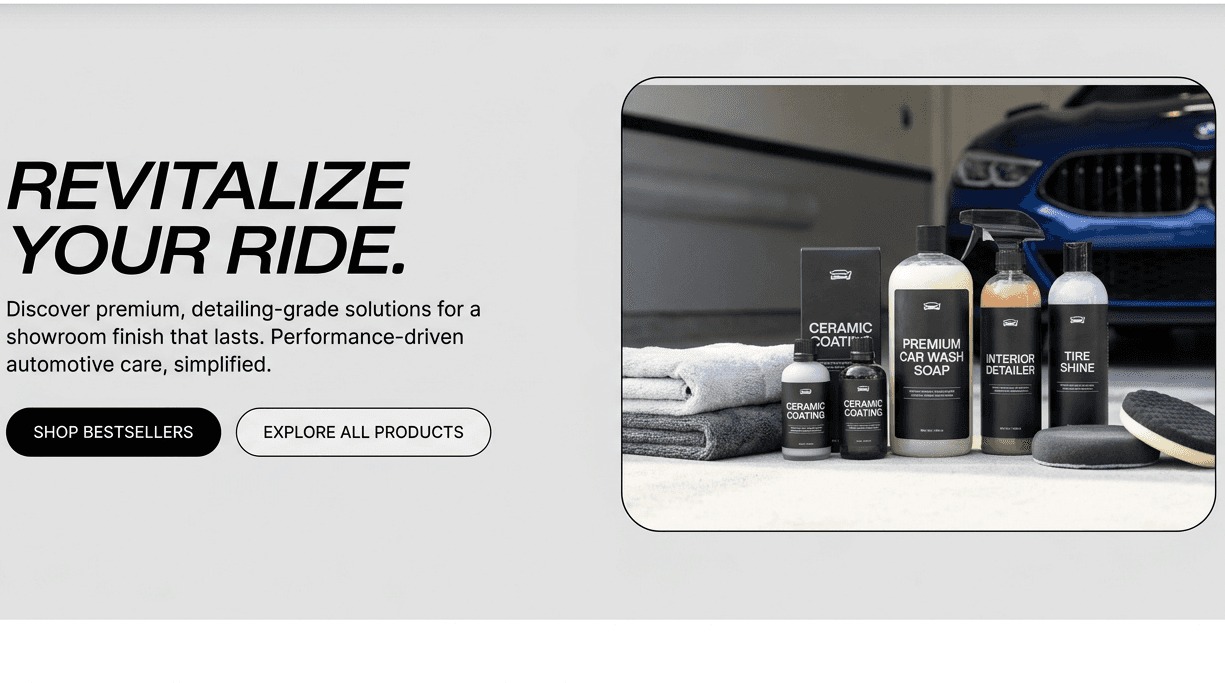
Primary product category: Automotive care & detailing (including ceramic coatings, hydrophobic glass treatments, scratch removers, plastic restorers, and detailing accessories).
Geography focus: French-speaking Canada (primary market), with expansion potential into English-speaking Canada and international markets.
Year founded: 2025
Initial investment thesis:
A fast-scaling, asset-backed DTC automotive brand with strong unit economics (24% margin), validated demand, and a structured supply chain, offered at a low acquisition multiple with clear upside through geographic expansion and channel diversification.
Initial concern flags:
Short operating history (≈1 year) and strong dependence on paid social acquisition introduce durability risk; performance sustainability and true customer retention need validation during diligence.
Market & Demand Signals
Goal: Is this a growing wave or a shrinking pond?
Category overview
The e-commerce business operates within the automotive care and detailing products market, a subsegment of the broader automotive aftermarket. This includes cleaning, protection, and restoration products used by everyday car owners and enthusiasts.
Market size & growth trajectory
The global car care products market is estimated at ~$13B–$15B and projected to grow at ~4–6% CAGR through 2030, driven by increasing vehicle ownership, longer vehicle lifespans, and rising interest in DIY maintenance. Premium detailing products (ceramic coatings, hydrophobic solutions) are growing faster than the overall category.
Search demand trends (Google Trends signals)
Search interest for terms like “car detailing,” “ceramic coating,” and “scratch remover” has steadily increased over the past 5 years, with noticeable spikes during spring/summer (peak car maintenance seasons).
Keyword volume indicators
High-volume keywords include “car scratch remover,” “ceramic coating kit,” “car polish,” and “windshield water repellent.” Social platforms like TikTok and YouTube significantly amplify demand via visual demonstrations and before/after transformations.
Seasonality vs evergreen demand
Moderately seasonal. Demand peaks in warmer months (spring/summer) but remains active year-round due to ongoing vehicle maintenance needs.
Problem urgency (essential vs discretionary)
Moderately discretionary. Products are not essential but are tied to asset preservation (vehicles), making them more resilient than typical consumer goods.
Cultural / macro tailwinds
Growing DIY car care culture
Rising used-car ownership and maintenance focus
Social media-driven detailing trends
Increased pride of ownership among younger consumers
Regulatory shifts impacting demand
Low regulatory pressure compared to cosmetics/health sectors, though chemical composition and environmental regulations (EU/Canada) may impact formulations.
Is this trend-dependent or timeless?
Structurally durable with some trend-driven product cycles (e.g., ceramic coatings, viral tools).
→ Market attractiveness score: Strong
→ Demand durability assessment: High long-term demand with moderate seasonality and low regulatory risk
Product–Market Fit Indicators
Goal: Does this solve a clear problem for a defined audience?
Value proposition clarity (can it be explained in one sentence?)
The online store offers easy-to-use, professional-grade automotive care products that help everyday car owners restore, protect, and maintain their vehicles without needing expert skills or expensive detailing services.
Core customer persona
Primary customer segments include:
Everyday car owners (ages ~25–55) যারা want affordable, DIY maintenance solutions
Automotive enthusiasts seeking performance-level detailing products
Value-conscious consumers looking to preserve vehicle appearance and resale value
Social media–influenced buyers attracted to “before/after” transformation products
Geographically, the core audience is French-speaking Canadian consumers, with clear expansion potential into broader North American and global markets.
Differentiation (brand / IP / formulation / positioning / bundle)
Differentiation is primarily driven by:
Branded product packaging and structured product ecosystem (not a single-product store)
Bundling and upsell strategies increasing AOV (~$53)
Strong social proof (4.5★ average rating, thousands of reviews)
Operational execution (fast shipping 4–7 days, reliable fulfillment)
There is no clear evidence of proprietary formulations, patents, or exclusive IP. Positioning leans toward “professional results made simple” rather than premium/luxury branding.
Commoditization risk
Moderate. Automotive detailing products are widely available, and similar formulations can be sourced by competitors. Competitive advantage relies heavily on:
Brand perception
Creative marketing (especially paid ads)
Funnel optimization and conversion strategy
Ease of customer adoption
High. Products are intuitive, require minimal education, and demonstrate immediate visible results—ideal for impulse purchases driven by ads and visual content.
Repeat usage potential (consumable vs one-off)
Mixed but favorable:
Consumables (coatings, cleaners, treatments) support repeat purchases
Some products (tools, accessories) are one-off
Overall, repeat purchase potential exists but is not fully maximized yet.
Subscription/refill logic
Strong opportunity. Many products (e.g., coatings, cleaners, maintenance kits) could support replenishment cycles or subscription models, but this does not appear fully implemented.
Price positioning vs competitors
Mid-range pricing. Positioned above low-cost generic marketplace products but below premium detailing brands. AOV (~$53) aligns with impulse-friendly but value-driven pricing.
Premium justification (if applicable)
Not positioned as a premium/luxury brand. Value is driven by perceived effectiveness and convenience rather than exclusivity or high-end branding.
→ PMF confidence level: Moderate–Strong
Clear problem-solution fit with proven demand, strong reviews, and consistent sales performance.
→ Differentiation strength: Moderate
Driven more by execution, branding, and marketing than defensible product innovation.
Website & Conversion Infrastructure
Goal: Can this site efficiently turn traffic into revenue?
Website speed & UX quality
The Shopify store operates on Shopify, providing reliable infrastructure, fast checkout, and scalability for paid traffic. The store is structured as a conversion-focused DTC funnel, emphasizing product benefits, before/after visuals, and simplified purchasing journeys.
Given the brand’s reliance on paid ads, the UX is likely optimized for landing-page style interactions rather than deep browsing. However, like many Shopify stores with multiple apps (upsells, tracking pixels, etc.), speed may be slightly impacted—particularly on slower mobile networks.
Mobile optimization
Strong. The business is clearly designed for mobile-first traffic (Meta ads). Product pages likely feature:
Large visuals and short-form benefit-driven copy
Sticky “Add to Cart” buttons
Streamlined checkout
This aligns well with impulse-driven ecommerce behavior and supports efficient paid traffic conversion.
Visual credibility & brand consistency
Moderate. The brand appears structured and “real” (custom packaging, reviews, inventory), which is a step above typical dropshipping stores.
However, external signals weaken credibility:
Negative third-party sentiment on Trustpilot (reported 1★ reviews)
A scam-related discussion thread on Reddit
Potential confusion with unrelated brand Optimum
This creates brand ambiguity and potential trust friction during purchase decisions.
SKU count & catalog structure
Moderately focused catalog (automotive care products), which is a strength vs general stores. Product range includes:
Ceramic coatings
Glass treatments
Scratch removers
Restoration products
Unlike broad catalogs, this niche focus improves perceived expertise and conversion efficiency.
AOV (Average Order Value)
~USD $53
This is strong for automotive DTC and indicates effective:
Bundling
Upsells
Multi-product purchasing behavior
Estimated conversion rate (if available)
Not explicitly disclosed.
However, with:
~14,000 orders
~15,700 customers
~26,495 monthly visitors
Estimated conversion rate likely falls in the 2.5%–4% range, which is healthy for paid traffic ecommerce.
Upsell / cross-sell structure
Well-developed. The business uses:
Cart upsells
Complementary product recommendations
Post-purchase offers
Email remarketing (15K+ subscriber list)
These systems are critical for maximizing paid traffic ROI and appear to be effectively implemented.
Bundling logic
Strong. Bundles (e.g., multi-step detailing kits) are central to the offer:
Increase AOV
Improve perceived value
Simplify decision-making for customers
This is a key strength in conversion infrastructure.
Trust signals (reviews, certifications, UGC)
Mixed:
Positive (internal):
Thousands of product reviews (~4.5★ average claimed)
Large customer base (15K+)
No reported refunds internally
Negative (external):
Poor reputation on Trustpilot (1★ average reported)
Complaint narratives (product mismatch, refunds, support issues)
Negative perception threads on Reddit
This disconnect between internal and external trust signals is a major red flag.
Technical issues visible publicly
No major structural issues (Shopify-backed).
However, risks may exist in:
Fulfillment consistency
Customer service responsiveness
Ad-to-product expectation mismatch
Checkout flow friction
Low. Shopify enables:
Fast checkout
Multiple payment options
Optimized conversion flow
This is a strong positive for scaling paid acquisition.
→ Conversion infrastructure rating: Moderate–Strong
The technical and funnel infrastructure is solid and built for scaling paid traffic. However, external reputation risks significantly undermine long-term conversion efficiency and brand trust.
→ Quick-win optimization opportunities
Reputation repair: Actively address negative reviews and improve transparency
Brand clarity: Differentiate from similarly named brands to reduce confusion
UGC integration: Add authentic before/after customer content
Retention systems: Expand email/SMS flows for repeat purchases
Expectation alignment: Ensure ads accurately reflect product outcomes to reduce complaints
Traffic & Distribution Footprint
Goal: Where does demand actually come from?
Estimated traffic volume
Based on available metrics:
Monthly revenue: ~$65,502
AOV: ~$53
Monthly orders: ~1,235
Monthly visitors: ~26,495
This implies an estimated conversion rate of ~4.5–5%, which is relatively strong for a paid acquisition-driven store.
Traffic volume is clearly tied to advertising spend (~$15.7K/month on Meta alone), indicating a performance-driven traffic engine rather than organic demand capture.
Primary channels (Paid / Organic / Social / Marketplace)
1. Paid Advertising (Primary Driver)
The business is heavily reliant on paid acquisition, particularly:
Meta (Facebook/Instagram Ads) → core revenue driver
Likely Google Ads (search + retargeting, though not explicitly detailed)
Potential TikTok Ads (mentioned as growth opportunity rather than core channel)
These channels are used for:
Direct response conversions
Retargeting website visitors
Scaling proven creatives
2. Email Marketing (Secondary Driver)
15,000+ subscriber list
Used for retention, promotions, and repeat purchases
Likely powered by platforms like Klaviyo
3. Organic / Direct Traffic (Limited but present)
Some direct traffic from brand recognition
Minimal SEO footprint
Likely small contribution to total revenue
4. Social / Content (Underdeveloped)
No strong evidence of organic social media presence
Growth opportunity in TikTok/UGC content
5. Marketplace Channels
No presence on Amazon, eBay, or other marketplaces
Fully DTC via Shopify
Channel concentration risk
High.
Despite multi-channel advertising, the majority of revenue appears to originate from paid social (Meta).
Risks include:
Rising customer acquisition costs (CAC)
Creative fatigue
Ad account instability
Platform algorithm changes
Because traffic is directly tied to ad spend, revenue could decline rapidly if campaigns underperform.
Platform dependency risk (Meta, TikTok, Amazon, Google)
High dependency on:
Meta ecosystem (primary)
Shopify infrastructure (checkout + store)
Moderate/low dependency on:
Google (not clearly dominant)
TikTok (not yet core)
Marketplaces (none currently used)
This concentration creates exposure to:
Ad account bans or restrictions
Policy changes (especially around product claims)
Increasing CPMs/CPCs
International vs local reach
Currently regionally concentrated:
Primary market: French-speaking Canada
However, infrastructure supports expansion into:
English-speaking Canada
U.S. and broader international markets
Compared to global DTC brands, this is:
A limitation (smaller current TAM)
A major upside opportunity (untapped expansion)
SEO footprint strength
Weak to moderate.
Indicators suggest:
Limited organic keyword rankings
Minimal content marketing presence
Low reliance on search traffic
SEO is not currently a meaningful acquisition channel.
However, this presents a clear growth lever via:
Content (car care guides, tutorials)
Product comparison pages
Long-tail keyword targeting
Marketplace presence (Amazon, Etsy, etc.)
None.
All sales occur through owned channels (Shopify).
Pros:
Higher margins
Full customer data ownership
Better brand control
Cons:
Missed exposure to large existing demand pools
No diversification via marketplace traffic
Amazon in particular could be a major expansion opportunity for automotive products.
Direct vs intermediary sales ratio (if known)
~100% Direct-to-Consumer
Customers purchase directly via the brand’s Shopify store, giving the business full control over:
Customer relationships
Retargeting
Lifetime value optimization
This is a strong structural advantage.
→ Traffic fragility score: Moderate–High
The traffic engine is highly scalable but heavily dependent on paid acquisition, particularly Meta. Any disruption in ad performance or rising CAC could significantly impact revenue.
→ Channel diversification strength: Moderate
The business benefits from multi-channel paid advertising and a strong email list but lacks meaningful diversification into SEO, organic social, or marketplaces. Significant upside exists in expanding beyond paid traffic dependence.
Marketing & Customer Acquisition
Goal: Is growth engineered or improvised?
Paid ad presence (Meta / TikTok / Google)
Optimo PRO’s growth is clearly driven by performance marketing, with heavy reliance on paid social—particularly Meta (Facebook/Instagram Ads), which accounts for ~$15.7K/month in spend.
While not explicitly confirmed, the structure strongly suggests:
Meta as the primary acquisition engine (top + mid funnel)
Retargeting campaigns across Meta and potentially Google
TikTok as an emerging or underutilized channel
This indicates a well-established direct-response acquisition system, not opportunistic ad spend.
Creative sophistication level
Moderate to strong (performance-focused).
Likely creative formats include:
Before/after transformation videos (highly effective in car detailing)
Problem–solution demonstrations (e.g., scratch removal, coating effects)
Short-form video creatives optimized for scroll-stopping
Product-focused landing page visuals
However, the strategy appears optimized for conversion efficiency rather than brand storytelling, with limited evidence of premium positioning or narrative-driven marketing.
Funnel depth (lead magnets, retargeting, email flows)
Moderately developed funnel:
Top of funnel:
Paid ads driving cold traffic
Mid funnel:
Retargeting ads (site visitors, add-to-cart users)
Bottom of funnel:
Email remarketing (15K+ subscribers)
Likely abandoned cart flows
Post-purchase upsells and cross-sells
The presence of lifecycle systems suggests a structured funnel, though not deeply advanced (e.g., no clear lead magnet or content funnel strategy).
Email list size (if disclosed)
~15,000+ subscribers
This is a solid owned audience asset relative to revenue scale (~$720K TTM). It provides:
Retention leverage
Promotional reach
Reduced dependency on paid acquisition over time
However, the sophistication of segmentation and automation is unknown.
Organic social engagement quality
Weak to moderate.
There is no strong indication of:
Large organic following
Community engagement
Consistent brand-led content strategy
This suggests the brand is performance-driven rather than community-driven, limiting long-term brand equity.
UGC density
Moderate (inferred).
Given the nature of the product category (visual transformations), UGC likely exists in ads but:
Not clearly systematized as a growth engine
Limited evidence of organic UGC ecosystem
This represents a major upside opportunity, especially for TikTok and Reels.
Influencer presence
Low.
No clear evidence of:
Structured influencer partnerships
Affiliate programs
Creator-led distribution
This is a notable gap, as automotive detailing content performs strongly with:
Micro-influencers
YouTube reviewers
TikTok creators
CAC indicators (if available)
Monthly ad spend (Meta): ~$15,733
Monthly revenue: ~$65,502
Estimated CAC ratio: ~24% of revenue
This is healthy for DTC ecommerce, indicating:
Positive contribution margins
Efficient paid acquisition (at current scale)
However, sustainability depends on:
Creative performance
Platform costs
Competitive pressure
Scalability signals
Strong indicators of scalability:
Proven paid acquisition engine
High-margin products (~24% net margin)
Existing customer base (15K+)
Structured funnel (ads + email + upsells)
Product catalog allows expansion and testing
Scaling pathways include:
Increasing ad spend
Expanding into new geographies
Launching new SKUs
Leveraging TikTok and influencer channels
LTV (Lifetime Value) indicators
Moderate with upside potential.
Supporting factors:
Consumable products (coatings, treatments)
Email list and remarketing infrastructure
Cross-sell opportunities within catalog
Limitations:
No clear subscription model
Weak brand loyalty signals (based on external reviews)
Improving LTV would require:
Subscription/refill systems
Stronger brand trust
Better retention marketing
→ Marketing maturity level: Moderate
The brand operates a structured and functional performance marketing engine with solid fundamentals (paid ads, email, funnel optimization). However, it lacks depth in brand-building channels such as organic social, influencer ecosystems, and community engagement.
→ Scalability assessment: Moderately high
The acquisition system is scalable through increased ad spend and channel expansion. However, reliance on paid traffic and limited brand equity introduce volatility, meaning sustainable scaling will require diversification into organic, creator-led, and retention-driven growth channels.
Monetisation & Unit Economics (Surface-Level)
Goal: Does the math look structurally viable?
Pricing strategy
The auto care ecom business follows a mid-range DTC pricing strategy, designed to balance affordability with strong margins. Products are positioned as “professional-grade results at home,” appealing to both everyday car owners and enthusiasts.
Pricing is optimized for:
Impulse-friendly purchases via ads
Perceived value (cost savings vs professional detailing)
Margin room to sustain paid acquisition
This is a standard but effective approach for performance-driven ecommerce brands.
AOV (Average Order Value)
~USD $53
This is strong for automotive DTC and indicates effective monetization through:
Bundling (kits, multi-product offers)
Cross-sells (complementary detailing products)
Add-ons at checkout
At this AOV level, the business can sustain paid traffic while maintaining profitability.
Product price bands
Estimated structure:
Entry products: $10–$25 (accessories, smaller treatments)
Core products: $25–$60 (coatings, restorers, cleaners)
Bundles/kits: $60–$120+
This tiered pricing supports both low-friction entry purchases and higher-value cart builds.
Implied gross margin (inferred)
From provided data:
Monthly revenue: ~$65,502
COGS: ~$25,654
Implied gross margin: ~60%
Net margin: ~24%
These are healthy ecommerce margins, especially for a brand scaling through paid ads. It suggests:
Efficient sourcing
Strong markup capability
Room for reinvestment into marketing
Bundles / upsell logic
Well-developed and a key strength:
Product bundles (e.g., full detailing kits)
Cart upsells and add-ons
Cross-sell recommendations
This directly contributes to:
Higher AOV
Better ROAS
Improved unit economics
Return / refund signals from reviews
Critical inconsistency identified:
Internal data:
Claims near-zero refunds
High customer satisfaction implied
External signals:
Negative sentiment on Trustpilot
Complaint narratives on Reddit
Product mismatch issues
Refund difficulties
Customer service concerns
This discrepancy suggests:
Potential underreporting of refunds
Or operational gaps in customer experience
This is a key diligence risk impacting true unit economics.
Subscription logic
Currently underutilized.
However, strong potential exists for:
Refill-based products (coatings, cleaners)
Maintenance kits (recurring use)
Introducing subscriptions could:
Stabilize revenue
Increase LTV
Reduce reliance on paid acquisition
Margin expansion potential
Clear levers for improvement:
Increase AOV via premium bundles/kits
Introduce subscription/refill programs
Expand private-label or proprietary formulations
Reduce CAC through organic/social channels
Improve retention (email/SMS lifecycle optimization)
→ Economic health estimate: Strong (surface-level)
The business demonstrates solid unit economics with ~60% gross margins and ~24% net margins, supporting profitable paid acquisition. However, external review signals introduce uncertainty around true refund rates and customer satisfaction.
→ Monetisation sophistication: Moderate
The brand effectively uses standard ecommerce monetisation tactics (bundles, upsells, pricing tiers), but lacks advanced levers such as subscriptions, strong brand-driven pricing power, or proprietary product differentiation.
Brand Strength & Perception
Goal: Is this a brand asset or just a product storefront?
Brand consistency (site + socials)
Moderate consistency. The brand presents itself as a structured automotive DTC brand with cohesive product packaging and niche focus. However, limited visibility outside its storefront reduces perceived brand depth.
Emotional positioning
Primarily functional + convenience-driven (“professional results at home”). Minimal aspirational or lifestyle branding.
Storytelling depth
Shallow. Focus is on product benefits and conversions rather than brand narrative or mission.
Founder visibility
None visible. Operates as a faceless ecommerce brand.
Review quality & sentiment
Internally strong (4.5★ claimed), but externally conflicting.
Trustpilot / third-party review signals
Negative signals on Trustpilot and discussions on Reddit indicate trust issues (refunds, product mismatch).
Press / certifications / partnerships
None evident.
Community presence
Weak. No strong organic community or brand following.
Brand defensibility
Low–moderate. Relies on execution rather than brand equity.
→ Brand asset strength: Moderate
→ Reputation risk flags: High (external trust inconsistencies)
Competitive Landscape
Goal: How crowded and how dangerous is the space?
Number of visible competitors
High. Includes DTC brands, Amazon sellers, and legacy detailing brands.
Strength of top competitors
Strong incumbents with:
Established brand trust
Retail distribution
Content ecosystems (YouTube detailing channels)
Pricing tiers
Low: generic Amazon products
Mid: DTC brands (Optimo PRO position)
Premium: professional detailing brands
Differentiation gaps
Lack of proprietary formulations and strong brand story.
Switching cost
Low. Customers can easily try alternatives.
Barriers to entry
Low–moderate (sourcing is easy, branding is key differentiator).
Incumbent advantages
Brand trust, SEO dominance, retail presence.
Race-to-the-bottom risk
Moderate in lower tiers, less so in branded DTC.
→ Competitive intensity rating: High
→ Positioning gap opportunities: Premium branding, education-driven content, trust-first positioning
Operational Complexity
Goal: How operationally heavy is this business?
SKU count complexity
Moderate (multi-product catalog but niche-focused).
Supply chain dependence
Likely dependent on a few suppliers → potential concentration risk.
Regulatory exposure
Low–moderate (chemical products but less regulated than cosmetics).
Fulfillment intensity
Moderate (physical goods, 3PL handled).
Returns burden
Unclear due to conflicting data.
Cash-flow sensitivity
Moderate (inventory + ad spend dependency).
International logistics complexity
Moderate (Canada-focused but scalable globally).
→ Operational risk score: Moderate
→ Scalability friction points: Supplier reliance, inventory planning, customer service quality
Risk & Fragility Signals
Goal: Where can this break?
Hero SKU dependency
Unknown but likely partial dependence on best-sellers.
Single channel dependency
High (Meta ads).
Platform policy risk
Moderate (ad account bans, compliance issues).
Trend vs evergreen
Mostly evergreen with some trend-driven products.
Brand moat vs product moat
Weak moat overall.
Ease of replication
High.
Legal exposure risks
Moderate (customer complaints, potential refund disputes).
Revenue concentration
Geographically concentrated (French Canada).
→ Fragility index: Moderate–High
→ Top 3 structural risks:
Paid ads dependency
Weak brand moat
Reputation/trust inconsistencies
Growth Levers (Externally Visible)
Goal: If acquired, where can we grow this?
→ Actionable growth hypotheses:
Geographic expansion: Launch English market (Canada/US)
TikTok + UGC scaling: Build creator-driven acquisition
Amazon launch: Capture marketplace demand
Subscription/refill model: Increase LTV
Premium repositioning: Build stronger brand authority
Founder & Operator Signals
Goal: Are we buying systems or just a founder?
Founder visibility
None.
Execution velocity
High (scaled to $720K in ~1 year).
Professional vs hobby signals
Professional (structured ops, supply chain, ads).
Operator type
Marketing-driven operator.
Narrative consistency
Consistent performance narrative.
Over-reliance on founder
Low–moderate (systems appear in place).
Systems evidence
Yes (3PL, suppliers, email systems).
→ Operator dependency risk: Moderate–Low
Exit & Optionality Signals
Goal: Is this a flip, roll-up, or long hold?
Strategic buyer appeal
Moderate (attractive for ecommerce aggregators).
Roll-up compatibility
High (fits automotive DTC portfolios).
Brand vs cash-flow asset
Currently more cash-flow asset.
Multiple expansion potential
High if the brand and channels improve.
Defensibility over time
Currently weak.
What improves with scale?
Brand authority, CAC efficiency.
What worsens with scale?
Ad costs, operational complexity.
→ Exit attractiveness score: Moderate–High
“Unfair Advantage” Check
Core Question: Why this brand?
Hard-to-copy asset?
No clear IP or proprietary moat.
Community moat?
No.
IP?
None evident.
Data moat?
Moderate (15K customers + email list).
Brand affinity?
Limited.
Distribution advantage?
Paid ads infrastructure.
What cannot be replicated in 12 months?
Existing customer base
Optimized ad funnels
Supplier + logistics setup
Financial Snapshot (Preliminary Review)
Revenue consistency
Stable with seasonal peaks.
Profit consistency
Strong (~24% margin).
Margin trends
Healthy for DTC.
Multiple fairness
Very attractive (1.5x profit is low).
Revenue concentration
Geographically concentrated.
Anomalies
0% refund claim vs negative reviews
Extremely low multiple
Optimized for sale?
Likely yes (clean metrics presentation).
Key Unknowns to Validate in Seller Call
Monthly revenue breakdown (last 6 months)
True gross margins (per SKU)
CAC and blended ROAS
LTV (actual repeat purchase rate)
Verified refund/chargeback rate
Supplier contracts & exclusivity
Inventory levels & turnover
Reason for selling
Growth strategy if retained
Biggest operational bottlenecks
Preliminary Verdict
Opportunity Level: High (potentially asymmetric)
Risk Level: Moderate–High
Investment Profile:
Cash-flow play
Brand build opportunity
Potential roll-up candidate
Summary:
This is a high-margin, fast-scaling DTC asset at an unusually low multiple, suggesting strong upside. However, risks around paid acquisition dependency, weak brand moat, and external reputation signals must be carefully validated. If addressed, this could evolve from a cash-flow business into a scalable brand.