
Executive Snapshot
This e-commerce business represents a high-cashflow, paid-ads-driven DTC brand with proven product-market fit in a large, evergreen niche (cat owners), supported by a functioning acquisition engine and strong historical revenue velocity.
Initial Concern Flags
Heavy reliance on Meta Ads as the primary growth driver, combined with a dropshipping supply chain and prior ad account/domain issues, introduces platform and operational risk that could impact scalability and stability.
Market & Demand Signals
Category overview
The online business operates within the global pet care and pet accessories ecommerce market, specifically targeting cat-focused products. This category includes toys, carriers, grooming tools, and problem-solving accessories designed for indoor pets.
Market size & growth trajectory
The global pet care market is estimated at over $250B+ and is projected to surpass $350B by 2030, driven by increasing pet ownership and premiumization trends. The pet accessories segment continues to grow alongside ecommerce adoption, particularly in North America.
Search demand trends (Google Trends signals)
Search interest for cat-related products (e.g., “cat toys,” “cat carrier,” “indoor cat products”) has steadily increased over the past 5 years, with spikes driven by viral products and social media exposure.
Keyword volume indicators
High-volume keyword clusters exist around cat toys, cat carriers, cat enrichment, and pet convenience products. Social platforms like TikTok and Instagram significantly accelerate demand for “viral” pet products, aligning with the online store's strategy.
Seasonality vs evergreen demand
Demand is largely evergreen, as pet ownership drives continuous purchasing. However, spikes occur during holidays (e.g., Christmas) and promotional events, as well as during viral product cycles.
Problem urgency (essential vs discretionary)
Moderately discretionary. While pets require ongoing care, many of these products are convenience or enrichment purchases rather than essentials, though owners are typically willing to spend.
Cultural / macro tailwinds
Rising global pet ownership (especially post-2020)
Humanization of pets (treating pets like family)
Growth of ecommerce in pet retail
Social media-driven product discovery
Regulatory shifts impacting demand
Minimal direct regulation compared to food/health categories, though shipping, product safety, and import compliance (especially from China) remain considerations.
Trend dependency vs timelessness
The category is structurally strong, but the store's specific products are highly trend-driven and reliant on viral cycles.
→ Market attractiveness score: Strong
→ Demand durability assessment: High long-term demand with moderate volatility driven by product trends
Product–Market Fit Indicators
Value proposition clarity
The e-commerce store's value proposition can be summarized as:
A direct-to-consumer pet brand selling visually demonstrable, problem-solving cat products optimized for impulse purchase through high-performing paid advertising funnels.
The brand focuses on “viral-style” cat products (e.g., carriers, enrichment tools) that clearly demonstrate utility in short-form video creatives, making them highly effective for Meta-driven acquisition.
Core customer persona
The primary customer segments appear to include:
Cat owners aged 35–65 (skewing older, per data: 45–60 core demographic)
Primarily U.S. and Canadian consumers
Indoor pet owners seeking convenience, enrichment, or problem-solving products
Emotion-driven buyers who treat pets as family and are willing to spend on comfort and novelty
Social media-influenced shoppers responding to video ads and demonstrations
Differentiation
Differentiation is primarily marketing and execution-driven, not product-based. Key elements include:
Strong Meta Ads infrastructure with proven ROAS (~2.27)
Creative testing system built around viral, demonstrable products
Existing customer base (230K+ customers, 74K+ email subscribers)
Data-driven product scaling (e.g., Cat Carrier Pouch outperforming prior products)
There is no evidence of proprietary products, patents, or exclusive branding advantages, indicating low structural defensibility at the product level.
Commoditization risk
High. Products are sourced via dropshipping agents, meaning:
Competitors can replicate similar SKUs بسهولة
Margins and performance rely heavily on ad efficiency and creative output
Brand loyalty is likely limited
Sustained advantage depends on execution speed, ad performance, and creative iteration, not product uniqueness.
Ease of customer adoption
Very high. Products are:
Easy to understand visually
Problem-solution oriented
Low friction purchases (~$33–$42 AOV)
This makes them ideal for impulse buying via paid social channels.
Repeat usage potential
Moderate to low. Most products are one-off purchases (e.g., carriers, toys), though:
Cross-selling additional SKUs can increase LTV
Email list (74K+) provides retargeting opportunity
Subscription/refill logic
Limited in current model. Unlike consumables (e.g., pet food), products do not naturally lend themselves to subscriptions, though bundles or accessory add-ons could partially address this.
Price positioning vs competitors
Mid-range affordability. Pricing aligns with:
Impulse purchase thresholds
Slight premium over generic marketplaces (e.g., AliExpress equivalents)
Premium justification
Minimal. Pricing is justified through convenience, branding, and ad-driven perception, rather than product innovation or luxury positioning.
→ PMF confidence level: Moderate–Strong
Strong alignment between product type, audience, and acquisition channel, with proven sales velocity.
→ Differentiation strength: Moderate–Low
Driven primarily by marketing execution rather than defensible product or brand advantages.
Website & Conversion Infrastructure
Website speed & UX quality
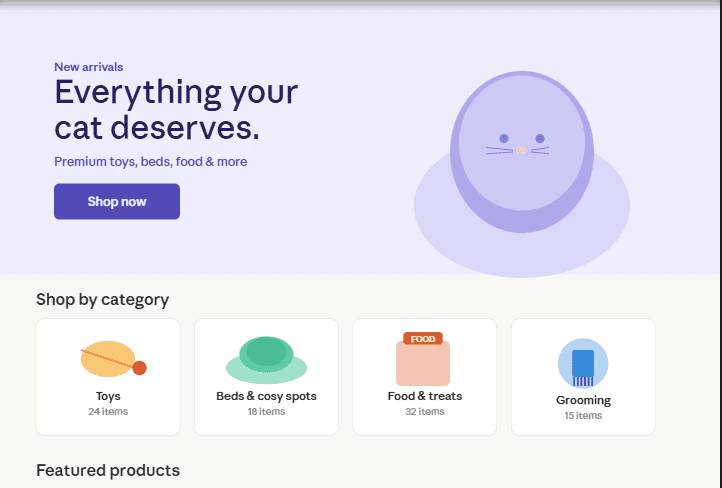
This Shopify brand operates on Shopify, providing a stable and scalable backend for DTC ecommerce. The site follows a direct-response layout, optimized for paid traffic conversion rather than deep browsing.
Product pages emphasize:
Problem-solution messaging
Large visual demonstrations (key for viral products like water mats/carriers)
Clear CTAs and pricing
UX is streamlined but heavily sales-focused, with limited storytelling or brand-building elements. Load speed appears typical for Shopify stores using multiple scripts (tracking pixels, upsell apps), though image-heavy pages may slightly impact performance on slower connections.
Mobile optimization
Strong. Given that most traffic comes from Meta Ads, TikTok, and social platforms, the site is clearly designed mobile-first:
Vertical scrolling product pages
Prominent “Buy Now” buttons
Simplified navigation and fast checkout
This aligns well with impulse-driven purchasing behavior.
Visual credibility & brand consistency
Visually, the site appears modern but conversion-first rather than brand-first.
Strengths:
Engaging product visuals and demos
Clear pricing and offers
Weaknesses:
Limited brand story or authority positioning
Generic product presentation (common in dropshipping stores)
Inconsistent brand depth across channels
External platforms (e.g., Trustpilot, social comments) indicate credibility gaps, which can undermine on-site trust.
SKU count & catalog structure
The store appears moderately focused, unlike large catalog dropshipping stores:
Emphasis on a few “hero” products (e.g., water mat, carrier pouch)
Additional SKUs used for testing and scaling
This focused approach is better for conversion, as it reduces decision fatigue and aligns with ad-driven funnels.
Average Order Value (AOV)
Reported AOV: ~$33–$42
This is consistent with:
Impulse-buy pet products
Multi-item bundles and upsells
Estimated conversion rate
Not explicitly provided. However:
69,854 orders from ~230K customers suggests moderate conversion efficiency
Strong ROAS (~2.27) indicates funnels are at least functionally optimized for paid traffic
Upsell/cross-sell structure
The store likely uses standard Shopify ecosystem tools, including:
Cart upsells (e.g., add-ons like toys/accessories)
Post-purchase upsells
Email remarketing via Klaviyo
These are critical for increasing LTV in a one-off purchase category.
Bundling logic
Bundling appears to be used tactically:
Multi-unit discounts (e.g., “Buy 2, get 1 free”)
Complementary product suggestions
This supports AOV growth but is not deeply systemized into product ecosystems.
Trust signals (reviews, certifications, UGC)
On-site trust signals include:
Product visuals and demonstrations
Standard Shopify checkout security badges
However, external trust signals are a major concern:
Poor reviews on Trustpilot (notably very low ratings)
Complaints around product quality, delivery, and refunds
Mixed sentiment across social platforms
This creates a disconnect between ad-driven perception and real customer experience, which can hurt long-term scalability.
Technical issues visible publicly
No major frontend technical failures observed. Shopify ensures:
Reliable uptime
Functional checkout
However, operational risks include:
Dropshipping dependency (7–10 day shipping)
Fulfillment inconsistencies
Customer service complaints
Checkout flow friction
Low. Shopify provides a highly optimized checkout flow:
Cart → Shipping → Payment
Multiple payment options
Minimal steps
This is ideal for cold traffic conversion.
→ Conversion infrastructure rating: Moderate
The technical foundation is strong and optimized for paid acquisition, but reputation issues and weak brand trust significantly reduce long-term conversion reliability and scalability.
→ Quick-win optimization opportunities
Reputation repair: Address negative reviews, improve refund transparency, and customer support responsiveness
Stronger brand positioning: Add storytelling, brand mission, and authority signals
UGC integration: Showcase real customer reviews, photos, and videos prominently
Post-purchase experience: Improve delivery communication and tracking transparency
Retention systems: Expand email/SMS flows to increase repeat purchases
Offer clarity: Reduce reliance on aggressive discount framing and improve perceived value
Traffic & Distribution Footprint
Estimated traffic volume
While exact traffic is not disclosed, we can infer scale from performance metrics:
~$2.28M annual revenue
~$33–$42 AOV
~69,854 orders
Assuming a 2–3% conversion rate (typical for paid traffic ecommerce), estimated traffic likely falls within:
190,000–300,000+ monthly visits during active scaling periods
Traffic volume is directly correlated with ad spend (~$65K/month), indicating a demand-generation engine rather than organic demand capture.
Primary channels (Paid / Organic / Social / Marketplace)
1. Paid Social (Primary Driver)
The business is heavily reliant on Meta Ads (Facebook/Instagram):
Core acquisition channel
Strong ROAS (~2.27)
Creative-driven performance model (viral product videos)
2. Paid Social (Emerging / Secondary)
TikTok (organic + paid testing)
Viral discovery via short-form video content
3. Email Marketing
74,000+ subscribers
Managed via Klaviyo
Currently underutilized (basic flows, limited lifecycle optimization)
4. Organic / Branded Search
Some SEO presence, but minimal compared to paid channels
Likely driven by brand searches after ad exposure
5. Marketplace Signals (Indirect)
Products appear on platforms like Amazon and Walmart, but not as official brand-controlled channels
Indicates product commoditization
Confirms competitive landscape
Channel concentration risk
High concentration around Meta Ads:
Majority of revenue tied to one primary channel
Performance dependent on:
Creative output
CPM/CPC fluctuations
Algorithm changes
While multiple platforms exist, true diversification is limited, as most revenue originates from paid social.
Platform dependency risk (Meta, TikTok, Google)
Significant dependency on third-party platforms:
Meta (Facebook/Instagram): Core revenue engine
TikTok: Emerging but not yet scaled
Google Ads: Underutilized opportunity
Risks include:
Account bans or restrictions (already experienced domain/ad account issues)
Rising ad costs
Creative fatigue
Policy changes affecting pet product claims
This is a structural vulnerability, especially given prior Meta-related disruptions requiring a store relaunch.
International vs local reach
Primary focus:
United States (core market)
Canada (secondary)
Unlike more complex global architectures, this is a North America–focused brand, which simplifies operations but limits diversification.
However:
Market size remains large
Scaling within the U.S. alone is still viable
SEO footprint strength
Relatively weak:
Minimal organic visibility
Limited content or authority-building
SEO not a primary acquisition driver
This indicates:
Low baseline traffic stability
Heavy reliance on paid demand generation
However, it also presents a clear growth opportunity if developed.
Marketplace presence (Amazon, Etsy, etc.)
No evidence of owned marketplace distribution strategy.
However:
Similar products are widely available on Amazon and Walmart
Suggests:
Low product exclusivity
Competitive pricing pressure
The brand currently operates as a pure DTC model, without leveraging marketplace traffic.
Direct vs intermediary sales ratio
~100% Direct-to-Consumer via Shopify
Advantages:
Full ownership of customer data
Higher margins
Strong retargeting capabilities
Disadvantages:
No diversification through third-party demand channels
Higher reliance on paid acquisition
Summary Assessment
→ Traffic fragility score: Moderate–High
The business is highly scalable but heavily dependent on paid acquisition—especially Meta. Any disruption in ad performance, platform access, or creative effectiveness could rapidly impact revenue.
→ Channel diversification strength: Moderate–Low
While multiple channels exist (Meta, TikTok, email), true diversification is limited. Organic traffic, SEO, and marketplace channels are underdeveloped, leaving significant room for improvement but also increasing current risk concentration.
Marketing & Customer Acquisition
Paid ad presence (Meta/TikTok)
The Shopify store is a heavily performance-marketing-driven brand, with Meta Ads (Facebook/Instagram) as the primary acquisition engine.
Monthly ad spend: ~$65.5K
Blended ROAS: ~2.27
CPA: ~$16.46
The brand clearly operates a structured paid acquisition system, not opportunistic ads.
TikTok is used as a creative testing and trend amplification channel, while Google Ads remains underutilized but represents a clear expansion lever.
Creative sophistication level
Creative strategy is highly aligned with modern DTC dropshipping best practices:
Short-form video ads
Problem–solution demonstrations (e.g., cat water mat, carrier pouch)
Scroll-stopping visuals optimized for mobile feeds
Iterative creative testing framework
The brand excels in direct-response creative, but lacks:
Deep storytelling
Emotional brand-building
Premium positioning
This indicates performance-first, brand-second marketing.
Funnel depth
The funnel is moderately well-developed and conversion-focused:
Top of funnel:
Paid social acquisition (Meta + TikTok)
Viral-style product discovery
Mid funnel:
Retargeting ads across Meta
Product-focused landing pages
Bottom of funnel:
Email flows via Klaviyo
Abandoned cart recovery
Basic post-purchase flows
Overall, the funnel is functional but not deeply optimized for retention or brand building.
Email list size
74,000+ subscribers
This is a strong owned asset, especially relative to revenue scale. However:
Flows are “lightly built”
Limited lifecycle sophistication
Significant upside exists in retention marketing.
Organic social engagement quality
Presence exists across platforms (Facebook, TikTok), but:
Engagement appears ad-driven rather than community-driven
Limited evidence of strong organic following or brand loyalty
The brand is not currently a social-first or community-led brand.
UGC density
UGC is central to paid creatives, including:
Product demonstrations
Customer-style videos
However:
Limited authentic UGC ecosystem visible publicly
Not deeply integrated into brand identity or website
This suggests UGC is used tactically (ads), not strategically (brand trust).
Influencer presence
No clear evidence of a structured influencer or affiliate program.
This is a missed opportunity, especially given:
Viral product category
Strong fit for TikTok creators
Influencer-led growth could significantly reduce CAC over time.
CAC indicators
CPA: ~$16.46
AOV: ~$33–$42
ROAS: ~2.27
This suggests:
Acquisition is currently profitable but not highly efficient
Margins are sensitive to rising ad costs
The model requires consistent creative performance to maintain CAC stability.
Scalability signals
Strong indicators of scalability include:
Proven paid acquisition engine
High-volume ad spend already validated
Repeatable creative testing framework
Large email list
Ability to launch and scale new SKUs quickly
Scaling is primarily achieved by:
Increasing ad spend
Expanding winning creatives
Launching new viral products
LTV indicators
LTV is moderate but under-optimized:
One-off product model limits natural repeat purchases
Email list provides retargeting potential
Cross-selling opportunities exist
However, growth requires:
Stronger retention systems
Product ecosystem expansion
Possibly consumable or repeat-use products
Summary Assessment
→ Marketing maturity level: Moderate–High
The brand has a clearly structured and functional paid acquisition engine with strong creative execution. However, it lacks depth in brand-building, influencer marketing, and retention systems.
→ Scalability assessment: Moderately scalable (with volatility)
The business can scale efficiently through increased ad spend and creative output, but remains highly dependent on paid acquisition performance. Long-term scalability would require diversification into organic, influencer, and retention-driven channels.
Monetisation & Unit Economics (Surface-Level)
Pricing strategy
The Shopif store operates a mid-range DTC pricing model, optimized for impulse purchases via paid social channels. Products are positioned as problem-solving, visually demonstrable solutions for cat owners (e.g., carriers, enrichment mats), allowing perceived value to exceed cost.
Pricing is designed to:
Support paid acquisition (Meta Ads)
Enable fast decision-making
Maintain healthy contribution margins
The strategy is conversion-first, not premium brand-driven.
Average Order Value (AOV)
Reported AOV: ~$33–$42
This is slightly below typical DTC benchmarks (~$45–$60), but still viable given:
Low product costs (dropshipping model)
Upsell opportunities
High purchase frequency during scaling phases
Product price bands
Typical pricing structure appears to follow:
Low-tier impulse products: $15–$25
Core products (hero SKUs): $25–$50
Bundles/multi-unit offers: $50–$80+
This structure aligns with impulse-driven ecommerce and paid traffic funnels.
Implied gross margin
Based on:
Annual revenue: ~$2.28M
Annual profit: ~$298K
Profit margin: ~13%
After accounting for:
Ad spend (~$65K/month)
Operating expenses
We can infer:
Strong gross margins (likely 60–75%) typical of dropshipping
Net margins compressed by heavy ad spend
This indicates healthy unit economics at the product level, but dependency on paid ads reduces net profitability.
Bundles/upsell logic
The store uses standard Shopify monetization tactics:
Quantity breaks (e.g., buy more, save more)
Cart upsells and add-ons
Cross-selling complementary products
These tactics help:
Increase AOV
Improve ROAS
Offset acquisition costs
However, bundling is tactical rather than deeply systemized.
Return/refund signals from reviews
Internally reported refund rate: 0.0%
However, external signals (Trustpilot, social comments) suggest:
Customer dissatisfaction around product quality
Complaints about refunds and support
Potential mismatch between expectations and delivery
This discrepancy is a major diligence flag and suggests reported metrics may not fully reflect reality.
Subscription logic
Currently non-existent or minimal.
Unlike consumables (e.g., pet food), most products are:
One-time purchases
Low natural replenishment frequency
However, opportunities exist to introduce:
Accessory subscriptions
Product bundles for repeat engagement
Margin expansion potential
Key levers include:
Increasing AOV via stronger bundles and premium offers
Introducing private-label or branded SKUs
Improving retention (email/SMS flows) via Klaviyo
Expanding into organic channels to reduce CAC
Supplier renegotiation or localized fulfillment
Summary Assessment
→ Economic health estimate: Moderate–Strong (surface-level)
The business demonstrates solid gross margins and positive profitability, but net margins are constrained by high ad dependency. Reported refund metrics require validation due to conflicting external signals.
→ Monetisation sophistication: Moderate
The brand effectively uses standard DTC monetization tactics (upsells, bundles), but lacks advanced strategies such as subscriptions, private labeling, and strong pricing power driven by brand equity.
Brand Strength & Perception
Brand consistency (site + socials)
The online store maintains moderate consistency across its website and social channels. The messaging is aligned around:
“Problem-solving cat products”
Visual demonstrations (water mats, carriers)
However, the brand identity is thin and performance-driven, with limited cohesion beyond product ads.
Emotional positioning
Primarily functional + convenience-driven, with light emotional appeal (pet care/love).
Not aspirational or premium
Focuses on solving boredom, comfort, and indoor pet issues
Storytelling depth
Very limited.
No strong brand narrative
No mission, origin story, or differentiation beyond products
Website prioritizes conversion over storytelling
Founder visibility
None.
Fully faceless brand
Suggests systemized dropshipping operation rather than founder-led brand
Review quality & sentiment
Externally very negative:
Complaints about product quality, shipping, and refunds
Mismatch between ad expectations and actual product
Trustpilot/third-party signals
On Trustpilot, reviews are overwhelmingly negative (notably near 1-star aggregate).
This is a major reputational red flag.
Press/certifications/partnerships
None identified.
No authority signals
No partnerships or endorsements
Community presence
Weak.
Social engagement exists but is ad-driven
No strong organic community or loyal audience
Brand defensibility
Low.
No IP, patents, or proprietary positioning
Easily replicable products and messaging
→ Brand asset strength: Low–Moderate
→ Reputation risk flags: High (negative reviews, low trust, weak brand equity)
Competitive Landscape
Number of visible competitors
Very high.
Products widely available on Amazon and Walmart
Numerous dropshipping stores selling similar SKUs
Strength of top competitors
Strong incumbents include:
Established pet brands (higher trust, faster shipping)
Marketplace sellers with pricing advantages
Pricing tiers
Low: $10–$20 (marketplace sellers)
Mid: $25–$50 (The store's positioning)
Premium: $50+ (branded pet companies)
Differentiation gaps
No product uniqueness
Weak branding
No loyalty ecosystem
Switching cost
Extremely low.
Customers can easily switch to competitors.
Barriers to entry
Minimal.
Dropshipping model
Easily accessible suppliers
Incumbent advantages
Faster shipping
Brand trust
Marketplace visibility
Race-to-the-bottom pricing
Yes, particularly on marketplaces.
→ Competitive intensity rating: Very High
→ Positioning gap opportunities: Brand building, faster shipping, premium positioning
Operational Complexity (Inferred)
SKU complexity
Moderate.
Focus on hero SKUs with some testing pipeline
Supply chain dependence
High reliance on single-region (China) dropshipping agents → risk concentration
Regulatory exposure
Low (pet accessories), minimal compliance burden
Fulfillment intensity
Moderate.
7–10 day shipping
Cross-border logistics
Returns burden
Unclear (reported 0%, but external complaints suggest otherwise)
Cash-flow sensitivity
Low.
No inventory holding (dropshipping model)
International logistics
Moderate complexity due to shipping times and customer expectations
→ Operational risk score: Moderate
→ Scalability friction points: Supplier dependency, shipping delays, customer support
Risk & Fragility Signals
Hero SKU dependency
High.
Revenue likely driven by a few viral products
Channel dependency
Very high (Meta Ads)
Platform risk
Significant (history of Meta account/domain issues)
Trend vs evergreen
Products are trend-driven, not timeless
Brand moat vs product moat
No moat.
Ease of replication
Extremely easy
Legal exposure
Moderate (customer complaints, refund disputes)
Revenue concentration
Likely concentrated in top SKUs
→ Fragility index: High
→ Top 3 structural risks:
Meta Ads dependency
Reputation/customer trust issues
Product commoditization
Growth Levers (Externally Visible)
→ Actionable growth hypotheses:
Build brand trust layer
Improve reviews, UGC, and customer experience
Expand acquisition channels
Scale TikTok + launch Google Ads
Introduce premium/private-label products
Increase margins and defensibility
Retention optimization
Advanced email/SMS flows via Klaviyo
Faster fulfillment (local warehousing)
Improve delivery times and reduce complaints
Founder & Operator Signals
No visible founder
Business appears systemized with VAs + ad infrastructure
Strong marketing operator signals (performance ads focus)
Clear workflows and delegation
→ Operator dependency risk: Low–Moderate (systems exist, but performance marketing expertise required)
Exit & Optionality Signals
Primarily a cash-flow asset, not brand asset
Attractive for:
Performance marketers
Dropshipping operators
Limited strategic buyer appeal (weak brand equity)
→ Exit attractiveness score: Moderate–Low
“Unfair Advantage” Check
No clear unfair advantage.
No IP
No brand moat
No exclusive distribution
Only edge:
Existing ad data + creatives
→ Easily replicable within 6–12 months
Financial Snapshot (Preliminary Review)
Revenue: Strong (~$2.2M)
Profit: Moderate (~13% margin)
Growth: Implied strong but ad-dependent
Concerns:
0% refund rate likely unrealistic
Heavy ad reliance
Metrics may be optimized for sale presentation
Key Unknowns to Validate in Seller Call
Monthly revenue (last 6 months trend)
True gross margins
Verified refund/chargeback rates
CAC stability over time
LTV data
Supplier agreements
Impact of Meta account issues
Real reason for sale
Customer complaint resolution process
Preliminary Verdict
→ Opportunity Level: Moderate (with upside if optimized)
→ Risk Level: High
Investment Profile:
Cash-flow play (short-term)
Turnaround + brand-building opportunity
Not a strong long-term moat business in current state, but potentially valuable for an operator skilled in paid ads + brand transformation.